Creating a content strategy from scratch is difficult for any fintech.
It’s even harder when your product works behind the scenes.
For fintech infrastructure companies like Parafin, the end user may rely on the product without ever knowing the company’s name. In fact, Parafin already has visibility into 20% of small businesses in the US1!
A small business might access financing through a platform it already uses, such as DoorDash or Mindbody, while Parafin powers the infrastructure behind that experience.
That creates a specific content challenge: Parafin doesn’t need every small business to know its name, but it does need platform buyers, product teams, and executives to understand what it powers, why its infrastructure matters, and why they should choose Parafin over another provider.
When Gabrielle Bier joined Parafin as Content and Brand Marketing Lead, the company already had a strong product and well-known platform partners. But its content was still in the early stages. Her job was to build the foundations: find the topics Parafin had the right to own, create content that could show up in search and LLMs, and turn internal expertise into buyer-facing proof.
This case study looks at how Parafin is building its zero-to-one content strategy through AEO, internal expertise, small business stories, X distribution, and proprietary data storytelling.
Note: Every couple of months we release a new case study on how a financial services or fintech company does content. Join our newsletter to make sure you get each issue in your inbox!
Parafin’s backstory
Parafin is a financial infrastructure company that helps platforms offer embedded financial products to their small business customers.
It was founded in 2020 by Sahill Poddar, Vineet Goel, and Ralph Furman. The founding idea came from a problem they saw during the pandemic: small businesses needed capital to hire staff, buy equipment, and keep growing, but traditional financing often failed to serve them quickly or flexibly.
Instead of asking small businesses to go through a separate bank or lender, Parafin embeds financing into the platforms that those businesses already use. This lets platforms offer capital at the point where the business is already operating.
For example, delivery platforms can offer capital to eligible restaurants, while Parafin powers the financing infrastructure behind it. Here’s an example flow:
- The delivery platform owns the merchant relationship and brand experience.
- Eligible restaurants can see pre-approved financing offers as “[delivery platform name] Capital” inside [delivery platform name] Merchant Portal.
- If they are approved and accept the financing, merchants can receive funds in as little as 1-2 business days.
- Parafin handles the behind-the-scenes complexity, including underwriting, servicing, compliance, customer support, and the financing terms.
Parafin launched with platforms including Amazon, Walmart, and Gusto and has already funded more than 50,000 businesses. It raised a $100M Series C in 2024 at a $750M valuation and was named to CNBC’s 2025 Disruptor 50 list. And importantly, it comes strongly recommended by users, with a Net Promoter Score of 84.
That growth makes Parafin a useful company to study from a content perspective: its product grew steadily without much thought leadership or authority. But as it continues to its next stages, the company still needs platform buyers to understand how it can help their customers.
From a slim blog to foundational expertise: how Parafin is kicking off by owning the term “embedded capital”
When Gabrielle joined Parafin, the blog was lean and didn’t include much thought leadership. So she wanted to create some quick “foundational wins” while building their authority in embedded finance.
As she puts it, Parafin is trying to “earn the right to participate in the conversation” by creating content its audience is already searching for. Once that foundation is in place, the next question becomes: what can Parafin bring to the conversation that no one else can?
Her first priority was “putting their flag down” with pillar content. For example, through her research she realized that “embedded capital” wasn’t meaningfully owned by any company.
That was an opportunity for Parafin to publish the most useful explanation of the term early, positioning them as a leader and shaping how buyers understand their industry.
In her first month at Parafin, Gabrielle worked with internal experts to define how Parafin approaches embedded capital differently and created a guide: What is embedded capital and why platforms need it now. It soon reached page one of Google and began appearing in AI searches.
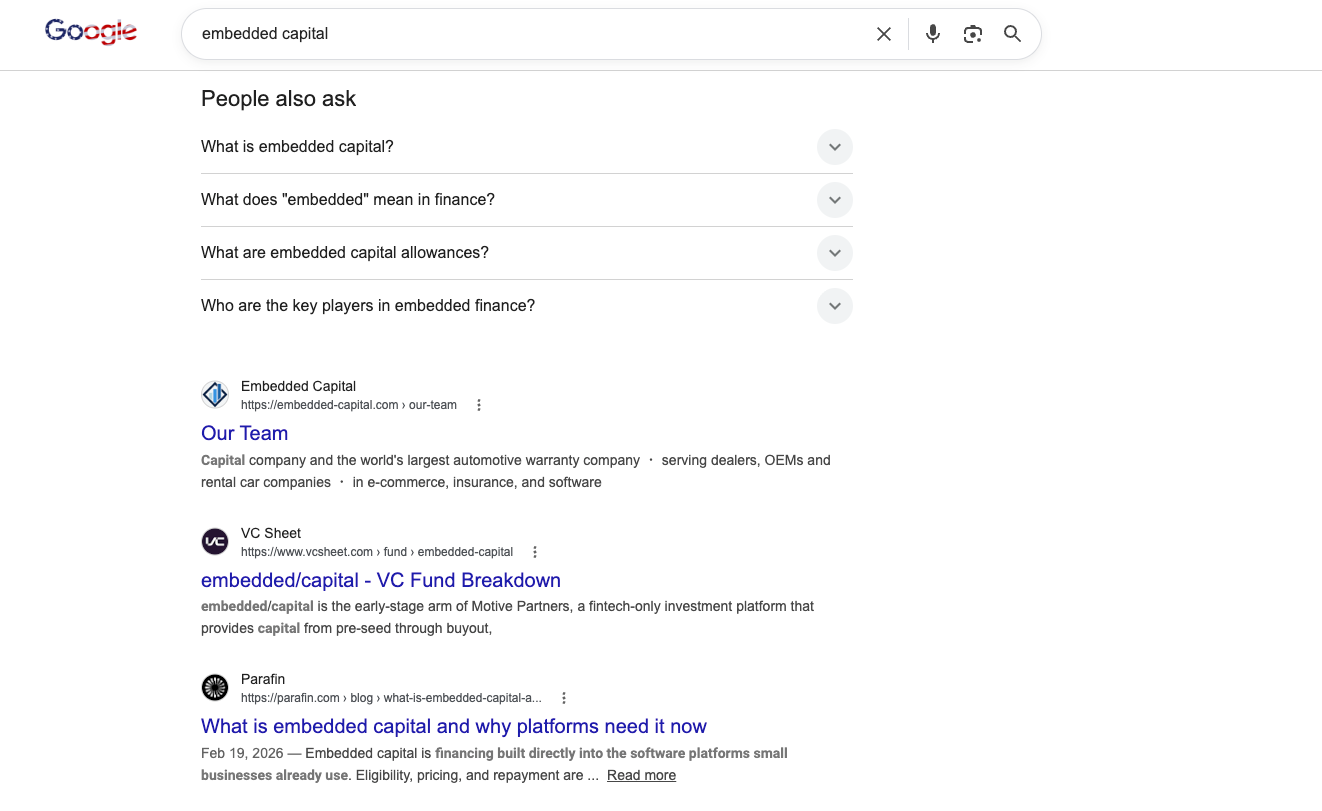
(Currently in position #5!)
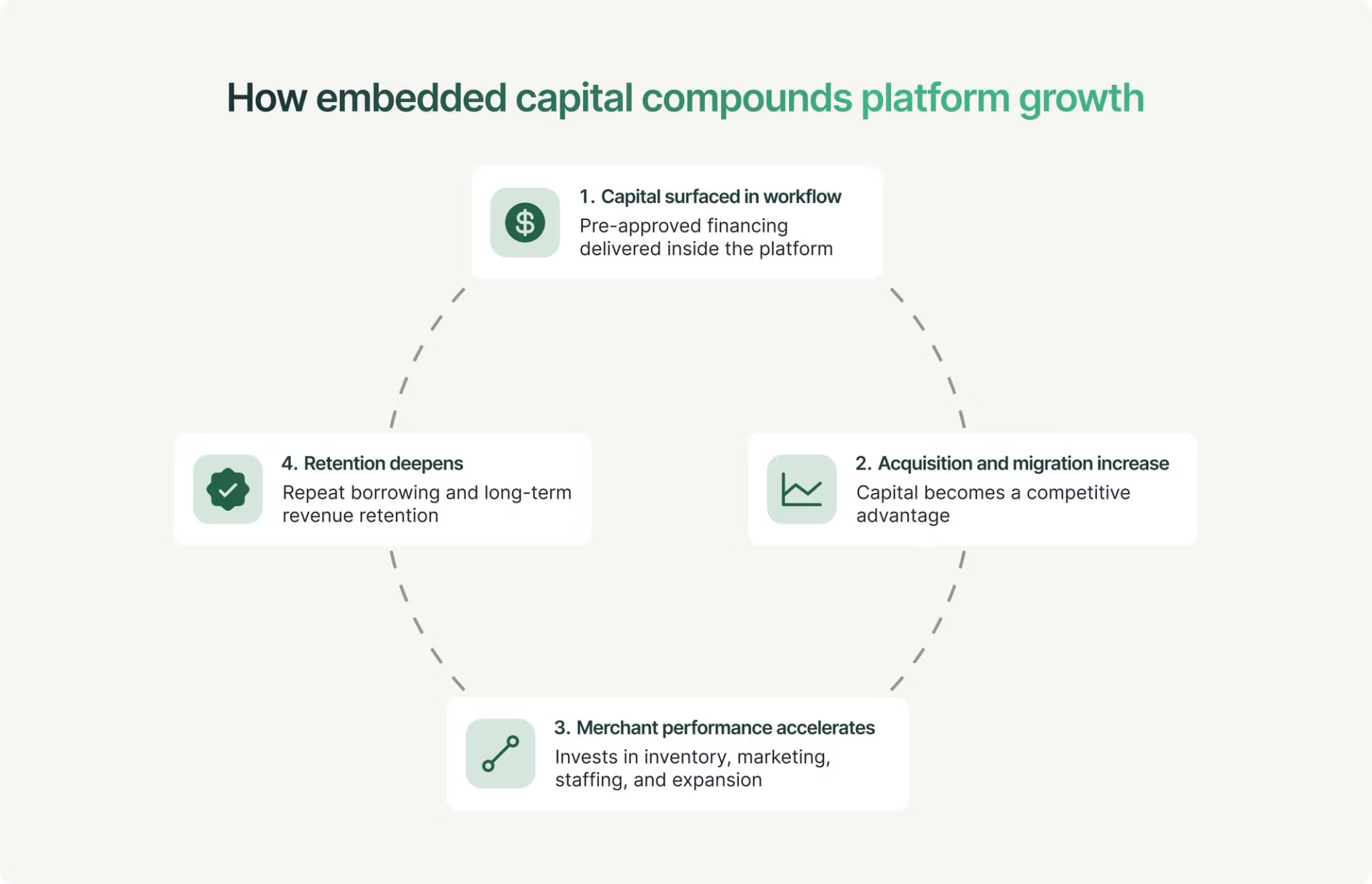
Illustrative diagram from Parafin’s embedded capital guide.
Why Parafin’s embedded capital guide worked quickly:
Broad terms are often too crowded for a newer player. “Embedded finance” covers everything from payments to lending to banking products. When someone asks an LLM or search term about embedded finance, it’s hard to be a ranking authority.
“Embedded capital” is more specific and aligned with Parafin. Narrower terms tend to attract platform buyers who are “bottom of funnel” and actively researching solutions. Contrast that to embedded finance, where many people searching are casual browsers who will never be looking to partner with an embedded capital platform.
Why Parafin focuses heavily on AEO instead of just SEO
Prioritizing AEO is a good way to get fast gains if you’re new to content marketing. Many of Parafin’s buyers aren’t only using Google to research embedded finance, they’re checking with Claude and ChatGPT for explanations and comparisons.
That created an opportunity for Parafin to build authority in a category that is still forming. If Parafin can answer those questions clearly and credibly now, it has a better chance of becoming one of the sources buyers and LLMs associate with topics like embedded capital.
It also means AEO and SEO aren’t separate strategies, because content is crucial for both. A lot of what makes content useful for LLMs also makes it useful for search: clear structure, specific answers, strong examples, and credible expertise that explains the topic better than what already exists.
While Gabrielle built the strategies together, AEO especially influences how their content is structured. Parafin builds content based on what buyers would ask an LLM, and what answers would be credible enough for buyers to take to their decision-making teams.
But there are more advantages to AEO. Gabrielle wanted some quick wins, and AEO works more quickly than “regular” SEO. This is because LLMs don’t always pick the top ranking articles for their results, and you don’t necessarily need backlinks from other websites for your articles to show up quickly.
How the team uses an internal “mini committee” to produce quality content
When Parafin brings internal experts into their content, they can share opinions and experience that don’t exist yet on the searchable web. Because lending is a high-stakes and complex environment, expert voices are incredibly important for readers.
And because expertise helps readers, it’s also exactly what helps your content become a cited source in search engines and LLMs.
At Parafin, their process starts by using AEO tools to help Gabrielle identify prompts around a topic and analyze competitor content. Team members then use an LLM to come up with an initial outline in less than 30 minutes.
But AI doesn’t replace editorial judgement. In fact, Gabrielle assembles a “mini committee” for Parafin’s published content.
- Customer-facing teams (AEs and AMs) validate that the content reflects real customer questions and objections.
- Product experts review for technical accuracy and fill in any gaps.
- Gabrielle edits for structure, clarity, SEO, and AEO so it’s genuinely useful to readers.
- Legal & Compliance reviews regulated or sensitive content.
- Executives provide strategic perspective and a final gut check before publication.
Parafin’s approach mirrors what we’ve found with AEO at Mint Studios. Instead of waiting a while to rank like in traditional SEO, you can become part of LLM answers earlier, especially in categories where there isn’t much high-quality content yet.
Start by understanding what buyers are asking LLMs. Then create answers strong enough to be cited because they contain real team expertise, product insight, customer stories, or proprietary data (we call them “GPT articles”).
We’ve written more about this in our article: Want LLMs to Recommend Your Brand? Here's What We've Found Works: GPT Articles
Choosing between technical content and small business stories
Gabrielle is strategically balancing two types of content at any time:
- “Hyper-technical content” showing an engineer or finance expert how their API or underwriting works
- Actual merchant stories for readers from any background, showing what access to capital makes possible for small businesses
At the platform level, technical evaluators need to understand Parafin’s infrastructure. These are readers who care about things like APIs, underwriting, data models, and how their product actually works behind the scenes.
But there are also less technical readers inside those same platform companies. Product teams and executives might not need a deep explanation of the underwriting model right away. They need to understand the business case: how will this help our customers? Will it improve the product experience? Will it give us a new way to support small businesses on our platform?

“When they’re seeing how our product makes customers’ lives easier, the reader wants to offer this sort of capability to their end user,” says Gabrielle. She thinks that platforms might notice these stories, see that their competitors offer embedding lending and think, “Oh gosh, we have to do this for our customers!”
Then there are the small businesses themselves: the restaurants, contractors, salons, merchants, and other SMBs receiving capital through Parafin-powered products. While they may not be able to decide if their platform offers funding through Parafin, they can certainly start shopping around to see what platforms do!
That’s why merchant stories are so useful. They give non-technical buyers a reason to care, merchants a product to ask about, and help technical teams understand the outcomes their infrastructure can support.
Detailed, specific customer stories and case studies are often cited by LLMs, further helping with AEO.

Gabrielle also found that Trustpilot is where a lot of hard-hitting customer stories live. With nearly 700 reviews at the time of writing, Parafin has 4.9/5 stars on Trustpilot. In these cases, often the customer was able to trace their funding back from the provider’s platform to Parafin and share their stories.
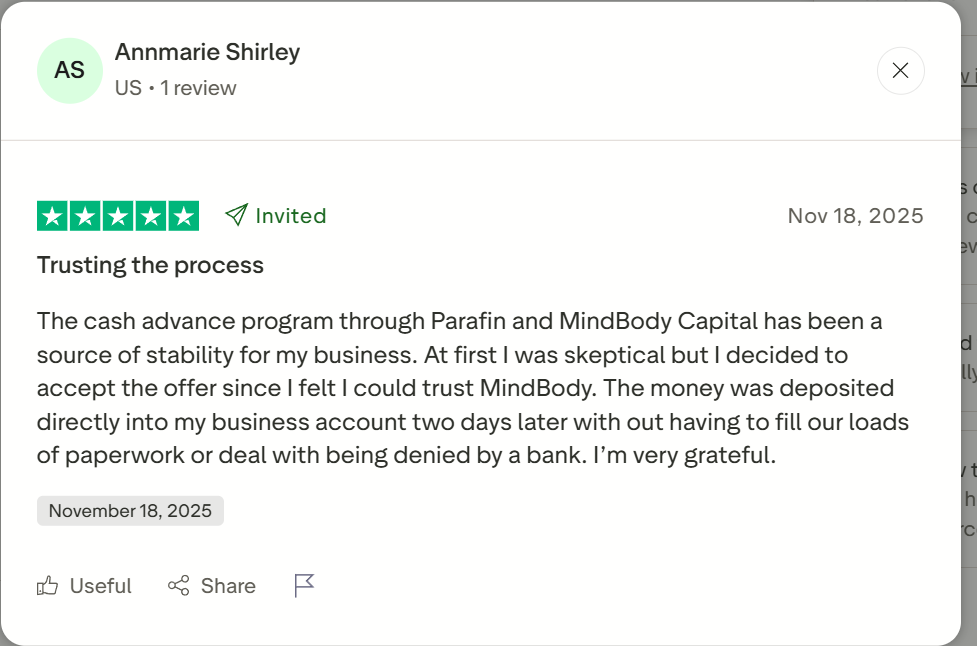
An example of a merchant from the MindBody fitness platform accessing funding through Parafin and sharing their experience on Trustpilot.
The marketing team’s favorite AI use case for content: storytelling with data
Gabrielle is particularly excited about using AI for proprietary data storytelling, which she saw first-hand while working at her two previous companies, Middesk and Gong (where she operationalized Gong Labs, their original research engine, herself). “The power of proprietary data storytelling is something that I stress to any content marketer that I come across.”
She’s excited to flex that muscle at Parafin. In fact, it was one of the reasons Gabrielle was excited to join the team: Because Parafin has funded over 50,000 small businesses, they have unique insights into how merchants use their funding. AI can help them dig deeper for patterns in how they use capital, and their changing needs over time.
That’s like hitting the jackpot if you’re creating content. Parafin’s data can be used to give extremely specific insights into small business financing. Instead of the general (boring) business content that floods LinkedIn, or heart-warming but isolated case studies, their data could help software platforms make lives better for small businesses.
In practice, that could mean content around:
- How small businesses are using embedded capital
- What types of businesses use capital for growth versus cash flow
- How financing needs change over time
- How platform-provided financing supports small business expansion
Gabrielle is already experimenting with what this could look like, using AI to explore Parafin’s proprietary data for potential stories and quickly turn promising ideas into campaign concepts. It’s an early-stage way to uncover what might be interesting and make bigger ideas more tangible before deciding what’s worth pursuing.
“The takeaway is that AI has allowed me to prototype really quickly and come up with ideas really that I could present as bigger picture campaigns to leadership. And it doesn't just live rent free in my head, it's something I can visualize and have on paper.”
What content are they proudest of?
When asked what content she was proudest of, Gabrielle came back to the guide mentioned earlier: What Is Embedded Capital and Why Platforms Need It Now.
It was her first article at Parafin, and it quickly validated the zero-to-one approach. They chose an ownable topic, created a definitive and well-researched guide, ran it through the right internal reviewers, and used it to earn visibility in a conversation Parafin wanted to shape.
Gabrielle still remembers celebrating it with the team on Slack when it reached page one on Google.
“I think just having a quick win right off the bat was awesome.”
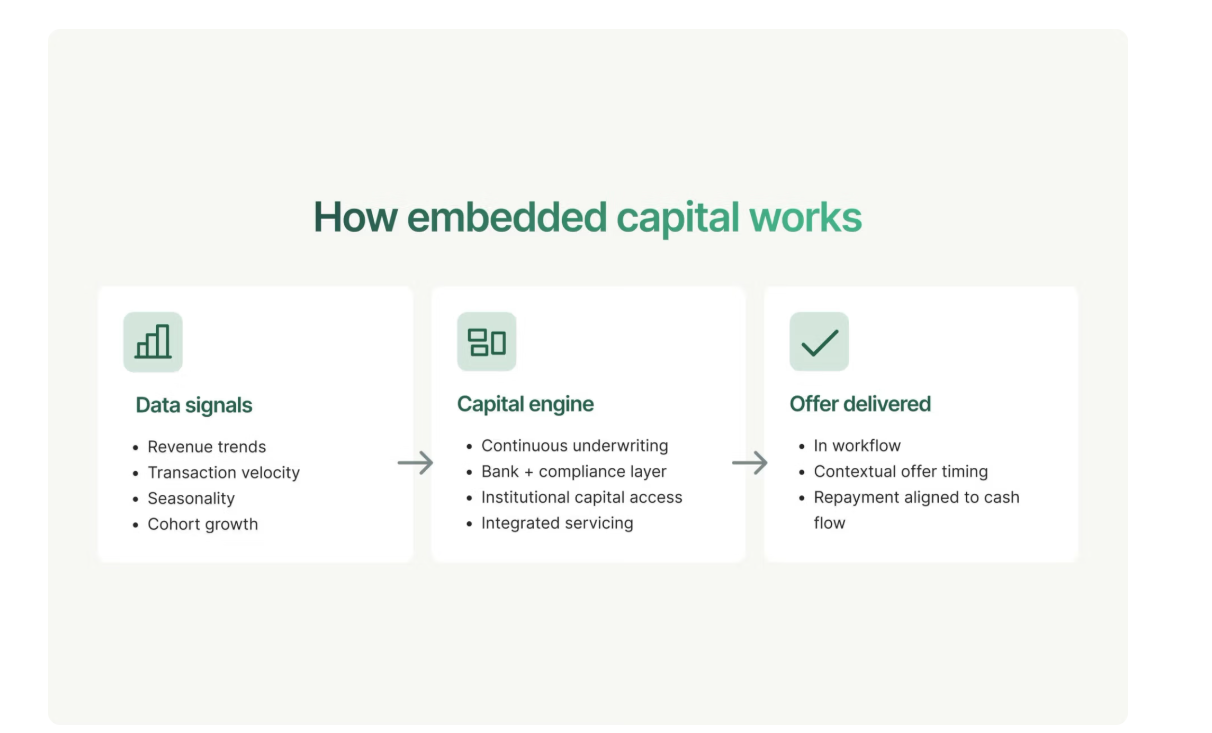
One of the graphics used in the guide to explain embedded capital.
Parafin’s content: from zero to one designed to reach the right people
Parafin’s approach shows what zero-to-one content can look like for a product that often sits behind another company’s brand. Parafin may power financing experiences that small businesses use through platforms like DoorDash or Mindbody, but the content needs to reach a different audience: the platform teams deciding whether to offer embedded finance in the first place.
Gabrielle’s strategy is one we love to see:
- Create content that works for readers, search engines, and LLMs
- Use narrow, ownable topics to earn early visibility
- Bring internal experts into the process so content is unique and accurate
- Show end-customer stories so buyers understand the real-world impact
- Experiment with distribution channels that match the audience
- Use proprietary data to create content competitors can’t easily copy
Big thanks to Gabrielle Bier, we’re excited to see what you continue adding to Parafin and the embedded finance world!
1. Source: Parafin internal data, as of August 2026