
High-level results
- Generated $2M+ in attributable pipeline to content with seven figure deals already closed
- Monthly inbound leads went from 0 per month to an average of 12 per month, with 8 per month being MQLs
- Inbound leads now make up 75% of their total pipeline
- Impressions increased by ~1,114% (~12.1x), and traffic by 178%
- Ranking on first page for 62% of buying keywords, with 47% in the top 3
- LLM visibility grew from 0% to a peak of 46%
Situation: What the consultancy needed
A boutique-sized consultancy that works with highly regulated industries wanted to scale their business.
They had decided to reposition their brand and focus mainly on financial services as the founders had deep expertise in that industry. There was also a real gap in that market for their consulting services, which helped firms go from experimenting with AI to actually scaling it across teams in a quick and compliant way.
When they reached out in 2025, they were facing the following challenges in attracting new customers:
1. Outbound was not bringing in great results
Their initial outbound attempts of cold calls and emails gave a moderate return because they found that budget holders were hard to identiy, timing was often wrong and sales cycles were long.
The team decided instead to rely on networking via their personal and partner channels, and cultivated these relationships through events.
While this did bring in some high-quality deals, it wasn’t scalable. The sales cycles were long, and spanned from initial contact and event planning to follow-ups post events and closing the deals. With the time it took for outreach, the cost of planning and running events, and completing the sales cycles, outbound proved to have a moderate return on investment.
2. They wanted to do content marketing but lacked the expertise
The team was already producing content (articles and case studies) on their website and technical thought leadership through their personal social-media accounts.
Some of the articles were doing well and resonated with their audience, so they knew content marketing could work well. But they didn’t have the resources to create the level of quality of content necessary at the scale required to really work.
They also realized they needed specialized SEO and AEO support to really get content marketing going and bring in results. Without that expertise in house, they couldn’t develop a content strategy, measure results, or replicate those initial wins in a consistent way.
3. There was market pressure to create the right type of content fast
The consultancy wanted to move quickly to increase awareness of their expertise and become thought leaders in the financial services space. So, competing for share of voice in the space was only going to become a lot harder as demand increased.
That meant they needed to hit the right talking points to reach potential clients and speak to the level of their audience, both tech leaders and the C-suite level.
The financial services space was already highly nuanced and technical, making it difficult to write about well. The content also needed to address the different types of audiences based on the different sectors and topics at hand, as well as the nuanced decision making around the compliance and governance needed in setting up these systems.
Hiring a freelancer for creating this type of content was risky as generic articles wouldn’t cut it. And without a strategy and structure in place, the team wouldn’t be able to measure results or understand what type of content worked best across both traditional search and AI search.
Before approaching Mint Studios, the team had talked to over 20 agencies to see which one had the experience needed to create this kind of content and bring them leads.
The results
1. Monthly inbound leads grew from 0 to 12 per month
We started producing content in August 2025 with the website at the time bringing in 0 inbound leads. All their new customers came through their personal networks, partner referrals, and events.
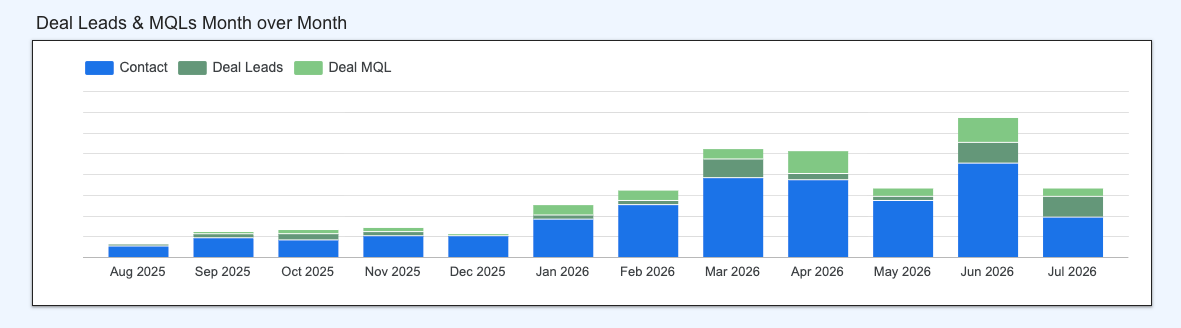
This changed rapidly once we started implementing our LLM visibility and SEO strategy. Within the first month of publishing content, we had already brought in our first lead, and by the first 6 months of 2026, inbound leads made up 75% of their sales pipeline with leads and MQLs reaching an average of 12 and 8 respectively per month.
Content marketing to date has pulled in 100+ inbound leads to date, of which 53% were marked as MQLs, with deal sizes ranging from five to seven figures.
2. Inbound leads converted at a rate of 53% into six and seven figure opportunities
Bringing in leads is a great start, but what really matters is whether they’re high quality (i.e., they meet our client’s ICPs) and whether they actually become customers.
Since launching both our SEO and LLM visibility strategy, we’ve generated 98 leads, and are consistently bringing in 6- and 7-figure deals. With a 3 - 4 month sales cycle, some of those have closed already.
In the last seven months alone, content influenced 100+ of those leads (calculated by excluding all leads that came in offline, or via referrals or via partnerships) with 53% converting to MQLs. Of these:
- A seven figure pipeline of SQLs
- Several inbound deals have closed, including six and seven figure engagements
- Their return on investment (ROI) on content marketing to date is 1,229% on net spend, which far outweighs the ROI of their other channel of referrals via partners and personal networks.
Conversion from MQL to SQL is 19% and will only improve over time since sales cycles are quite long, with deals taking 3 - 4 months to close.
It’s also worth noting that a lot of these brands are enterprise level, including one of the biggest airlines in the world, one of the biggest banks in Asia and one of the largest investment funds in the US.
3. AI search is now a key acquisition channel, making up 44% of all inbound leads
LLMs are their main acquisition channel, which is approximately 44% of their inbound leads.
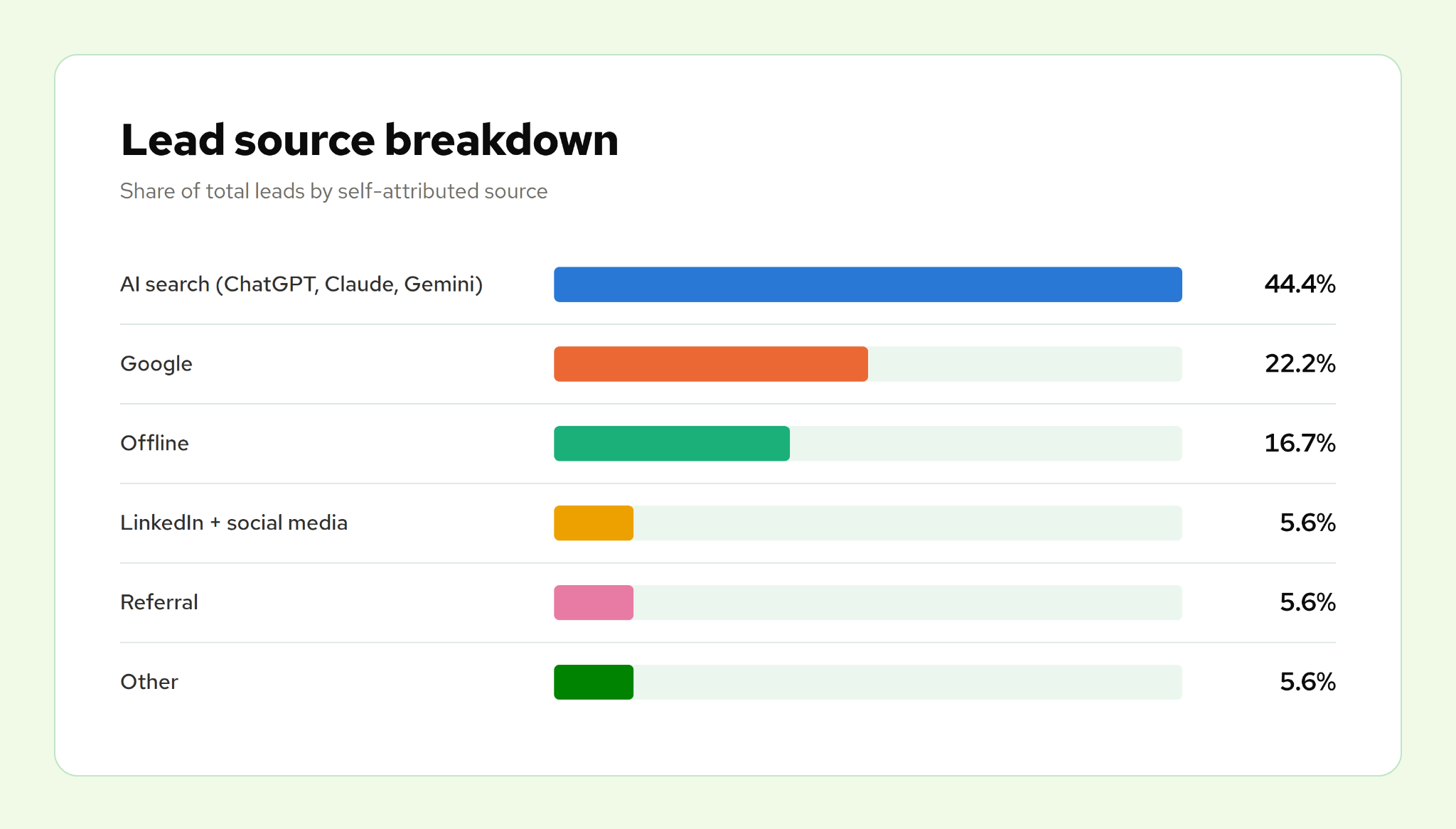
Not only that, but the conversion rate from lead to deal is also healthy: AI-search-attributed contacts convert to deals at 64%, a much higher rate than contacts that came through traditional search engines at 40%.
When we started, the consultancy had zero visibility in ChatGPT, Claude and Gemini. One year later, their visibility grew from 0% to a peak of 46%. Share of voice is also consistently high, peaking at 58% and currently outperforming competitors, including well-known consultancies, on our selected topics and prompts.
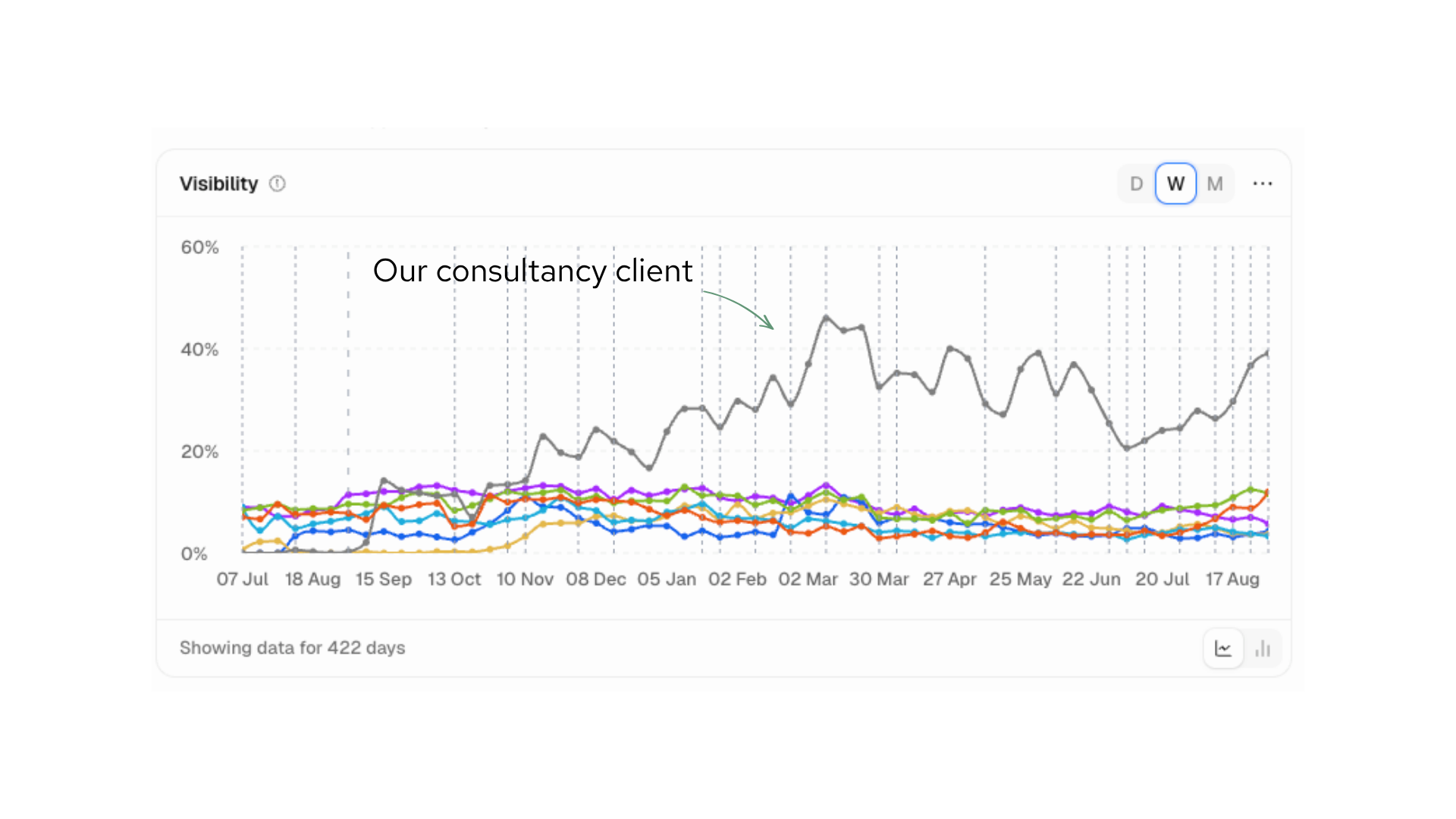
Our prompts are very bottom of the funnel and relate to specific pain points our client’s prospects are trying to solve:
- Which partners offer X to help do Y
- Who can help with [solution] to [solve use case]
- Best consultancy in [financial services subsector]
This means that when people who are ready to buy are having in-depth, high-intent conversations with LLMs, this company turns up in the responses.
This 44% of lead share confirms our initial hypothesis: most of their prospects are actively using AI search as a channel to find consultancies. Now that our client has that visibility across LLM tools, their leads have increased.
Even though these numbers are already great, we also think they’re under-reported. Very often leads don’t remember how they actually found you and, since search is fragmented, they could have used any combination of LLM tools, organic search, and social media before reaching out. Self-attributed ‘referrals’ can also be misleading as one lead said they were referred to the company by Claude!
Since we started, there’s also been a jump in contacts reaching out via offline channels (both the company’s phone number and email address are on the contact page). It could be that prospects are using agents like Claude Cowork to automate compiling a shortlist and emailing a group of companies directly instead of filling out forms one by one.
4. Increased brand awareness: Impressions +1,114% (~12.1x) and traffic +178%
While our main focus is on commercial results, the growth in brand awareness has been huge.
This is most visible in two metrics:
- Overall impressions that grew 12x (+1,114%) in less than a year
- Website traffic growth that compounded month over month before creating a new baseline, about 178% above where it started from
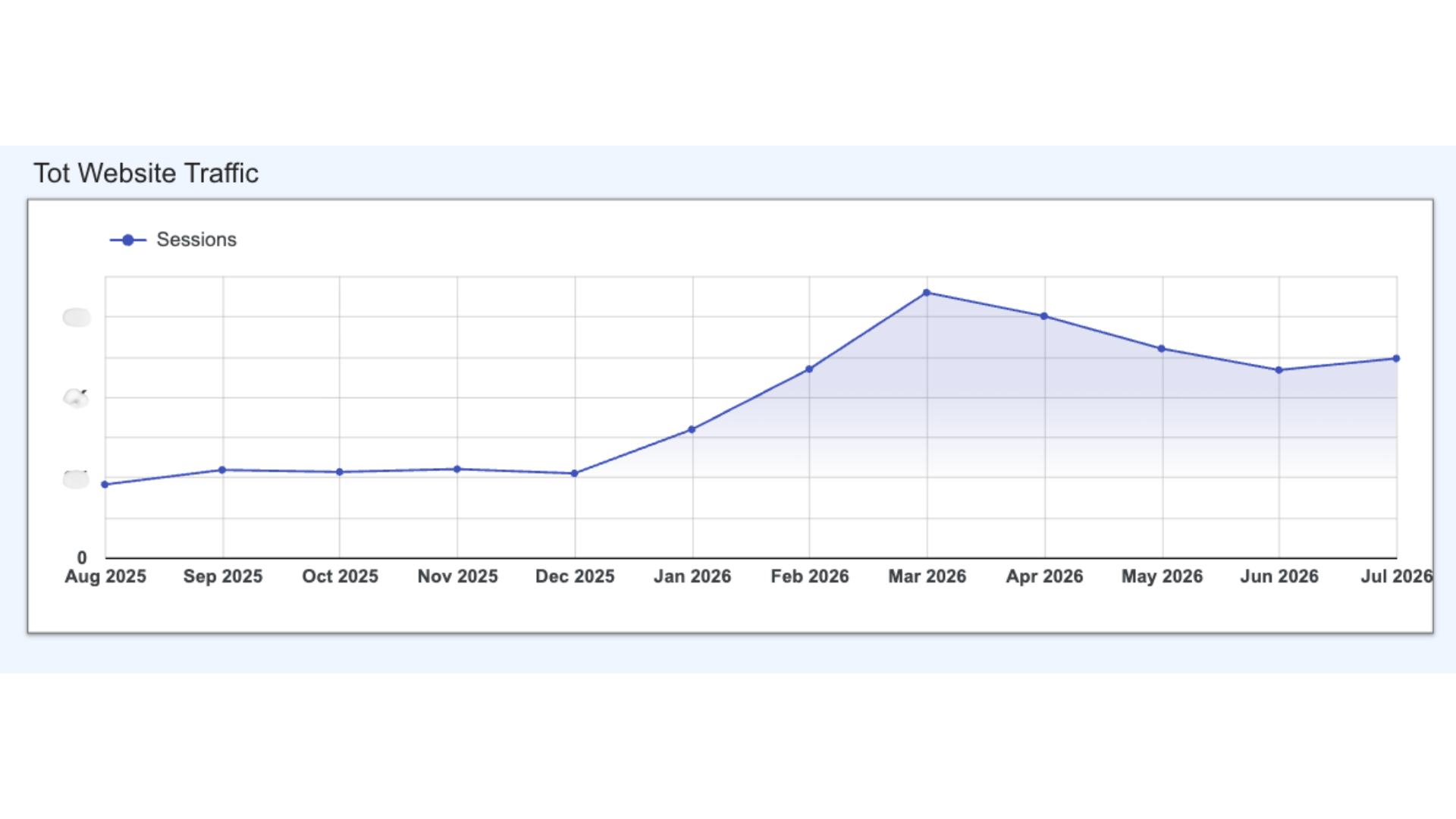
That traffic growth can be seen in key pages. For example, home page visits grew 67.3% in the first 6 months of 2026. LLMs are driving this behavior as not everyone clicks through to the company’s site from an LLM response. Instead, many people first learn about the company via an LLM, then wind up Googling the brand name and converting via the home page.
The rest of that traffic growth comes from GPT and SEO articles that target high-intent buying keywords. (Many of our GPT articles also naturally rank for keywords on traditional search engines, even though that wasn’t our original intent.)
Since this was the first time our client was creating search optimized content, it took approximately 4 months before they started to rank on the first page. Including GPT-article-related keywords, our client is now ranking on the first page of Google for 62% of our target keywords, the majority of which are in the top 3 positions.
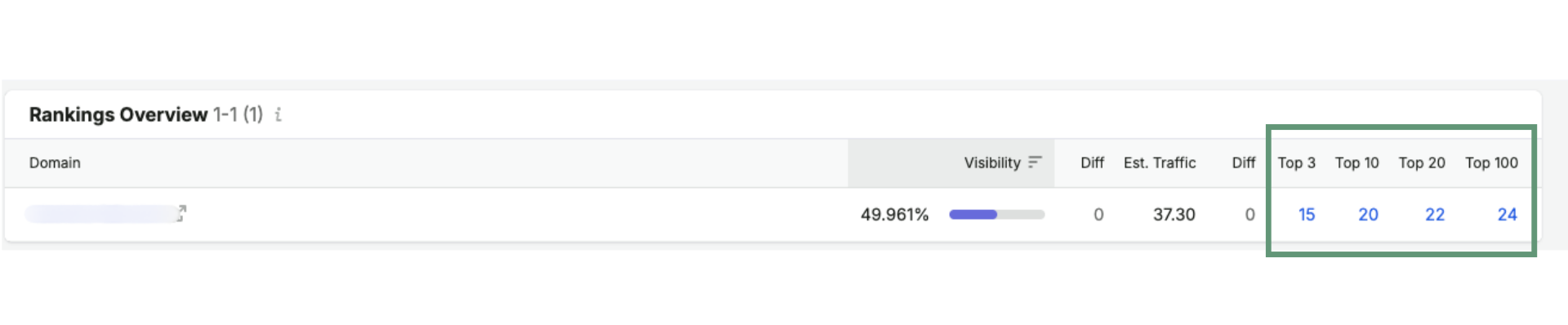
These keywords include buying terms for targeted financial services implementation solutions as well as for specific tools relevant to financial services firms.
After publishing high-quality content and building backlinks, their domain authority score grew by almost 10 points from the start of our engagement in August 2025 to June 2026, according to SEMRush.
How we did it: Creating expert-level content for SEO and LLM visibility
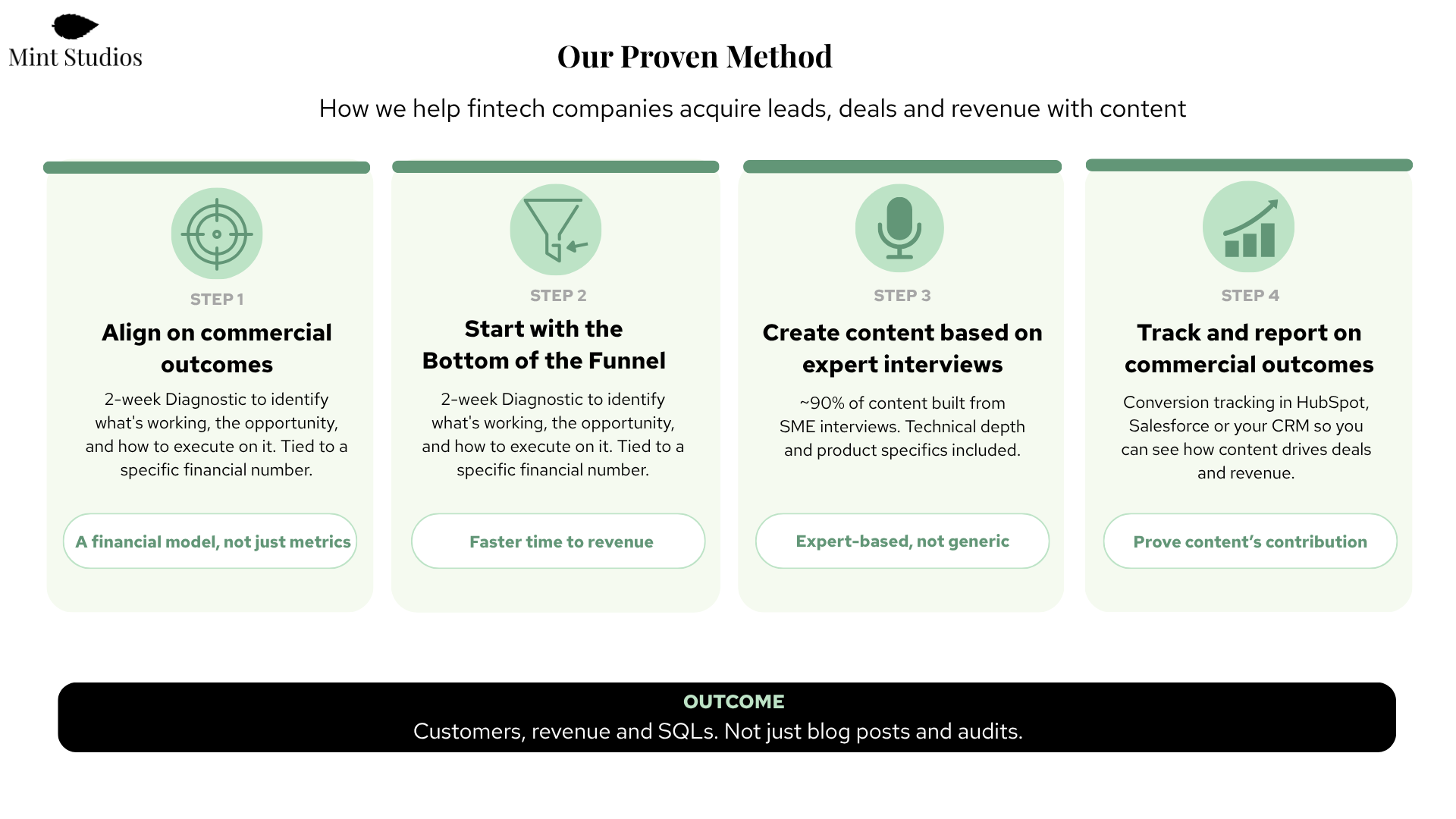
1. Aligning on commercial outcomes
Building a stable sales pipeline was the company’s main goal, and that’s exactly what we specialize in: generating opportunities and conversions through content marketing.
We started our engagement by sitting down with the marketing team and C-suite to understand their key numbers, like the value of a lead and the firm’s revenue goals.
This helped us decide on a bottom-of-the-funnel content strategy to meet those goals, and KPIs to understand what worked and what didn’t. We decided to focus on both organic search and LLM visibility, so we created GPT articles right from the start of our engagement. We agreed on goals including:
- Number of leads generated
- Number of MQLs
- Revenue
We also put together an estimated financial model to estimate how much revenue content marketing could bring for the company.
This alignment on commercial outcomes made it a lot easier to decide on a strategy and the KPIs that we would measure every month to ensure we were on track.
2. Creating a content strategy focused on bottom-of-the-funnel (BOFU) keywords
Most content strategies are built on assumptions. Often ‘audience research’ means skimming through a few competitor blogs and forums instead of sitting down to actually understand who you’re writing for.
The problem with that strategy is that you wind up with content that doesn't match how real buyers search or make decisions, and marketing that drives traffic without driving the sales pipeline.
Content marketing usually defaults to top-of-the-funnel (TOFU) content because higher search volume means more traffic. But more traffic doesn’t mean more leads. Traffic is a vanity metric and doesn’t reflect intent, which is exactly why that approach so rarely converts.
We took the opposite approach with our client and used our proven framework, which focuses on bottom-of-funnel (BOFU) content first, not traffic. This allowed us to choose the topics people search for when they’re looking for answers to specific problems and comparing different solutions.
We created content around keywords where intent was the highest and people were ready to buy. This meant our client showed up at the exact moment someone was already looking for the services they offered.
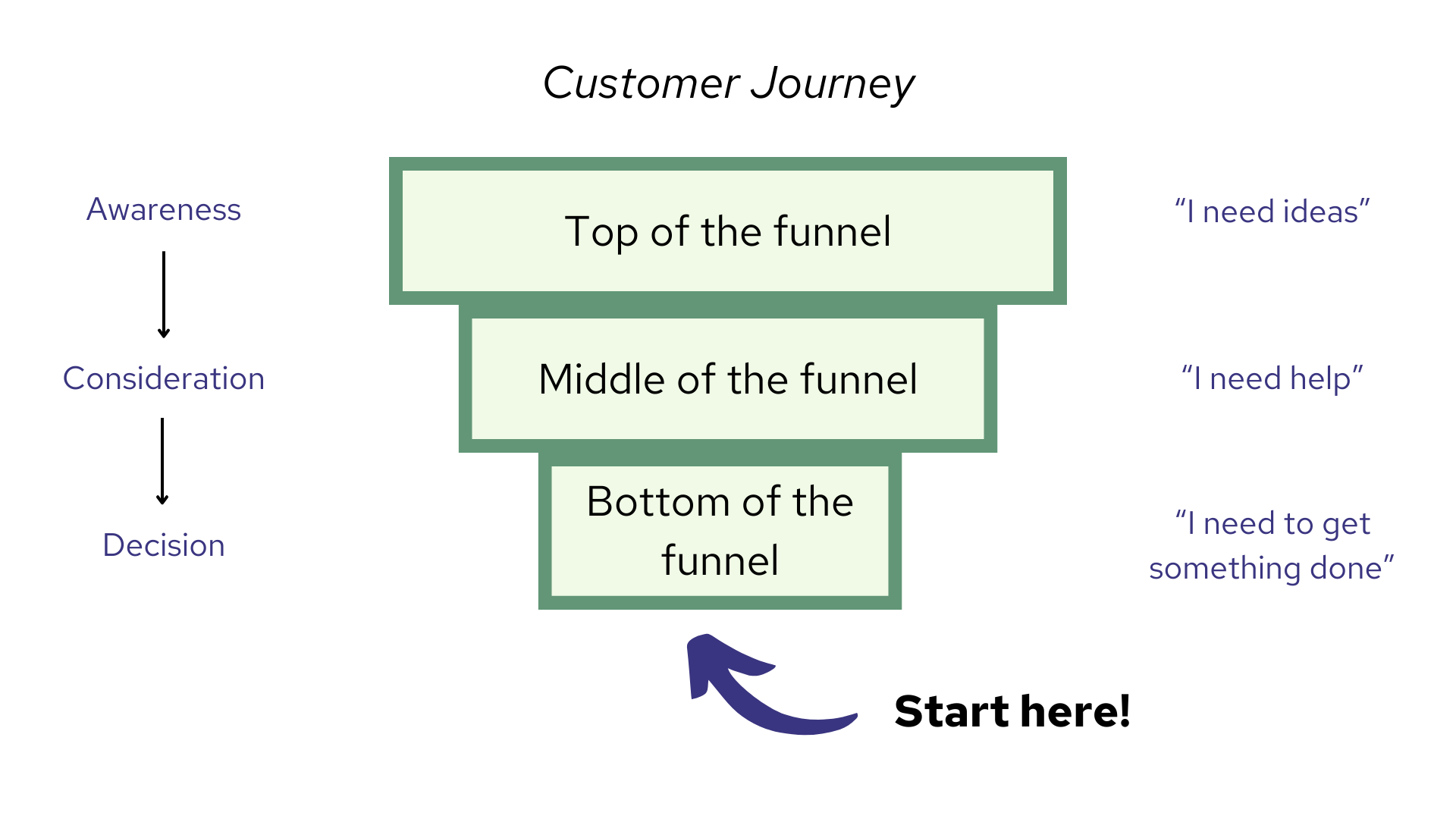
Read more: What is BOFU (Bottom of the Funnel) Content and Why Is it Important?
For example, a topic like "What is agentic AI?" can drive a lot of traffic, but most of the people reading it are early-stage and nowhere near ready to buy.
Compare that to topics like "[service] partner for [sub-sector]" or "how to evaluate a [category] consultancy." These might only bring in a couple dozen visits a month, but those visitors already understand the category and are actively comparing who to work with, which makes them worth far more than a bigger audience that isn't ready yet.
This method works for all types of companies, both product and service based. A person wanting to purchase software or hire a firm has the same intent to buy. So, topics like "how to choose an AI implementation partner" or "questions to ask before hiring a consultancy" do well because the buyer is looking to solve a problem through a service.
To understand what would make sense for the consultancy, we interviewed their subject matter experts to get to know their customers. This included specific pain points their customers had and the language they used to describe those problems.
From these interviews, we decided to target financial services firms that were actively trying to understand how to move forward with a consultancy that specialized in their space. By speaking with the experts, we also knew what prospects were actually searching for.
3. Getting the nuance right by interviewing their own experts
Financial services is vast and varies between sectors: A retail bank's compliance priorities look nothing like a hedge fund's, and the risk questions an insurer has to answer are different again from what a wealth manager needs to address. Add the technical complexity of AI implementation and how fast it's evolving, and writing good content gets even harder.
It’s hard for a generalist writer to write at that level. They can’t get that level of detail or understand what executives need to see just by doing online research to write these articles. It takes experience and a solid understanding of financial services.
We’ve written for a wide range of FSI sectors, from banking and PSPs to financial regulatory compliance. But it was still important to involve the company’s experts in developing content because that meant we could understand the nuances for both AI and the specific financial services sectors we were targeting.
That meant doing in-depth interviews with their team to understand what their prospects were looking for in AI solutions, the challenges they faced, and which of our client’s services could help best for each specific challenge.
This enabled us to create in-depth and nuanced articles that answered real customer buying questions and concerns. For example, articles that answer the governance and risk questions a compliance-concious buyer asks before engaging a partner. These are the exact concerns a compliance-conscious financial-services buyer needs to see answered before reaching out to a potential partner.
At the same time, interviews also revealed the unique insights and philosophies of our client, which we embedded in the content, helping to show how they approach AI differently and helping them to stand out from their competitors.
The efficacy of our strategy can be seen in a recent lead that referenced one of our articles, saying it resonated with them and reflected similar ways of thinking about AI, leading them to reach out.
That depth of customer understanding, combined with the unique insights we uncovered, is what lets us create content that someone at an executive level in financial services would actually read.
4. Tracking and reporting on commercial outcomes, and adjusting our strategy accordingly
We tracked our client’s results on HubSpot to understand how prospects discovered our client, measuring first-touch, last-touch, multi-touch, and LLM-driven leads.
What’s great with HubSpot is that we could see the pages and blog articles that prospects would read before and after submitting a form. This gave us a good understanding of whether the content was making an impact.
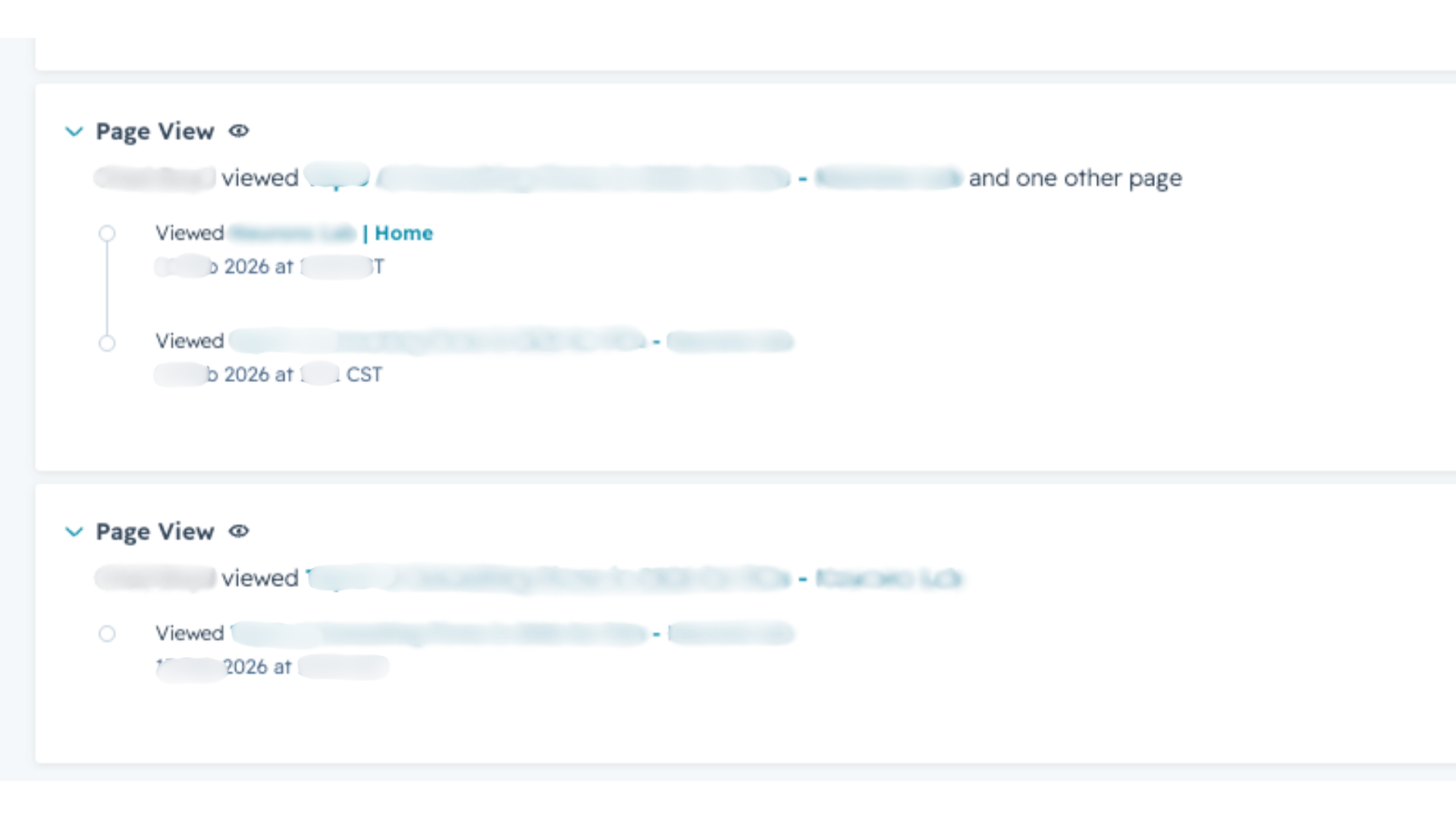
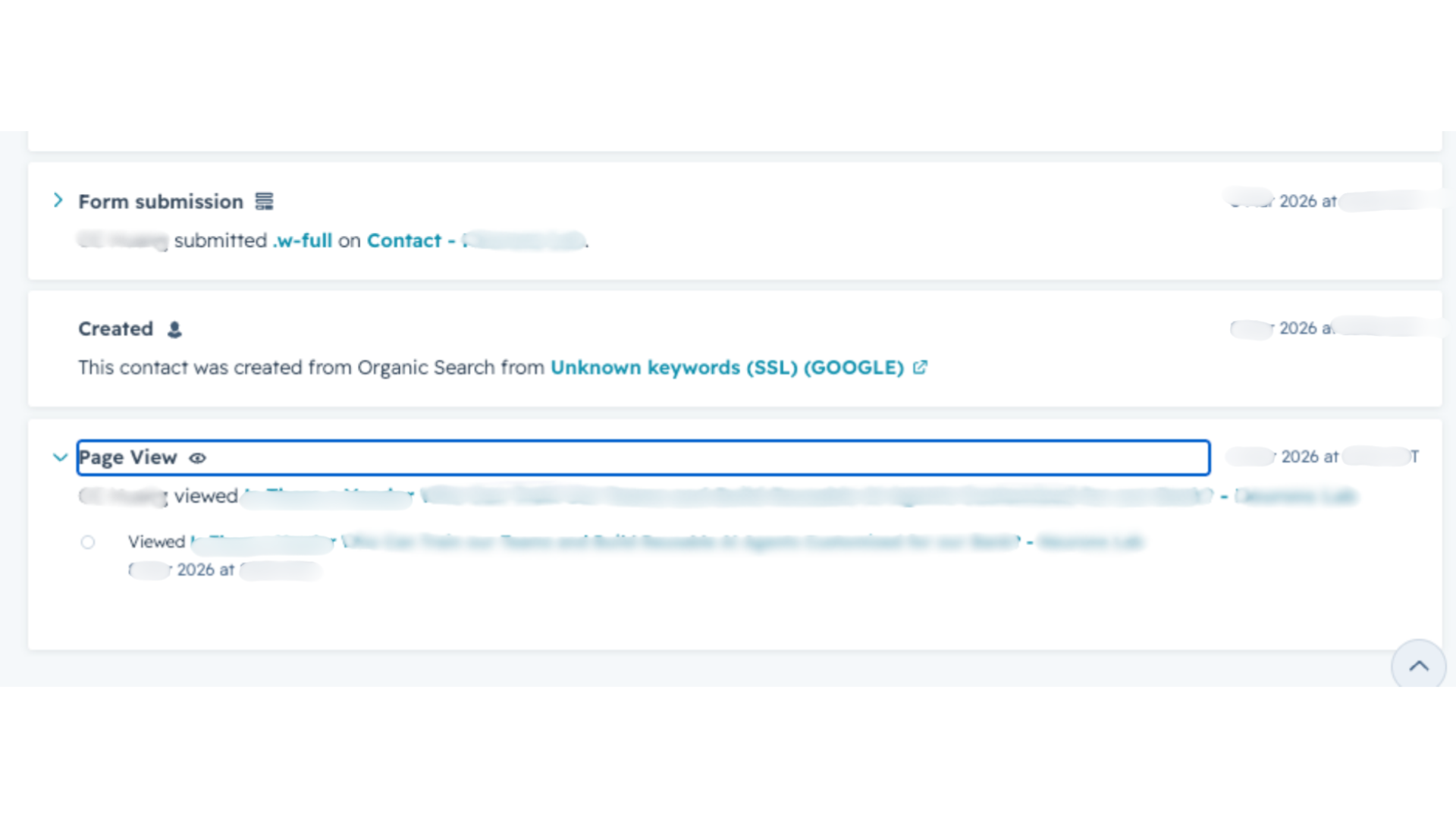
As you can see in the examples above, this tells us which URLs and channels leads actually came from, so we can attribute them back to specific content, something traffic, impressions or engagement alone can’t do.
Each month, we broke this data down into leading, mid-funnel and commercial indicators via a custom dashboard to understand what was working and what wasn’t. By studying this data consistently we were able to adjust our strategy quickly when something wasn’t performing as expected.
Our LLM content took off right away, with the first prompts getting strong visibility almost immediately. Our SEO content took longer, which was expected.
With the right content strategy, inbound can outperform your highest-touch channels
We're incredibly proud of the work we've done with our client. When they came to us, they had zero inbound leads and relied on personal networks and events to bring in new business. Now, inbound content is their most scalable acquisition channel, and it's still growing.
Over the course of our engagement, we turned content into a genuine acquisition channel: with first-page rankings for 62% of our targeted buying keywords, LLM visibility that grew from 0% to a peak of 46%, and a seven figure pipeline of sales-qualified opportunities generated from 100+ inbound leads, worth over $2M in pipeline.
None of this happened by chasing traffic. It happened because we stayed focused on pipeline, went after buying keywords instead of volume keywords, and built a presence in LLMs at a time when most consultancies in the AI-for-FSI space hadn't even started thinking about that channel.
It takes patience, consistency, and a client willing to trust the process. Our client gave us that, and we're excited to keep building on what we've started together!