
In the past few months, different agencies and marketers have come up with their own frameworks, approaches and strategies to increasing a brand’s visibility in LLMs. Some say you should focus on Reddit, others recommend doing a lot of digital PR and some say ignore everything and continue what you’re doing with SEO.
We’ve developed our own framework as well, which we’ve described as “GPT articles”. This is a framework that involves creating a set of Bottom of the Funnel (BOFU) prompts to target (aka the “money prompts” that reflect buying intent), and then targeting each prompt with a short “GPT” article. This strategy has consistently proven to help our clients appear in AI search, enabling multiple brands to go from 0% to 30%+ visibility in just a couple of months.
We recommend reading this article first to understand exactly what GPT articles are and how they work: Want LLMs to Recommend Your Brand? Here's What We've Found Works: GPT Articles
But the big question is: does this actually help with business results?
Does increasing LLM visibility translate into more inbound leads / MQLs / SQLs that eventually turn into customers?
As an agency that specializes in content marketing for customer acquisition, this is what we really wanted to know.
When we first wrote the article, we explained it was still early days and we weren’t 100% sure yet. A few months down the line and with more data and case studies under our belt, we can confidently say: yes. This framework does help bring in new business. In fact, for one of our clients, the GPT article framework enabled them to go from 0 inbound leads to multiple per month worth $30k+.
Like our initial article on this topic, we’ll begin by going through real case studies with real clients of ours. Then we’ll explain when it didn’t work, mistakes to avoid and some best practices.
Note: get updates in your inbox every time we publish a new article by joining our newsletter!
How do we track conversions via LLMs?
Most marketers seem to be tracking conversions from LLMs by referral source. This means, GA4 or HubSpot track the source / medium and if it’s ChatGPT / Gemini / any other LLM, this is tracked as an LLM source.
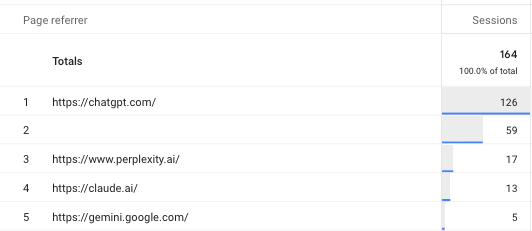
This is not how we track conversions.
We believe it’s inaccurate, for two key reasons:
- Few people click on links within ChatGPT / Gemini / Perplexity. Typically, they’ll continue to do research and either search the brand name within Google or go directly to the website. This would then be marked as “Organic” or “Direct” within GA4 or the CRM.
- Many AI tools don’t pass on the referrer correctly. For example, if you click on a link within the content itself of ChatGPT, the referrer value doesn’t pass on. If you’re on the Perplexity desktop app rather than the website, it doesn’t pass on either.
LLM tools are discovery and research channels; they are not designed to pass on traffic or clicks.
So instead, we track LLM conversions via self-attribution. For each case study below, the user fills in a field called “How did you hear about us?” in the contact or submission form, and this is what we use to track whether someone came in via LLMs.
We go into detail later in this article explaining why this makes more sense and the pros and cons of this approach.
What results have we seen?
B2B payments client goes from 1 high value opportunity per month to 3+ per month consistently
This is a small B2B payment client that highly prioritizes quality over quantity of leads. As a relatively small startup, they’ve said themselves that 1 - 3 high-quality leads per month is more than enough for them, since one closed customer can be worth anything between $150k - $300k.
This does happen in the early stage B2B payments space because growth comes from payment volume: if you have one customer who grows and does well, your business grows with them since you charge a % of their payment volume.
Although they partnered with us for SEO and organic content marketing, as a young website, they know it will take months to start seeing consistent inbounds via organic. They also don’t invest in any other type of marketing and wanted to take the slow route.
Since the beginning of 2025, they’d get about 1 lead every month from organic and the quality was hit or miss. Initially, we also experimented with paid ads, but the space was too competitive and expensive, and the lead quality didn’t justify the cost.
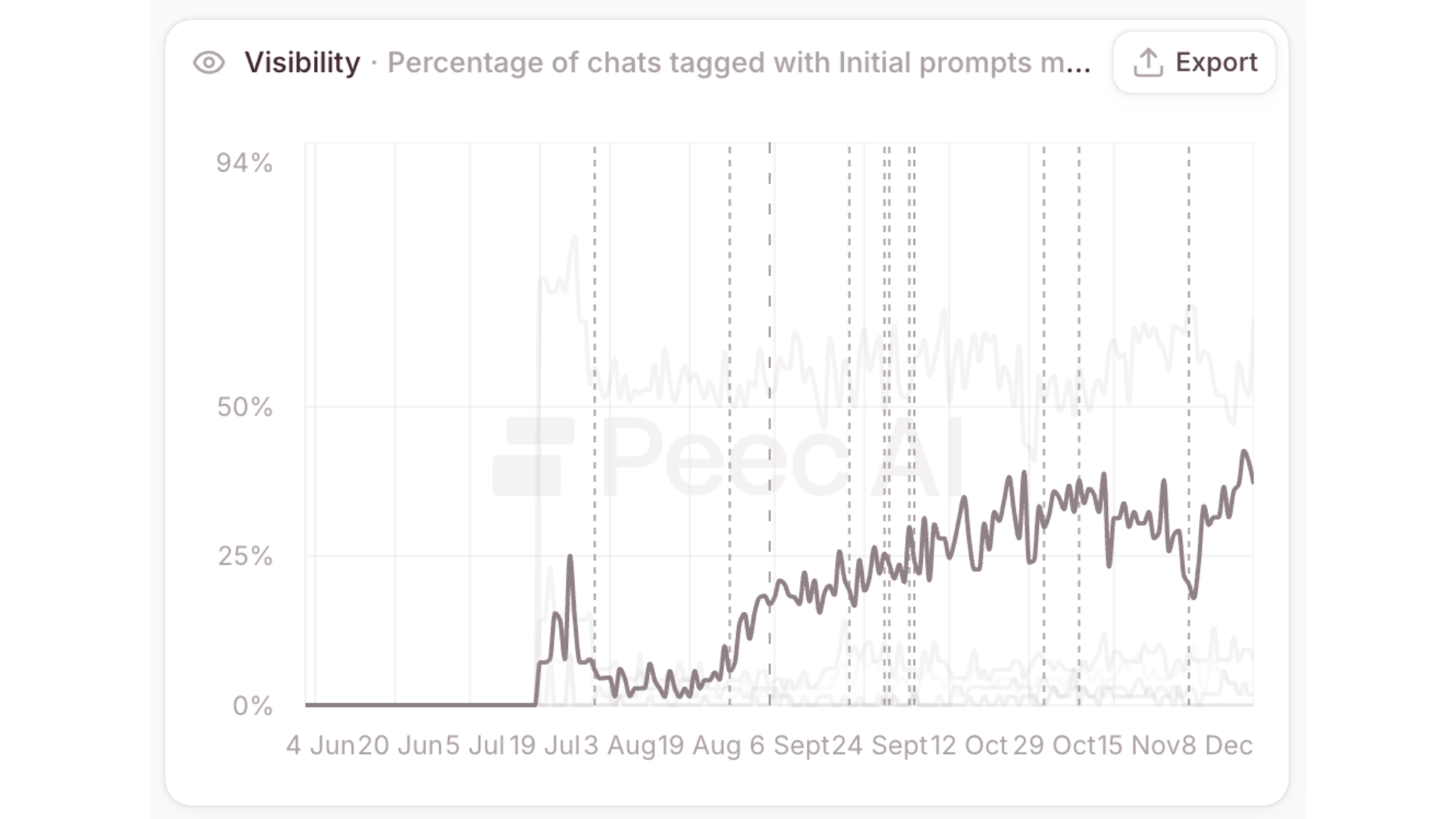
Towards the end of August, we started publishing GPT articles, and we started to see visibility grow. Our client went from very little visibility to 30%+ visibility for the prompts we were tracking, outcompeting other huge companies. Whereas before the brand was never turning up in Gemini / ChatGPT / Perplexity, it was now appearing regularly.
We started to see an increase in inbounds almost immediately in August, and then September was the highest ever month in inbound conversions. We went from 1 - 2 opportunities every couple of months, to an average of 3+ per month consistently, with many of them saying they came via AI search tools.
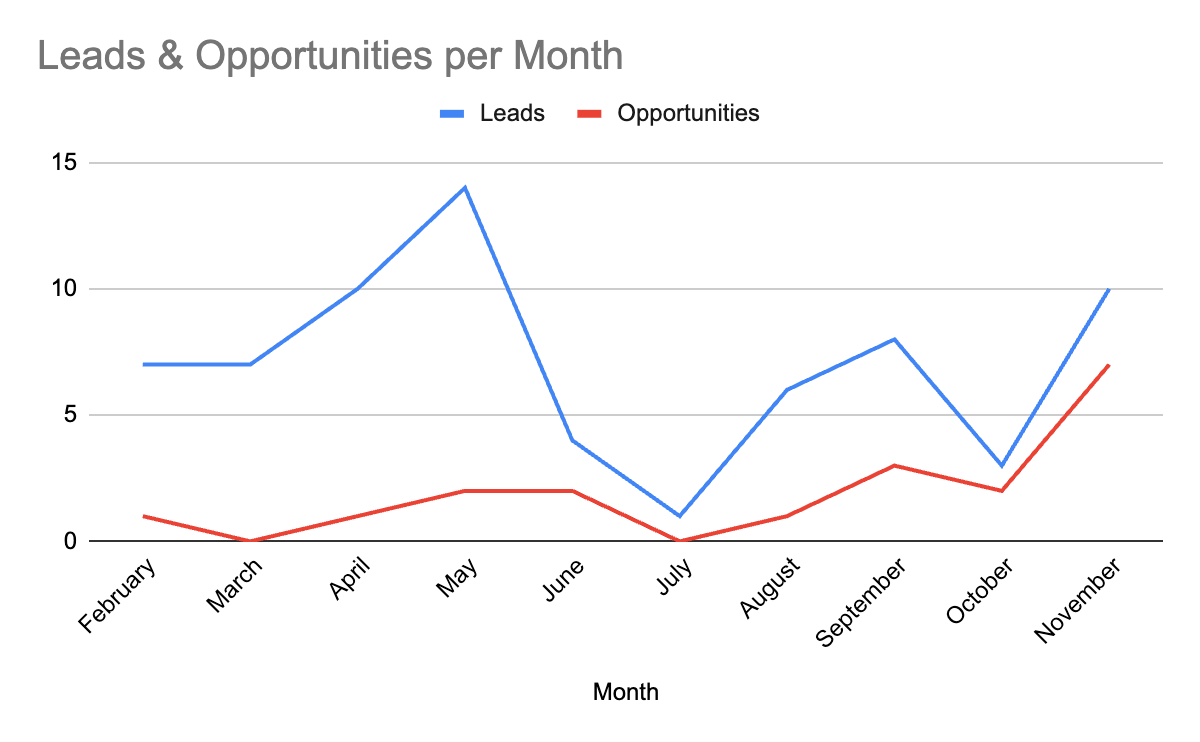
Interestingly, October was a quiet month, with only 3 inbounds – but they were high quality, with 2 of them marked as opportunities (i.e. they are qualified enough to buy) . November was then our strongest month ever, followed by December which also continued this trend. There is a clear difference between the results we were getting before and after publishing GPT articles.
The website went from seeing practically no inbounds mention AI search, to one in every two mention some type of AI tool. Also, since the company isn’t doing any other type of marketing it’s logical for us to assume that many of the leads come via AI search (and the CEO said that, on calls, many prospects mentioned finding the company through LLMs).
Client in niche financial services sector doubles the number of leads from AI referrals per month
This is a client that we just started working with recently, in a B2B financial services sector that is very niche. They were getting inbounds in different European geographies, and we were hired to grow the UK side of the business.
We already started with our SEO strategy, but as usual, we knew this would take a while.
In the meantime, we published our first month of GPT articles and saw visibility increase as we predicted.
What's so powerful about GPT articles is the fast time to value because they work more quickly than SEO.
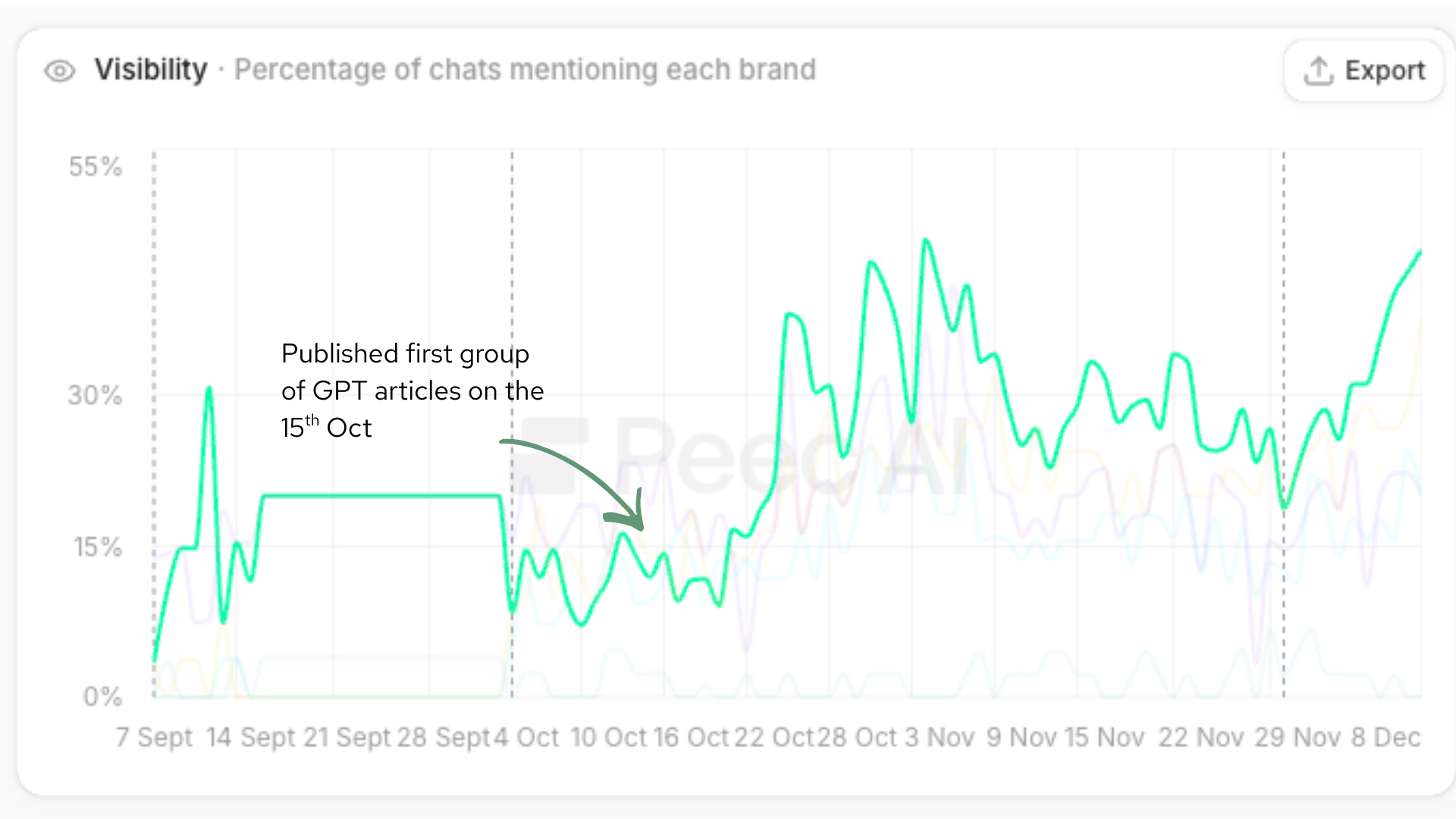
We typically see LLMs pick up these articles in a matter of days. For example, after publishing a GPT article on 28 November, we could already see it appearing in Peec.ai just four days later. Since starting to publish GPT articles, we’ve seen this happen time and time again.
Before we started publishing GPT articles, the client typically received 1 inbound via ChatGPT per month. We published the first group of GPT articles on the 15th October, and although October was a strong month, the number of leads via LLMs in November doubled.
Most interestingly, they were UK leads, so we could be even more confident it was from our content.
Client in the B2B financial services sector selling a service with no SEO visibility goes from 0 inbound opportunities to 4+ per month
Before working with this next client, we knew some of the uplift in AI-sourced leads we were seeing could also be due to other factors. The number of people using LLMs for search increased in 2025. And, our organic and SEO efforts likely contributed by strengthening topical authority and content depth, which makes a client's site more credible and easier for LLMs to surface during research.
But we became more confident that GPT articles were truly helping to bring in leads when our new client went from practically no inbound leads at all from any channel, to 4+ per month regularly.
When we started working with this client, they had very little SEO visibility (although their DA was good, at 25 based on SEMrush). We had yet to publish any SEO pieces but managed to quickly create and add 5 GPT articles to their site.
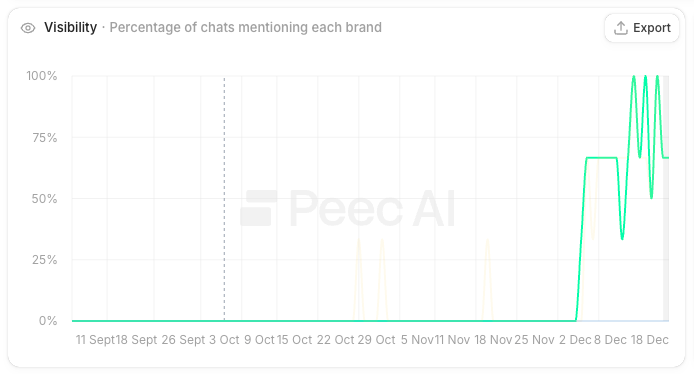
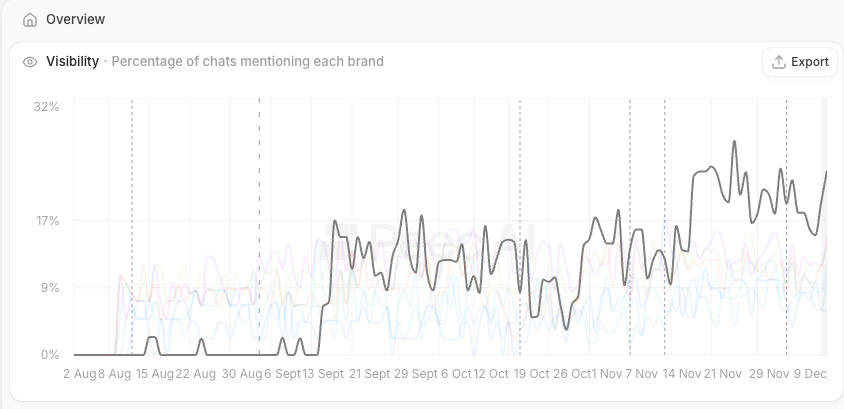
Just one week after publishing GPT articles, LLM visibility for this client shot up.
We hadn't changed any parameters in our LLM visibility tracking tool, Peec. Our client just started being mentioned by LLMs for key prompts from one day to another, as you can see in the graph below.
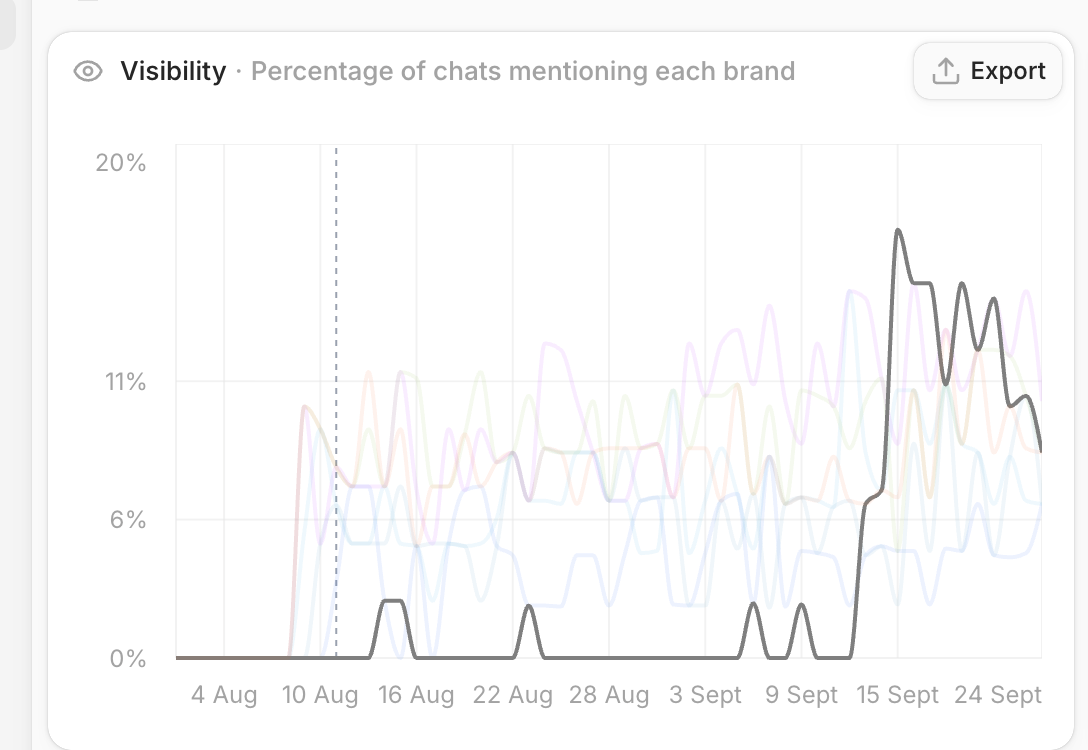
A couple of weeks after seeing this boost in LLM visibility, our client started to see an influx of inbound, high-quality conversions. The handful of inbound leads they got previously were typically low quality and rarely turned into opportunities. But the new leads that were coming in were turning into opportunities and deals from their target regions and audience.
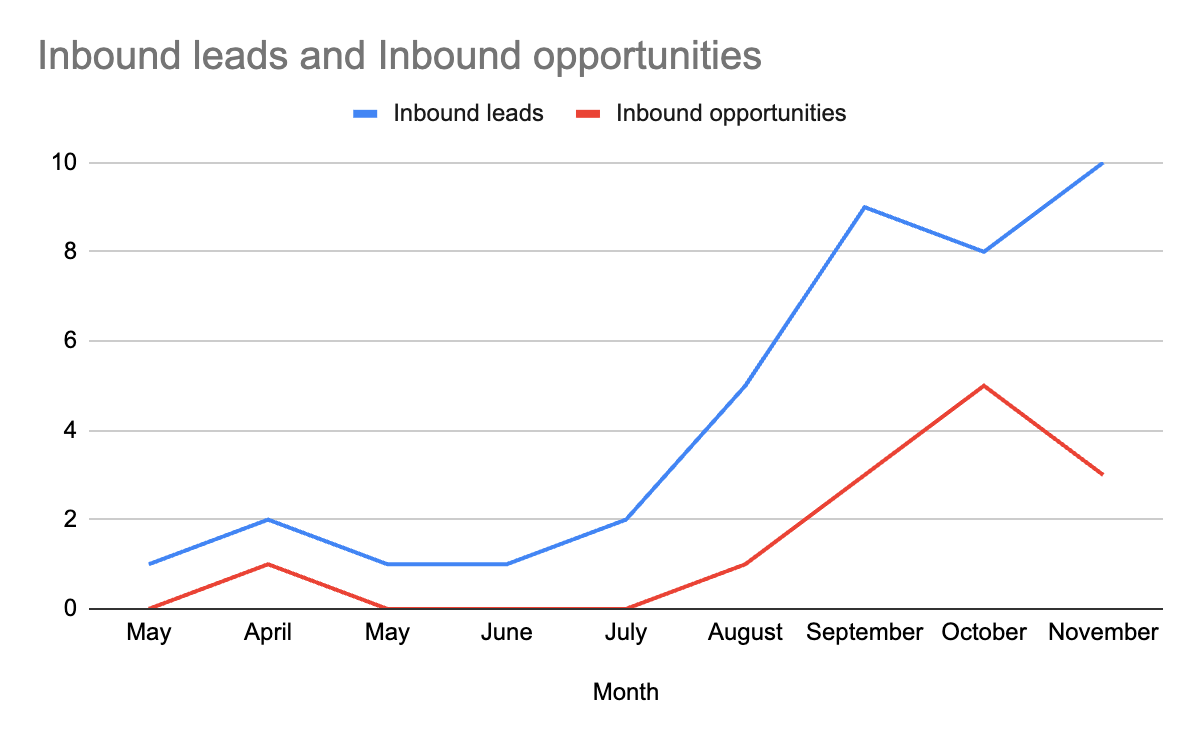
Again, it was easy to attribute these new leads to our work for two reasons:
- They were getting very few inbounds before. While we did publish our first SEO articles later on, it was far too soon for them to have an impact because they were not yet ranking. Likewise, there were no other obvious marketing efforts (i.e., no outbound, no PR), so we could safely assume it was down to our GPT articles.
- Prospects were regularly mentioning – in form submissions and sales discussions – that they found out about our client using AI tools. Before our GPT articles, this wasn’t happening.
Key takeaway: a big reason that GPT articles work is that they appear for more than just the prompt
You might find yourself with the following question: By creating a GPT article that targets a specific prompt like “Top payment gateways for SaaS”, do you also turn up for a related prompt, like, say, “Top embedded payment solutions for hospitality SaaS”?
From our case studies above, the answer is clearly yes. The fact that there is a correlation between AI visibility and an influx of inbounds clearly means that there is a “halo effect” of appearing for other prompts, even when targeting one prompt.
Ultimately, there are millions of variations of what someone may type into ChatGPT, Claude or Perplexity. People don’t search in neat, exact-match queries inside LLMs. They ask messy, context-heavy questions. It’s simply impossible to have a complete list of every phrase a buyer might use.
Fortunately, LLMs don’t seem to treat your article as a single keyword target. They treat it as a source of structured knowledge about a topic. If your content clearly explains the category, the criteria, the trade-offs, and who each solution is best for, the model can reuse that information when someone asks a neighbouring, similar question.
This is how one well-aimed GPT article can expand your footprint across a cluster of related prompts, even ones you didn’t explicitly write for, and maintain consistent visibility in LLMs, bringing in new leads.
If this weren’t the case, we wouldn’t see a correlation between inbound leads and LLM visibility in our data. If GPT articles only surfaced for one precise prompt, we would see isolated spikes, rather than a consistent uplift in both visibility and AI-sourced inbounds over time.
The biggest challenge is accurate tracking
As you’ll see in the case studies, the absolute numbers are relatively low, usually under 10 opportunities per month. This is because the sector we’re in prioritizes quality of leads over quantity (for most of our clients, one lead can range in value from $30k to $500k per year).
But it’s also because it’s a lot easier to see the impact of our work when the absolute numbers are lower. If you’re already getting a high number of form submissions, it may be harder to see an uplift in “AI” leads since they may be marked as coming via organic or direct. This is why for our clients that get 100+ leads per month, it’s been harder to see a correlation – even with “self-attribution” in place.
This leads us onto the biggest challenge we’ve found with growing AI visibility: accurate tracking. ChatGPT and LLM tools have fragmented the buyer journey even more. A buyer will use ChatGPT to do a bit of research, then search for your brand online, read some of your content and then reach out. The buyer journey is messy.
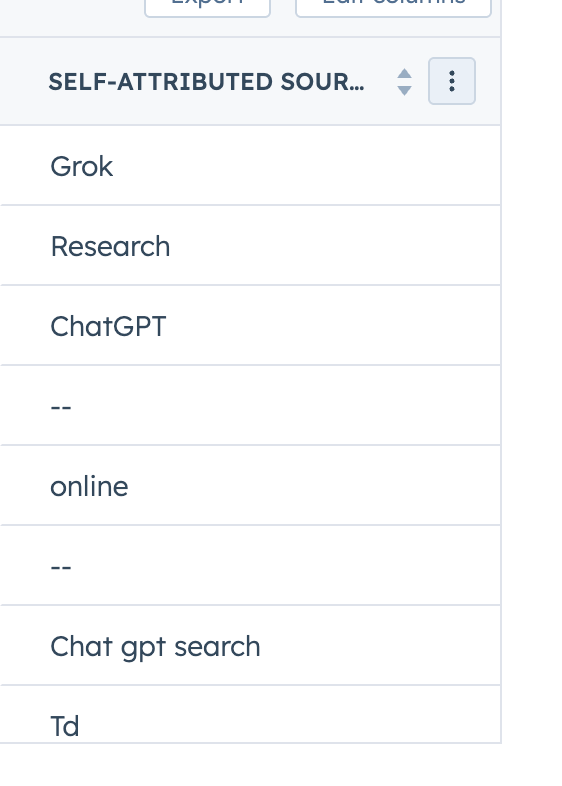
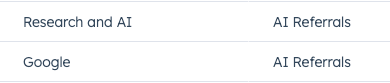
Although someone may have discovered you via ChatGPT, they may come up in your CRM as “Direct” or “Organic”. In the example below, you can see the first lead is marked as “Direct” even though it came via Grok. The second one just said “Research”, which doesn’t tell us much, and the third is marked as “Organic” when they came via ChatGPT. With such different levels of information, it can be hard to really understand where a lead comes from.
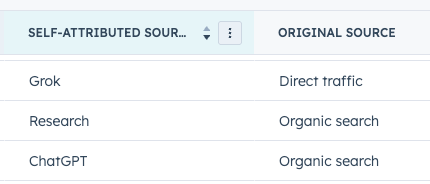
And it shows that only relying on referral sources or what HubSpot calls “AI Referrals” is just not accurate enough. We’ve also seen the opposite, where users who are marked by HubSpot as “AI referrals” say they came via Google.
What’s the best way to track LLM leads? Our answer is: Self-attribution. This involves asking the user “How did you hear about us?” by adding a specific field in your contact form. But in larger organisations, it can be hard to implement this because:
- The product team pushes back since it may affect conversion rates (we believe the information is valuable enough that it’s worth it)
- There are other priorities right now and they don’t want to change the form
The larger companies that already receive a high number of form submissions every month may struggle to implement this, which compounds the issue: as mentioned earlier, it’s harder to see an uplift in leads if they are coming from a variety of sources and if many other marketing activities are happening at the same time.
If you’re able to make the change in the contact form, we recommend implementing it as fast as possible. We believe the way our client Yapily does this is the best, using a drop down rather than a free form field:
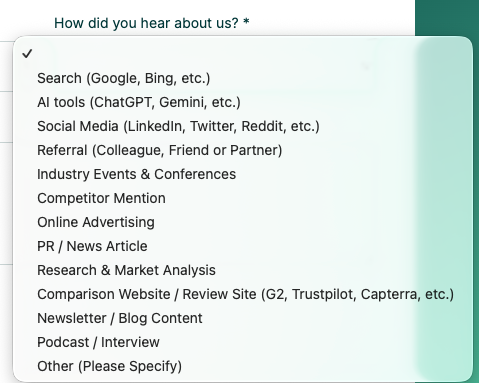
Although there are pros and cons of each method, users will often type in “online” or “searching” or “internet” into a free form which doesn’t tell you much. A drop down is more rigid but allows you to more easily categorize where people are coming from.
Tracking is the hardest part of improving LLM visibility. Referral data alone will always undercount impact because most buyers don’t click straight from an LLM to your site. That’s why we recommend combining three signals:
- Self-attribution on the form
- AI visibility tracking (using a tool like Peec, Profound, Scrunch)
- Evidence from sales notes
You’ll never get perfect attribution, but you can get directional clarity quickly and enough confidence to invest in what’s working.
What about the quality of the leads?
Depending on the study you read, different people will say different things about the quality of the leads that come from LLMs. Here’s what various marketing experts say:
- Gaetano DiNardi, who works in B2B SaaS, says that while the conversion rate from LLMs is higher, the deal size from organic is 10x the one from LLMs (33k vs 334k)
- Amsive says that conversion rate from LLMs is the same as those from organic
- For Ahrefs, they say ChatGPT converts a lot higher than organic
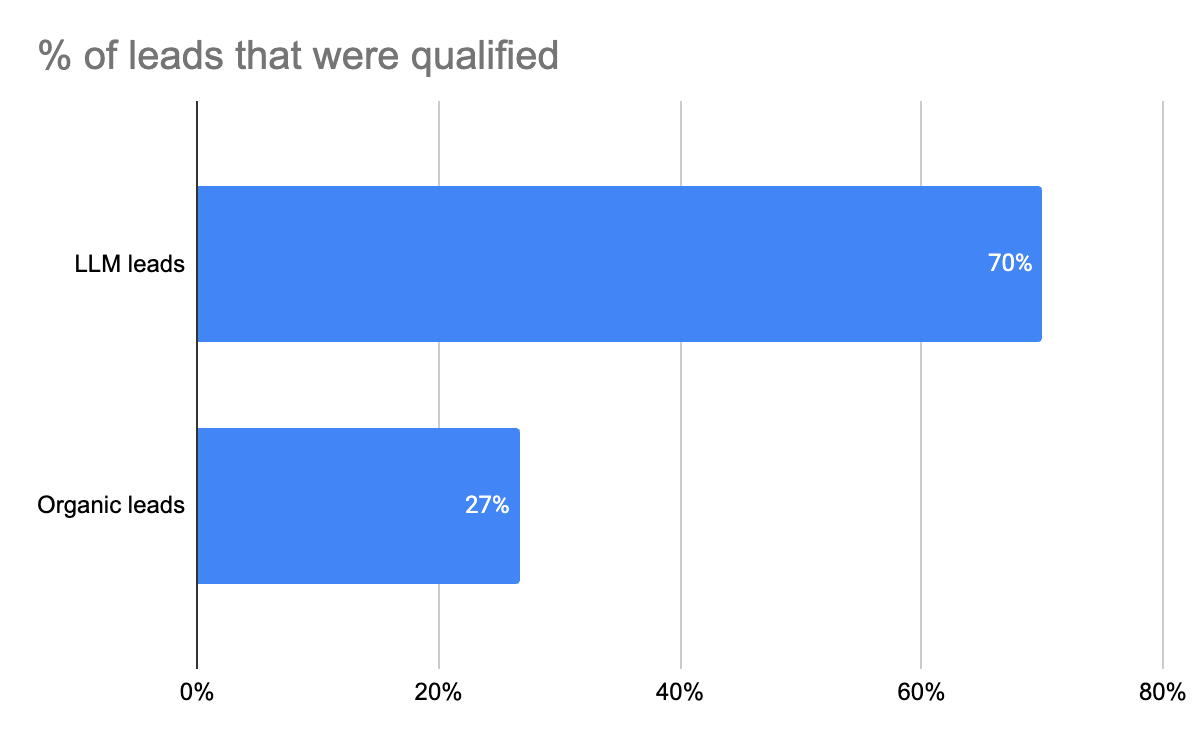
So what’s the answer? We believe it really depends on the niche you’re in, your business model, the pain points you solve and your product’s value proposition. In other words, it really varies from company to company. Across our clients, some have higher quality from LLM leads, and others from organic. It is true that across all clients, however, the total number of organic leads is a lot higher than LLMs, which also naturally affects the conversion rate.
Here’s the data from various clients (these are clients that get a meaningful amount of ChatGPT leads per month).
Qualified = Nurture, MQL, SQL or Converted Opportunity. I.e. anything that is not marked as “Unqualified”.
B2B payments company targeting payment companies:
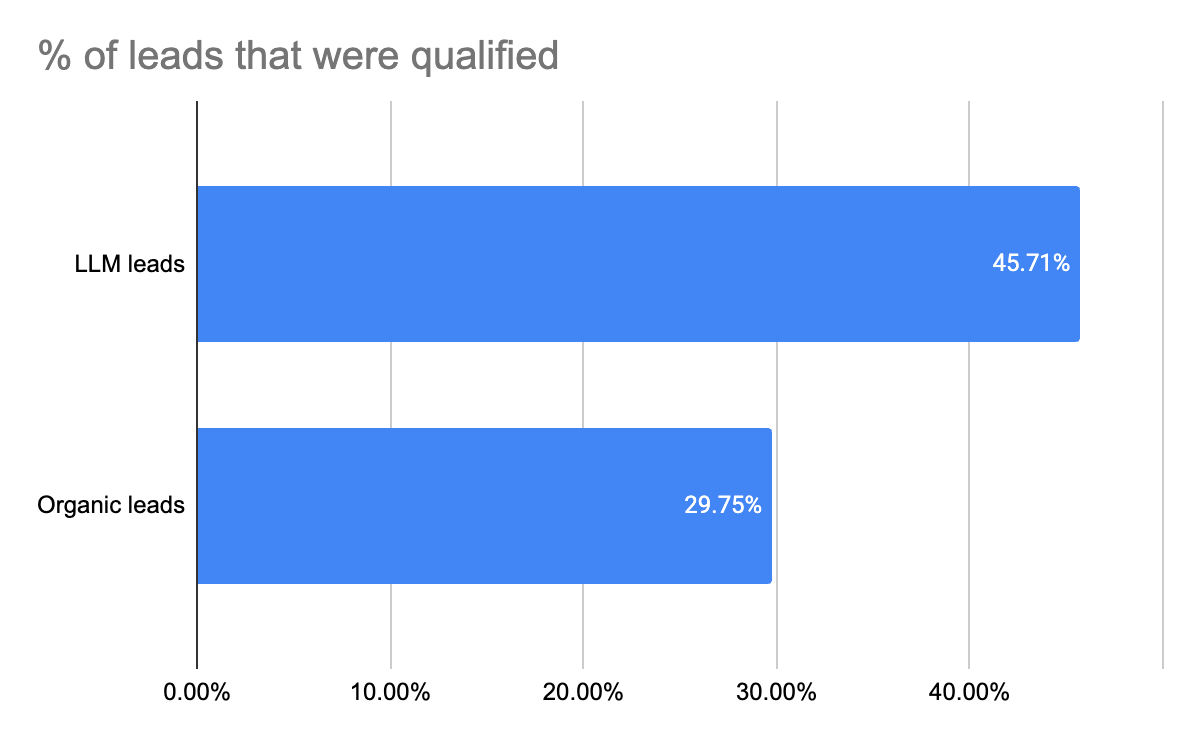
B2B payment company targeting merchants:
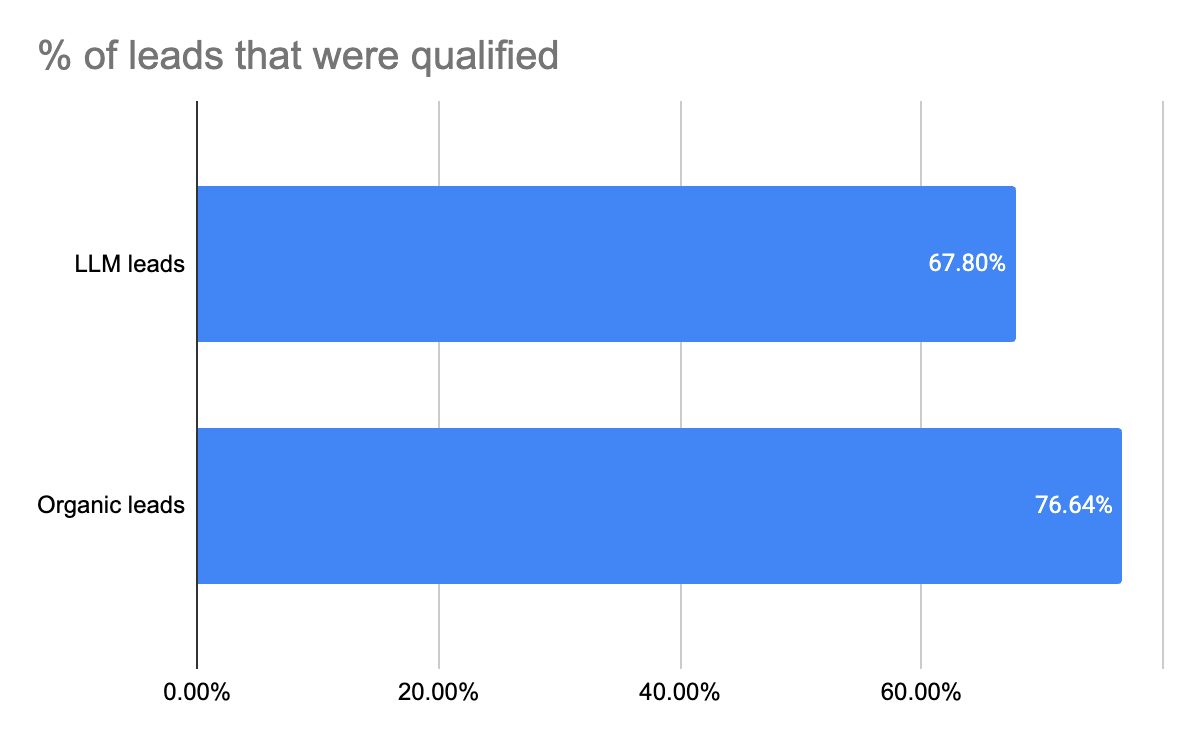
B2B payment company targeting software companies:
When do GPT articles not work so well?
There are some instances where the GPT framework hasn’t worked so well, and in the sake of transparency we think it’s important to share:
When you don’t publish many GPT articles / not consistently enough
It’s a lot harder to see the impact if you just publish 5 GPT articles and leave it at that. Or even if you publish 5, then 3 months later, you publish 15. If it’s inconsistent, it’s a lot harder to see the impact. We recommend publishing consistently to get the most out of GPT articles.
When they are not focused on the “money prompts”
If you target prompts that don’t require a brand recommendation, then you won’t see an uplift in inbound leads (and likely not visibility either). E.g. “What is a payment gateway?”. When someone types that into ChatGPT, it will never recommend a brand, it will simply answer the question.
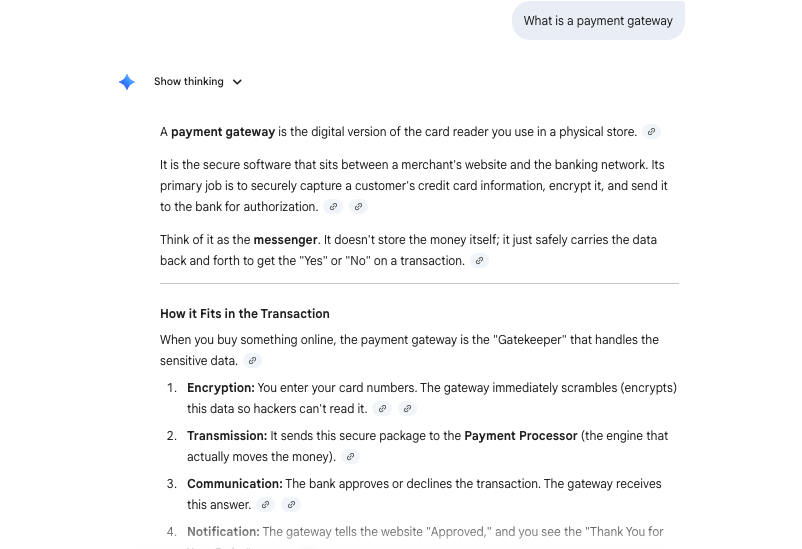
So there is not much point in targeting those prompts because not only will your brand not get mentioned, but you’re also not targeting someone who is close to converting.
Instead, go after the prompts where clearly the person wants a brand name. In this case, for example, “Top payment gateways”
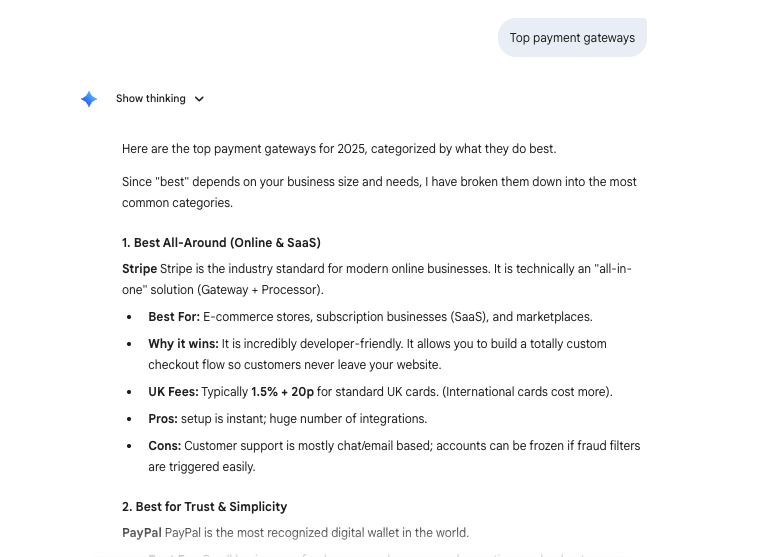
Just like with the SEO strategy we implement for our clients, start with the BOFU to make the most of your content.

Acquire more customers by improving your LLM visibility via GPT articles
LLM visibility is still the wild west, and it is possible that in a few years we are no longer able to get the results we can now.
However, it’s clear that there is an opportunity right now. Improving your visibility on LLMs can take a few days, which is unheard of in the world of SEO. There is an opportunity here to be a pioneer in your space and get visibility early, even if the results are still early days.
While everyone is debating whether AEO/GEO is SEO and whether you need to do digital PR or not, you can start immediately by creating short articles that target the “money prompts” you think your prospects are searching for on LLMs.
Based on our findings, this is a straightforward way to grow visibility and as we’ve now found, ultimately see an increase in inbound leads (that are qualified!).
Interested in investing more into AI search as a channel? Reach out to us to learn more about how we potentially help you.