Marketing in the payments industry has to do two things well:
- Build trust
- Educate the market.
After all, payments companies are asking customers to trust them with the lifeblood of what keeps companies going: money. At the same time, they’re often selling complicated products in markets with major variability. So content has to make the market easier to understand and the company easier to trust.
That sounds simple, but it’s difficult to do well.
Establishing trust and expertise takes more than a couple good articles. Thunes’ tracking tools show some accounts have more than 200 touchpoints before a sales conversation even starts.
That’s a lot of content that has to position your company as a trustworthy expert.
Yet Mathieu Limous, CMO at Thunes, notes that marketing is often treated as secondary until the company needs to raise funds or enter a new market.
“Having marketing always at the table is really important, and unfortunately it's consistently not happening.”
In this case study, we’ll look at how Thunes uses content to build trust through thought leadership and original research, using AI as a research tool without replacing people. We’ll also talk about how Thunes measures the returns on its content when sales cycles can span months or years.
Note: Every couple of months we release a new case study on how a financial services or fintech company does content. Join our newsletter to make sure you get each issue in your inbox!
Thunes’ backstory
Thunes is a Singapore-headquartered global cross-border payments company that calls itself “The Smart Superhighway to move money around the world”.
It helps businesses solve the “last mile” problem in global payments, because the right payment method for paying a gig worker or sending a remittance varies widely by country.
That’s where Thunes’ Direct Global Network comes in. It lets businesses move money internationally through mobile wallets, bank accounts, cards, and stablecoin wallets. Thunes says it’s operated across 140 countries and 90 currencies since 2016, with clients including Uber, Remitly, and Payoneer.
The scale of the Thunes network is massive. It connects directly to more than 12 billion mobile wallets, stablecoin wallets, and bank accounts worldwide, as well as 15 billion cards through more than 220 payment methods. It also recently raised a $150M Series D, the largest funding round in its history, to support expansion in the U.S., the Middle East, and Latin America.
That scale creates an educational challenge. Thunes is explaining complex global payments problems that look different in every market.
Why Thunes focuses on thought leadership before bottom-of-funnel content
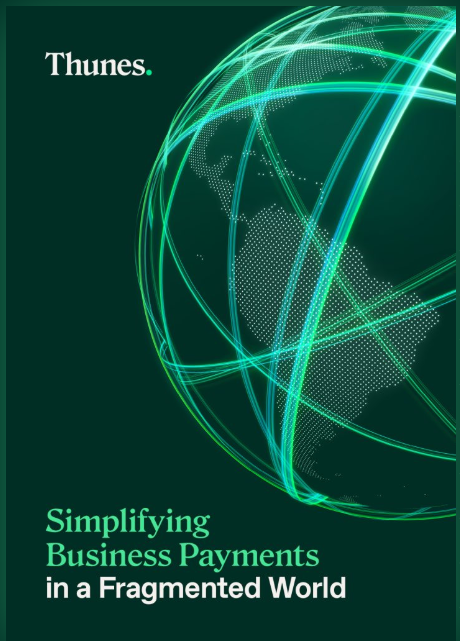
Most of Thunes’ public content work goes into thought leadership such as the ebook Simplifying Business Payments in a Fragmented World. Their goal is to simplify complicated payments topics and help buyers understand market opportunities they may be missing.
After reading their broader thought leadership content, Mathieu says readers can “double-click” into more specialized information. For example, after the ebook, they might read a shorter blog entry explaining how to make payments less of a headache. Then, they click further into more bottom-of-funnel (BOFU) content based on their role, region, vertical, or pain point, such as an article on global contractor payments.
Mathieu shares that the BOFU content they create is usually “very specific to specific accounts” and “specific pain points,” so it functions more like “sales enablement at the last mile.”
This differs slightly from our usual BOFU-first approach at Mint. Usually, we recommend starting with BOFU because it captures buyers who already know they have a problem and are actively comparing solutions.
But Thunes’ strategy makes sense because their market often needs education before buyers can even recognize the problem.
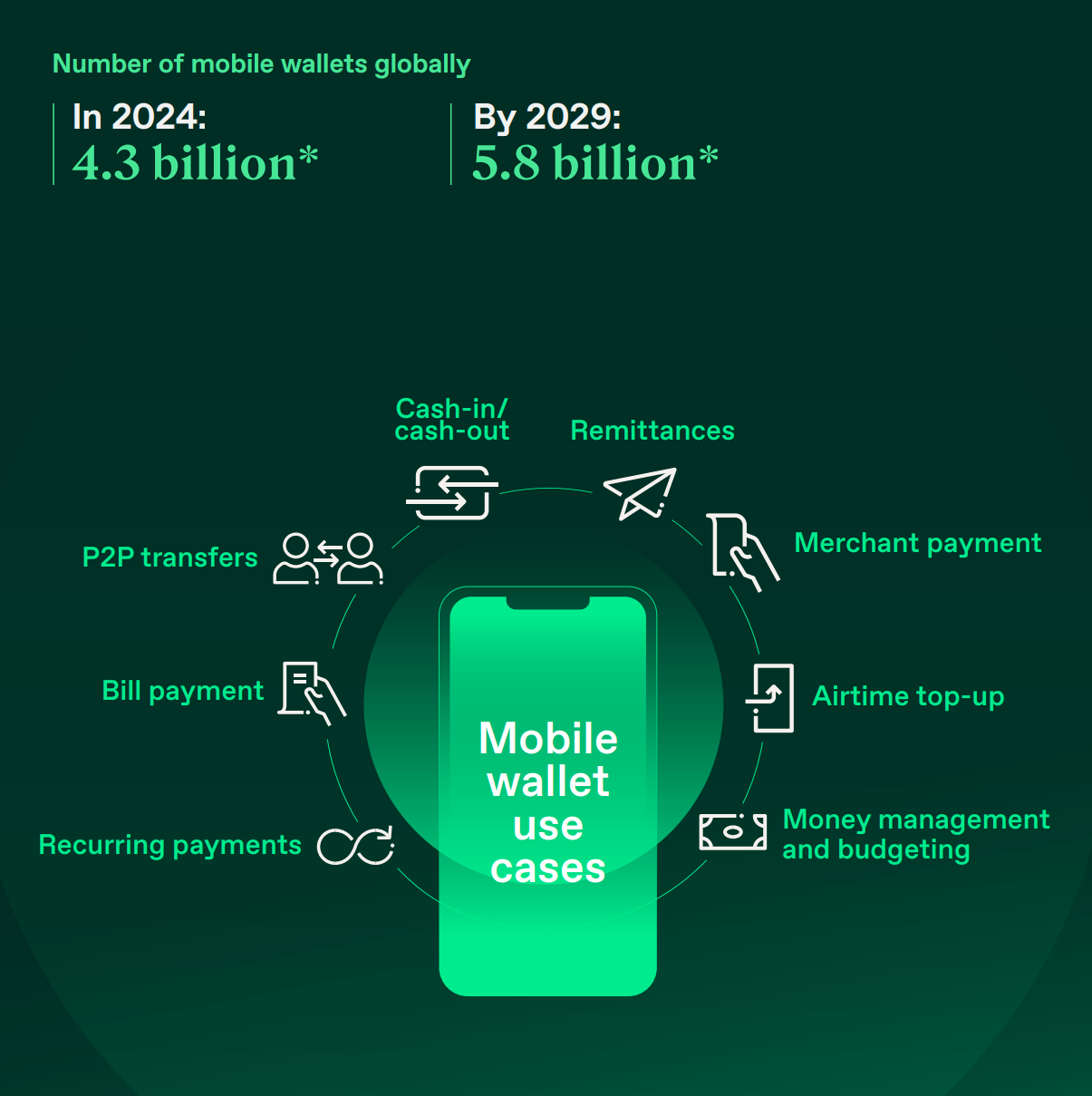
Mathieu gives mobile wallets as an example: Many companies in the U.S. or Europe may default to thinking about international payments through bank transfers, because that’s what feels familiar in their own markets. “But in reality there are more people with a mobile wallet than with a card in the world.”
So if a business only thinks in terms of bank accounts or cards, it may miss a major global payments opportunity.
That’s why Thunes creates content like mobile wallet reports, which open the market’s eyes to mobile wallet use cases. It also gives Thunes a large cornerstone asset they can break down into smaller pieces for different audiences.
How the team turns original research into unexpected content angles
Thunes doesn’t always know every content angle before it creates the cornerstone asset. With a report like the Thunes Cross-Border Payments Interoperability Index, the team started with a known problem: cross-border payments often stop at borders. Each country has its own payment systems that don’t talk to each other.
Thunes wanted to measure how easy or difficult it is to access overseas payment systems from different countries. So they worked with Juniper Research to create a market research project ranking 50 countries based on criteria like how easy it is to send money internationally.
The team knew there was a lack of interoperability, but they didn’t know exactly what the data would reveal. Once the research was complete, Mathieu’s team identified several content streams from the findings.
“And we have crazy findings! Like even though Europe is at the forefront of stablecoin regulation, more than 60% of people surveyed have never heard of stablecoin. While in countries like Nigeria, where stablecoin is in the grey area of the regulation, everybody’s using it.”
Because payments experts are already surrounded by generic commentary on the same trends, findings like these from original research give Thunes something more interesting to say than “stablecoins are growing.” That helps people remember the brand and come back for more touchpoints.
Internally, their original research also gives the team new areas to explore, and strong hooks for content and sales conversations.
Using AI to create great content that still educates and builds trust
Mathieu says that content is about building trust, and you’ll lose value if you’re using AI to write LinkedIn posts that sound like everyone else.
That’s why AI doesn’t write Thunes’ reports and other keystone content. But it does have its place in their workflow, with the underlying philosophy Mathieu shares: “Human is the answer”.
Here’s a high-level workflow for content with Thunes, and how AI fits in.
1. Choose a topic that matters to clients with the help of tools
To find topics that matter to Thunes’ audiences in the upcoming weeks, Thunes plugs its “AI bots” into Ahrefs for topics based on keywords, and Gong recordings to see what customers are asking. It helps surface issues that are important more quickly, but human judgement still matters. Mathieu’s team asks questions like:
- Is the topic aligned with our brand?
- Is it serving my objectives of building trust and love for the brand?
- Is it answering the actual points that the customers are raising, or is it just anecdotal?
2. Create a cornerstone asset and see what emerges
This could be a report, research study, or other long-form content asset. AI isn’t used for writing, but it helps analyze data more quickly.
The team doesn’t force the research into pre-decided angles. They look at what emerges and decide what content and formats make sense based on their findings.
3. Split the findings into audience-specific content packages
Thunes turns their results into content streams for different audiences and channels (see example below). AI helps “slice and dice” and extract content for different formats, like social posts and infographics for shorter takeaways.
The team builds relationships with reporters serving different interest areas.
For example, the team packages stablecoin findings into content for press with audiences interested in digital assets. Gig economy findings become content around freelancer payouts.
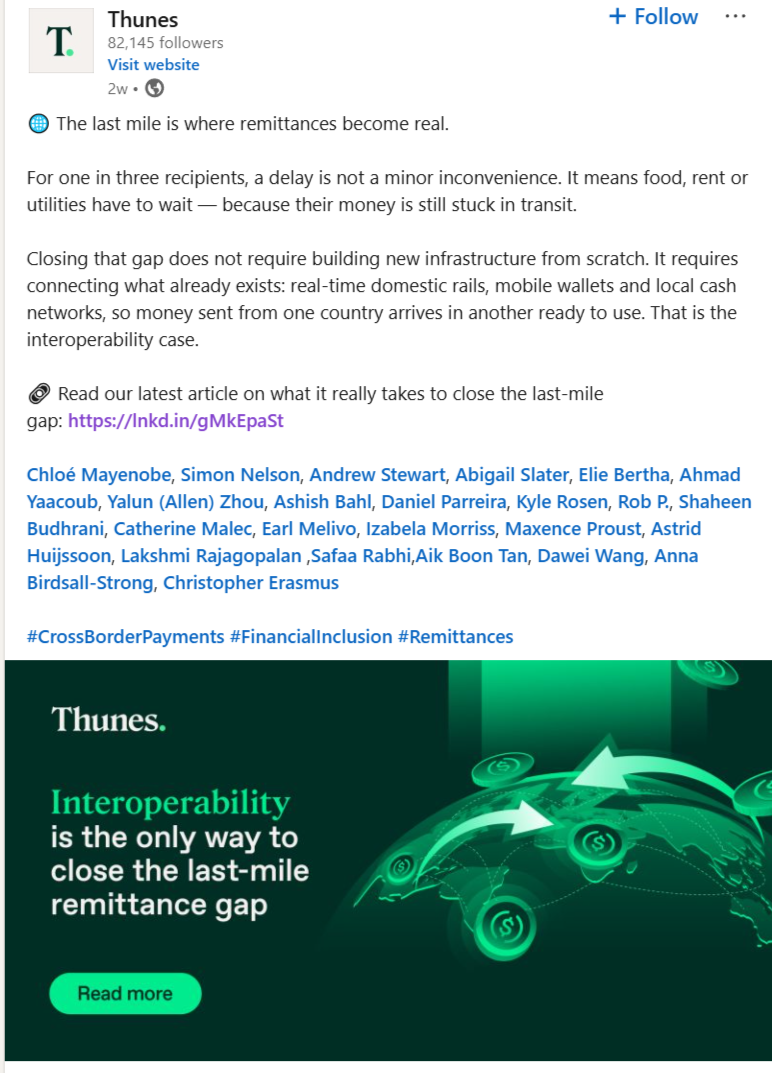
Their Interoperability report findings around the hardship of expecting payments were packaged into content for press that focuses on financial inclusion. The team wrote a blog post on the topic, and repurposed the blog further for LinkedIn (pictured below).
How Thunes measures content when sales cycles are 12 months to 2 years long
Mathieu says “the dream” would be understanding the exact revenue impact of each piece of content. But in enterprise B2B payments, where sales cycles can last anywhere from 12 months to two years, direct attribution isn’t always realistic.
Instead, Thunes focuses on content consumption:
- Is the content being consumed?
- Is it being consumed by the right people?
- Are those people working at the accounts Thunes wants to win?
Because Thunes is highly account-focused, the team knows which companies it wants to reach. It then uses content across touchpoints like targeted advertising and webinars.
Some accounts can have 200+ touchpoints before a sales conversation even starts. That makes it almost impossible to credit one blog post, webinar, or report as “the” thing that drove the deal.
To track this, Thunes uses tools like Dreamdata and 6sense to understand how target accounts are engaging with content and other marketing touchpoints.
Any way you look at it, making a business case for content can be difficult. At Mint, we have a process in place that helps us track and attribute content to conversions, which you can read about: How to Make a Business Case for Content Marketing (With Examples).
Using content to build (and re-build) trust if it’s been lost
For Mathieu, trust is the most important brand attribute a fintech can have because customers are trusting you with their money. “Whether it's a million dollars or one cent, it's value for somebody; it's important.”
He says trust can’t just live in a content campaign. It has to show up everywhere like:
- how customer-facing teams behave
- how sales teams speak to prospects
- how the company communicates when something goes wrong
Mathieu saw this first-hand at Flutterwave, where the company had been incorrectly accused of money laundering and fraud in Kenya before he joined. Flutterwave denied wrongdoing, and the case was later closed after Kenya’s Asset Recovery Agency withdrew its claims. But by then, the company still had a trust problem to solve.
In situations like that, the instinct can be to stay quiet or issue vague legal statements. But in his view, that often makes things worse. When a company doesn’t clearly explain what happened, people fill in the blanks themselves. And their assumptions can be worse than the reality.
So the Flutterwave team decided to try a more proactive approach. They:
- Worked on taking control of the narrative by being transparent about what happened, explaining the details
- Shared Flutterwave’s side of the story in front of the right media
- Rebuilt trust by associating Flutterwave with larger, established brands through real partnerships and announcements, including work with names like Microsoft and IATA
The strategy worked. Over the next six to nine months, Mathieu says the team started hearing a different response from the market. Existing customers, older prospects, lost opportunities from a couple years ago, and investors were saying they were hearing about Flutterwave in a more positive light.
It wasn’t a single content win, but it was a sign that the company’s proactive communication and credible brand associations were helping shift the narrative.
What content is Mathieu proudest of?
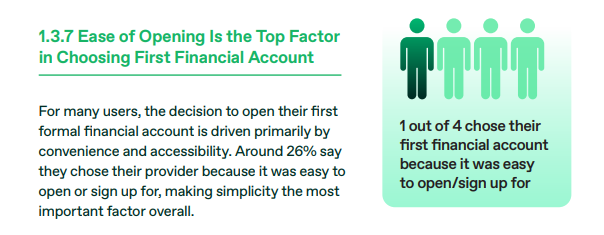
Mathieu is proud of the Thunes Cross-Border Payments Interoperability Index. While it was full of insights they used in content for months, it was also helpful because it went beyond providing value to their audience. The research created useful insights internally, so everyone benefitted.
Thunes’ content: using thought leadership to build trust and educate the market
Thunes’ content strategy works because it starts with the two things cross-border payments companies need: trust and education.
That gives the team more than “content for content’s sake.” It creates repeated, useful touchpoints with the accounts Thunes wants to reach, while helping buyers understand the market and trust Thunes’ expertise over time.
For fintechs, the lesson is that thought leadership works best when it is specific, useful, and grounded in real insight. Done well, it can educate the market, support trust, and give buyers a reason to keep paying attention long before they are ready to speak to sales.
Huge thanks to Mathieu Limousi for sharing how Thunes thinks about content, trust, and marketing in payments.