Here’s a piece of event marketing advice that sounded a little strange to me at first:
Design your conference booth to feel more like a coffee shop than a trade show booth.
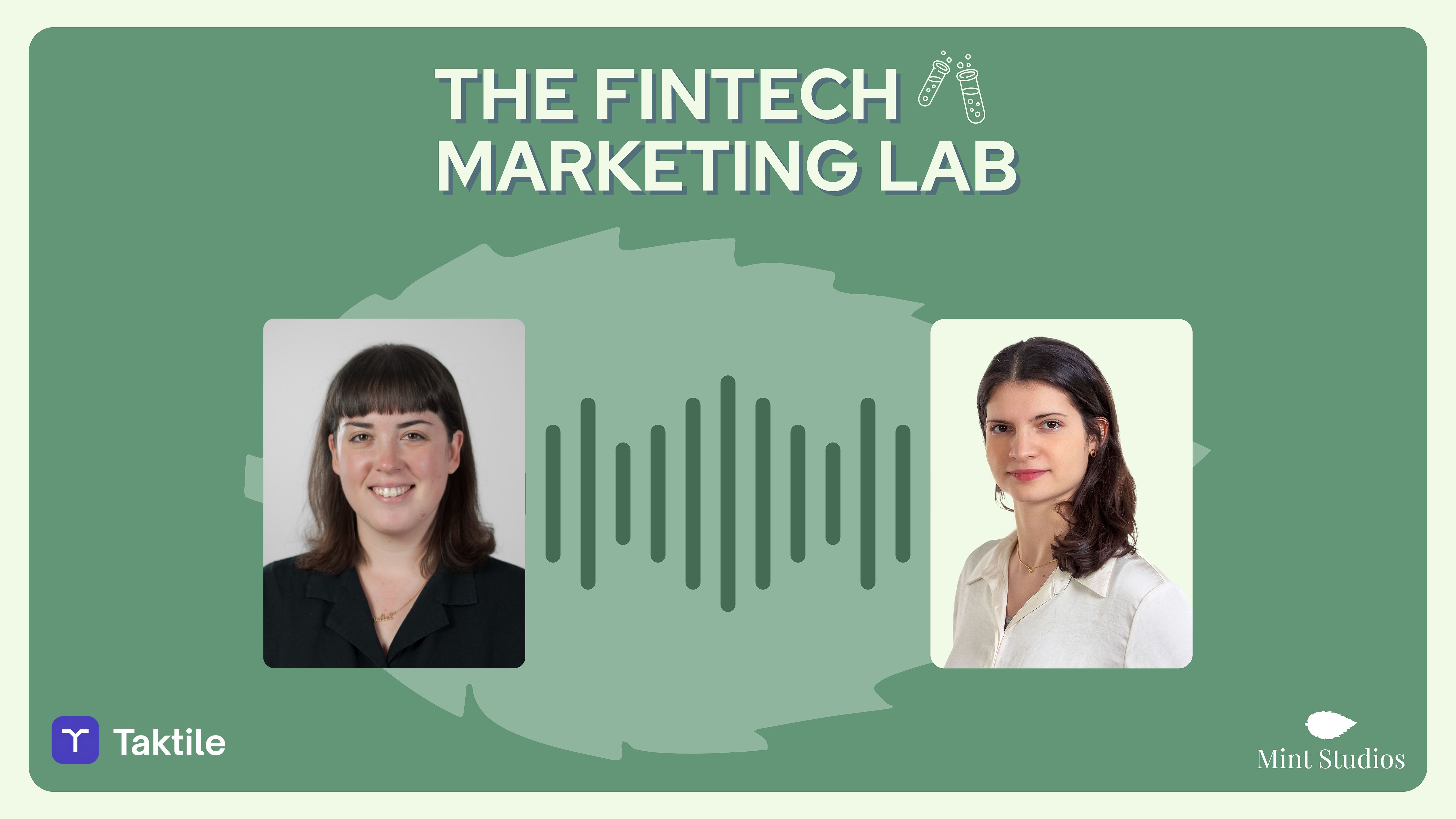
But after speaking with Rachel Verrill, Field Marketing Manager at Taktile, it makes complete sense.
Rachel’s background is not the typical field marketing path. Before fintech, she spent years at Starbucks, working her way up from barista to running a reserve bar. She then moved into sales as a PDR at Unit before moving into field marketing.
And you can really see where that hospitality background shows.
Rachel doesn’t think about booths as a place where people quickly scan a banner, grab some swag, and walk away. She thinks about them as spaces where people should want to sit down, stay for 30 minutes to an hour, and have a proper conversation.
That’s especially important in fintech, where products are often complex, sales cycles are long, and buying decisions involve multiple stakeholders.
Taktile is a risk decisioning platform for fintech companies, helping risk teams build automated decision flows for areas like onboarding, credit, fraud, AML, and compliance. The company raised a $54 million Series B and works with companies like Mercury and Zilch.
So in this episode of The Fintech Marketing Lab, I wanted to get very specific with Rachel about what actually makes fintech events work.
Not in a vague “make your booth more engaging” kind of way.
But in a practical, how-do-you-design-the-space, who-do-you-send, what-do-you-measure, and how-do-you-turn-this-into-pipeline kind of way.
Why fintech booths need to be built for conversations, not traffic
Many companies still treat conference booths as visibility plays.
They buy the space, set up a backdrop, bring a few team members, scan badges, hand out swag, and hope something good happens.
But Rachel's view is much sharper than that.
For her, the point of a booth is not just to get people to walk past. It's to create the right environment for the right people to stay.
That matters because a fintech buyer usually needs more than a quick pitch.
If you're selling into risk, compliance, payments, lending, banking, infrastructure, or anything remotely enterprise, the conversation is usually not simple. Buyers have questions. They want to understand the product. They may need to bring in a technical person. They may want to see a demo. They may need to speak with an executive.
So the booth has to support that.
Rachel gave a really useful example. A prospect might start with a 15-minute meeting somewhere on the conference floor. But if the booth is designed well, that person can be brought back to the booth, sit down, watch a demo, and spend 30 minutes to an hour going deeper into the product.
That is the real opportunity. Not more traffic, but better conversations.
Make your booth feel like a place buyers want to stay
One of Rachel's biggest points was that booths should be genuinely comfortable. And I know that sounds obvious, but when you walk around a lot of expo halls, you realize it's not.
So many booths have uncomfortable barstools, harsh lighting, loud surroundings, crowded layouts, and backdrops covered in way too much copy.
Rachel's advice was very simple: make it feel more like a coffee shop.
That could mean adding softer lighting, better seating, a rug, a plant, a coffee machine, or a quieter area where people feel slightly removed from the chaos of the expo floor.
I loved her point about rugs in particular. You see rugs in recording studios because they muffle sound. They make the space feel warmer. They reduce echo. They even stop that constant clicking sound when people are walking around in heels.
It is such a small thing, but it changes how the booth feels.
And that's really the bigger lesson here. Comfort is not just a nice-to-have. In B2B fintech, comfort can be a conversion lever.
If someone feels rushed, awkward, or overstimulated, they probably will not stay long enough for a meaningful conversation.
But if they feel comfortable, they might.
Design the booth around your sales motion
One of the most interesting parts of the conversation was how Rachel connects booth design to the full sales journey.
She's not just thinking, "Does this look good?" She's thinking, "Can this space help us move a deal forward?"
That changes how you design everything.
For example, if you’re running demos at the booth, you need proper demo stations. You need strong Wi-Fi. You need charging ports. You need seating that works for both the prospect and the person giving the demo.
You also need to involve the right people before you design the booth.
Rachel talks to solutions engineers because they often run demos all day. She asks them what they need before the booth is built. That might sound like a small operational detail, but it’s exactly the kind of thing that makes the booth more useful in practice.
And in fintech, I think this is especially important.
You cannot always rely on a salesperson to answer every technical question. Sometimes the buyer needs to speak to someone who can go deeper into the product, the implementation, the risk controls, the workflow, or the technical side of things.
That's why Rachel sees solutions engineers as anchor people at the booth.
They add credibility. They make the conversation more useful. And they help serious buyers move from interest to actual understanding.
Bring the right people, especially your BDRs
One of Rachel's strongest opinions is that BDRs and SDRs are some of the most underrated people you can bring to an event. I really liked this because it flips how a lot of teams think about conferences.
Often, companies prioritize senior salespeople, executives, and maybe a few marketers. But Rachel sees BDRs as one of the biggest drivers of event success.
And it makes sense. BDRs are the people booking meetings before the event. They’re prepping executives, managing schedules, making introductions, and helping turn the event from a busy few days into an actual pipeline motion.
Rachel even uses a buddy system where BDRs are paired with AEs, sales leaders, executives, or solutions engineers. That way, the senior people are not walking into meetings cold. They know who they are meeting, what matters, and the goal of the conversation.
That's where events become much more strategic. Instead of everyone just showing up and hoping to meet the right people, the team is coordinated around the right accounts, the right conversations, and the right follow-up.
For B2B fintech marketers, this is such a good reminder that event marketing is not separate from sales. It is sales enablement. It is pipeline generation. It is deal acceleration.
Or at least, it should be.
Measure event success by pipeline, not badge scans
This was probably the biggest theme of the whole episode. Rachel does not care that much about foot traffic. She also does not care that much about scanning every badge.
And I completely agree with her. Scanning the badge of someone who walked up, grabbed a t-shirt, and left does not tell you very much. It might give you a name in your CRM, but it doesn't mean that person is a qualified buyer. It doesn't mean they had a real conversation and are looking for a solution.
It is a bit like gating a report and assuming every download is a strong buying signal. Sometimes people just wanted the report.
And at events, sometimes people just wanted the swag.
Rachel's view is that the names that matter are the people who actually sat down with your team, had a proper conversation, booked a demo, met with an AE, spoke with a solutions engineer, or moved an existing deal forward.
That's what marketers should be tracking.
So instead of asking, "How many people came to the booth?"
A better question is:
- How many qualified meetings did we have?
- How many demos did we run?
- How many open opportunities did we accelerate?
- How many executive conversations did we create?
- How much pipeline did this influence or generate?
That is a much more useful way to evaluate whether the event actually worked.
Use side events to deepen relationships and accelerate deals
We also talked a lot about side events, and Rachel had some very practical advice here too.
First, venue selection matters. If your event is connected to a conference, make it easy for people to attend. Choose somewhere close to the expo hall or conference venue. If you can visit the space in person beforehand, do it.
Second, do not overtheme it. You can make the event feel connected to the conference or the city, but it doesn’t need to become a complicated production.
Rachel gave the example of Taktile hosting a side event around FinTech NerdCon. The conference had a strong eight-bit video game style, so they called their event NerdCon Night Shift and used that visual language in the branding. It was specific, memorable, and clearly connected to the conference without needing an official partnership.
The third piece of advice was probably my favorite: Do not put a panel at a happy hour.
I know this sounds like it should work. You have people in the room, you want thought leadership, so why not add a panel?
But Rachel’s point is that after a full day of sessions, most people really don’t want to sit through another talk. They want to relax, connect, have good food, and speak to people naturally.
Unless you have the proper setup, with a stage, AV, lighting, and a room that actually supports it, the panel can easily become awkward. People talk over it. The energy drops. And suddenly the event feels more like an obligation than a good experience.
For fintech marketers, this is a good reminder that the format should match the moment.
Like a dinner can be intimate, a happy hour should be social, a VIP sporting event should feel like a genuinely great experience.
And a panel should only happen when people are actually in the right environment to listen.
Small details shape how buyers perceive your brand
One of the things I appreciated most about Rachel's approach is how much she cares about the little details.
Name tags. Clean spaces. Comfortable seating. Good lighting. Team t-shirts. Trash cans under demo tables. Charging ports. Coffee. Snacks. Color-coded name tags for internal targeting.
These things might sound small, but they shape the whole experience.
Rachel said she treats events as if she were inviting people into her home. If there's an empty cup, pick it up. If the space feels messy, fix it. If guests need clear name tags, make sure they have them. If the team needs to identify priority prospects in the room, use color-coded name tags so the right people know who to focus on.
I think this matters more than we sometimes admit because people use your event as a proxy for your company.
If the event is thoughtful, polished, and useful, they assume the company is thoughtful, polished, and useful.
If the event feels chaotic, generic, or careless, they may wonder if the product experience is the same.
That's why event marketing carries so much weight in fintech. Especially when trust, compliance, risk, and credibility matter.
The booth is not just a booth. The side event is not just a side event.
It is a live expression of your brand.
Key takeaways
- The best fintech conference booths are designed for conversations, not just visibility.
- Comfort matters because buyers are more likely to stay, ask questions, and go deeper when the space feels calm and welcoming.
- Your booth should support your sales motion, including BDR intros, AE conversations, solutions demos, and executive meetings.
- BDRs and SDRs can be some of the most valuable people to bring to an event because they help create structure, momentum, and pipeline.
- Badge scans are not the same as buying intent. Track qualified meetings, demos, deal progression, and pipeline instead.
- Side events work best when they are convenient, enjoyable, and designed around how people actually want to spend their time after a long conference day.
- Small hospitality details can have a big impact on how buyers experience your brand.
Show notes
[00:00] Introducing Rachel Verrill - Field marketing manager
[02:37] All about booths and events
[10:18] Vendors And Agencies
[17:27] Choosing A Booth Theme
[25:43] Color Coding VIP Targets
[31:28] Side Events That Work
[39:37] Hosting Sporting Suite Events
[42:31] Events As Product Signal
[43:13] Closing Thoughts And Gratitude
Show links
- Taktile on LinkedIn
- Rachel Verrill on LinkedIn
- Araminta Robertson on LinkedIn
- Mint Studios on LinkedIn
- Mint Studios Website
- Mint Studios Newsletter
About Araminta Robertson
Araminta is the Founder and Managing Director at Mint Studios, an agency that turns content into measurable pipeline for fintech and financial services companies.