Most marketing teams are built once and then slowly inherited. A hire gets made during a growth push, a function gets added when someone complains it's missing, and before long, you have a team that reflects the company's past rather than its current needs.
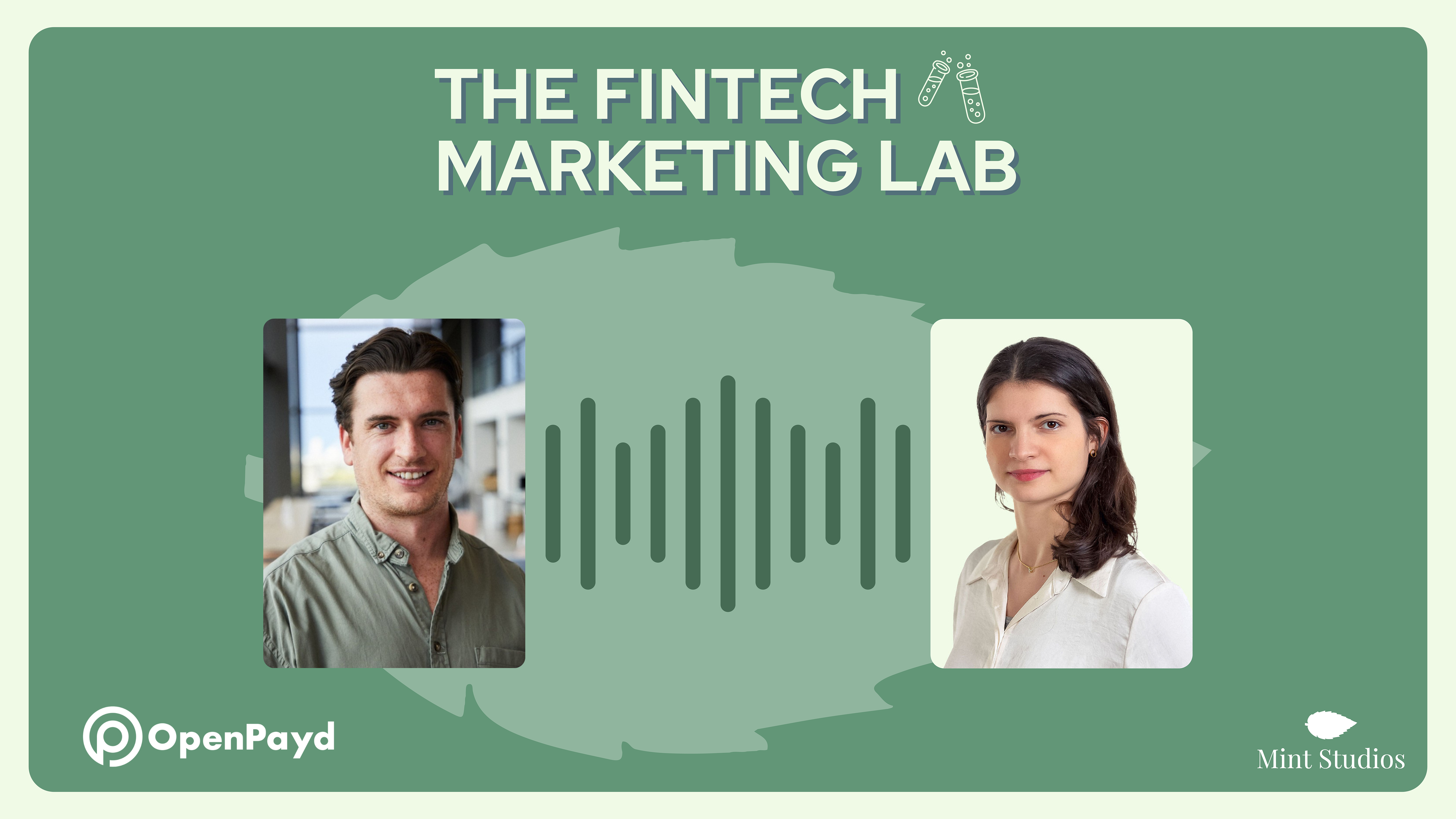
Michael Treacy has spent over five years at OpenPayd doing the opposite. As the company scaled from a freshly launched banking-as-a-service platform to one serving more than 1,200 enterprise clients, Michael rebuilt and repositioned the marketing function at almost every stage of that growth. His title changed three times. The team's structure changed more than that.
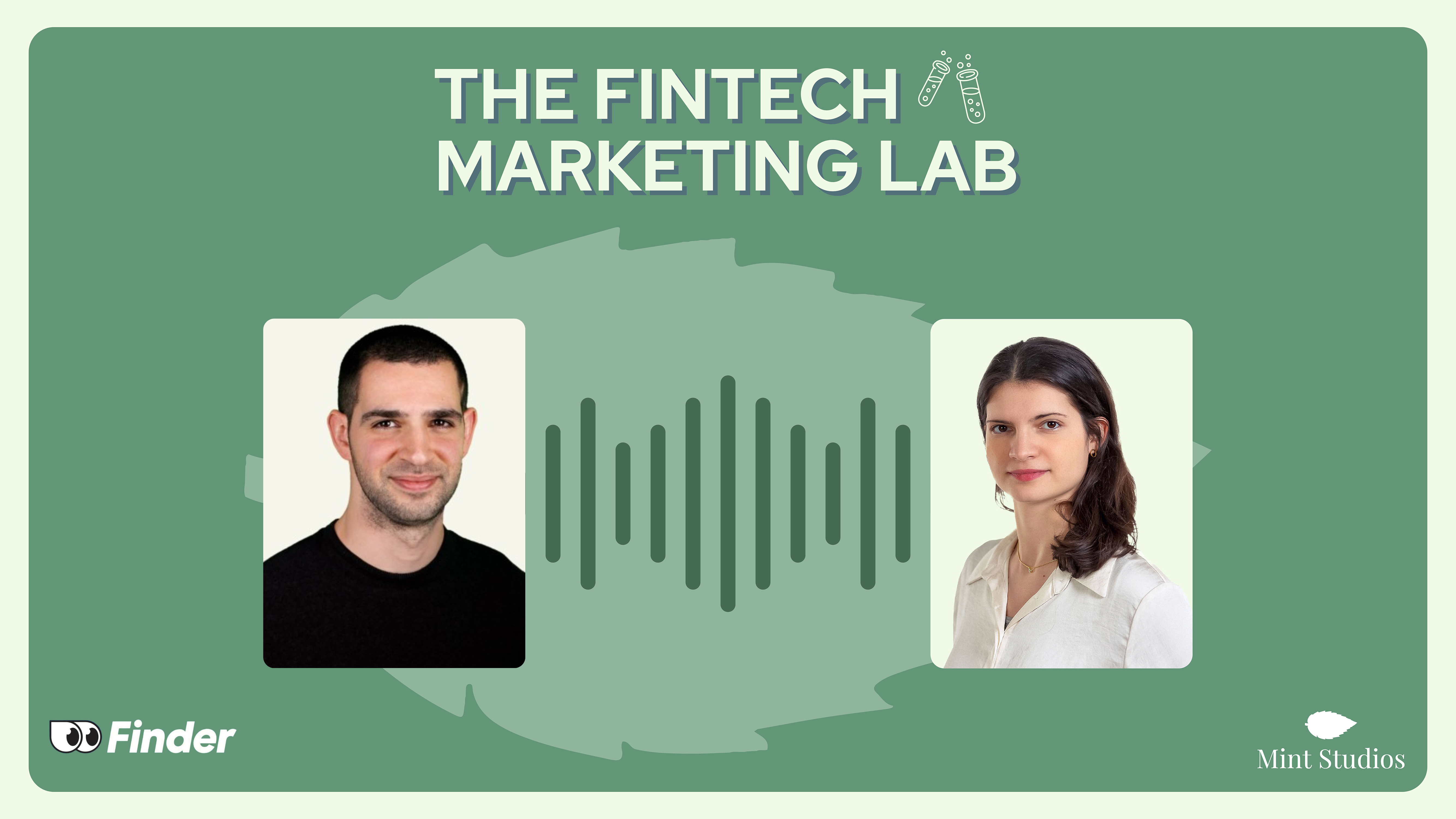
In a recent conversation on our Fintech Marketing Lab podcast, he laid out the logic behind those decisions with a clarity that's rare in marketing leadership discussions. The core idea is simple, even if the execution isn't: the marketing team you need at launch is completely different from the team you need at scale, and confusing the two is one of the most common and costly mistakes a growing company can make.
Listen to our podcast on YouTube: Fintech Marketing Lab
Listen to our podcast on Spotify: Fintech Marketing Lab
Listen to our podcast on Apple Podcasts: Fintech Marketing Lab
Stage 1: When nobody knows who you are
When Michael joined OpenPayd, the brand had been in existence for about a year. The product was live, but awareness was effectively zero within the industry verticals they were targeting.
In that environment, the marketing job is straightforward: get the name out, establish what you do, and start generating leads. It's a broad mandate with limited resources, which means the team needs to be scrappy generalists. Content, events, paid, PR, often handled by the same small group of people.
Michael describes this period as classic lead generation mode. You're not being selective about accounts yet. You're just trying to find anyone who might care. The instinct at this stage is to cast wide and see what sticks, and to some extent, that's correct. But the trap many teams fall into is staying in that mode long after it has stopped being appropriate.
The thing that changes everything is customer knowledge. As soon as you start to understand which verticals are actually converting, which use cases the platform solves best, and what the sales cycle actually looks like, you have enough information to make a much more deliberate set of decisions about where marketing spends its time.
Stage 2: Moving from lead gen to account-based
By the time OpenPayd had meaningful scale, the marketing approach had shifted fundamentally. As Michael put it: "We're very clear on the core verticals that we service, and we will add new verticals methodically. We're not going to try and serve every single business."
That clarity enables account-based marketing, but only if the marketing function is actually structured to support it. ABM is not just a targeting strategy. It changes who you hire, how you measure success, and how closely marketing needs to work with sales.
At OpenPayd, this manifested as a deliberate structural split. The team today has two clear functions: Brand, which covers content, PR, and awareness-building, and Go-to-Market, which handles demand generation, product marketing, and now includes the SDR function.
And that SDR shift is bigger than it sounds. Moving SDRs out of the sales org and into the marketing and GTM function is a trend Michael has observed across the industry, and it reflects something real about how modern B2B buying works. The handoff model, where marketing generates a lead and throws it over the fence to sales, breaks down completely when you're targeting a small set of carefully selected enterprise accounts over a 12-to-18-month sales cycle. You need a single team to manage the full journey from first awareness to a signed contract, with shared context and incentives throughout.
The attribution problem nobody wants to talk about
The natural tension in this kind of structure is attribution. When a deal closes, who gets credit?
Michael doesn't overthink it. Commission at OpenPayd isn't tied to lead source, full stop. A salesperson doesn't earn more because a lead came through their outreach versus through a content piece or an event. As he explained: "There's no benefit to the salesperson to say that came through them." The goal is to understand what the actual source was in order to learn from it, not to adjudicate credit.
This might sound obvious, but it runs counter to how many companies set up their incentive structures. As soon as credit-claiming becomes financially meaningful, teams stop collaborating and start competing. Marketing exaggerates attribution. Sales ignores anything that came from a non-outbound source. Everyone spends time managing the CRM in their favor instead of managing the customer.
Removing that incentive misalignment was a deliberate choice, and it shows up in how the teams actually operate together at OpenPayd.
Building the team: what to hire for
He describes himself as a generalist, which means most of the specialist hires he's made have been in areas where he doesn't have deep expertise.
His approach: prioritize intelligence and drive over experience. Not because experience doesn't matter, but because someone who is genuinely bought into the mission and wants to make an impact will outrun someone with an impressive CV who is there to collect a salary.
"Someone that comes in with the drive and the commitment and the want to make a real difference is the number one necessity."
Experience comes second because it helps de-risk the hire, not because it's the primary signal. This distinction matters especially in fintech marketing, where the domain knowledge required is significant and technical, but can be learned by the right person faster than you might expect.
On the interview side, Michael has noticed the same AI problem most hiring managers are dealing with right now: candidates who show up prepared with polished answers to every standard question but fall apart the moment you dig a level deeper. His test is simple: ask about something specific and recent that the company has done, and see whether the candidate has genuinely engaged with it or is just pattern-matching to a prepared response. Strong opinions, clearly held and articulately explained, stand out.
Staying close to customers at every stage
The thread running through the entire conversation is customer proximity. Michael comes back to it repeatedly, and not as a platitude.
At OpenPayd, even as the company has grown, the marketing team sits in the same office as the commercial, customer success, and relationship management teams. That physical proximity matters. It makes it easy for a marketer to join a client call to hear how a new product feature is being discussed in the real world, or to be present at one of the 50-plus events the company ran in the past year.
The danger as companies scale is that marketers gradually insulate themselves from customers. As the systems get bigger, the inbound pipeline becomes more predictable, and suddenly the content being produced is written by people who haven't had a real conversation with a customer in six months.
Michael is direct about the cost of this: "It's very easy to be sat in an office trying to write copy or build a campaign without ever having to speak to a customer, and I think that is very counterproductive."
The more time you spend with customers, the more your campaigns reflect how they actually think about their problems. And in a space like banking-as-a-service, where the buying decision is complex, the sales cycle is long, and trust is the deciding factor, that accuracy in messaging is not a nice-to-have. It’s the whole game.
Five things to take away from Michael's playbook
If you're building or rebuilding a fintech marketing team, here's what Michael's experience at OpenPayd actually suggests:
Match the team to the stage. Early on, you need generalists who can generate awareness and leads across a broad set of potential customers. As you get more clarity on your best-fit verticals and buyers, you need specialists who can execute ABM, build product marketing, and work closely with sales.
Structure for collaboration, not handoffs. Putting SDRs into the GTM function rather than pure sales is one structural way to do this. Removing commission-based credit fights over lead attribution is another. The goal is to have one team managing the full journey.
Hire for drive first, experience second. Especially in fast-moving environments, a person who wants to prove themselves and understands the mission will outperform a credential-heavy hire who has stopped being hungry.
Keep marketers close to customers. This is the most important one, and the easiest to let slip as the company grows. Find ways to keep the marketing function in regular direct contact with clients, whether that's joining sales calls, attending events, or sitting near the commercial team.
Invest in brand before you can prove it on a spreadsheet. Some of OpenPayd's largest clients today came from events run in the first year or two, before there was data to justify the investment. The ROI on brand-building is real. It just takes longer than most attribution models can see.
Key takeaways
- Build the marketing team around what the business needs now, not what worked at the last stage
- The shift from lead generation to ABM should come with a structural change, not just a change in targeting spreadsheets
- Moving SDRs into the GTM function reduces friction and improves alignment between marketing and sales
- Clean attribution is hard, but misaligned incentives are harder to fix later. Remove them early
- Intelligence and drive matter more than experience when hiring, especially for specialist roles the leader can't personally evaluate
- Customer proximity is the best source of competitive advantage in B2B fintech marketing. Protect it as the company scales
Show notes
00:00:03 — The core thesis: Marketing must evolve with scale
The episode opens with the central idea that the marketing team required at 50 customers is completely different from the one needed at 1,200 customers.
00:00:23 — From unknown startup to global fintech
Overview of OpenPayd’s growth journey and how marketing responsibilities expanded alongside the company’s scale.
00:00:44 — The shift in marketing’s role
Marketing transitions from brand awareness to supporting enterprise deals, building trust, and working closely with sales.
00:01:09 — What the episode covers
Preview of key themes:
- Shift from brand awareness to ABM
- Marketing team structure (Brand vs GTM)
- Hiring philosophy
- Measuring ROI in long sales cycles
00:02:17 — Career evolution: Marketing → business development
Treacy explains how his role evolved from marketing lead to Director of Marketing and BD as the business scaled.
00:03:35 — Wearing Multiple Hats in Early-Stage Companies
Discussion on how startup marketers naturally take on cross-functional roles including sales, operations, and customer support.
00:04:36 — Marketing beyond promotion (the 4 Ps perspective)
Marketing is framed as broader than just promotion, including product, pricing, and distribution strategy.
00:06:57 — Building marketing around business stage
Key insight: marketing strategy must align with the company’s current growth stage, not a fixed playbook.
00:10:30 — Why Account-Based Marketing (ABM) becomes essential
ABM is introduced as critical for enterprise fintech due to:
- Long sales cycles
- High-value deals
- Complex stakeholder groups
00:12:25 — Structuring the marketing team: Brand vs go-to-market
Treacy explains the two core pillars:
- Brand: awareness, trust, content, PR
- GTM: pipeline, campaigns, sales alignment
00:15:00 — Aligning marketing with sales
Marketing and sales must work closely together, especially in enterprise environments where deals are complex and long-term.
00:18:30 — Understanding enterprise buying committees
Enterprise deals involve multiple stakeholders, such as:
- CFO
- Product leaders
- Developers
- Operations teams
00:21:50 — Avoiding sales and marketing misalignment
Discussion on attribution and incentives.
Key idea: avoid penalizing teams based on where leads originate to reduce internal friction.
00:25:00 — Hiring philosophy: Skills over experience
Treacy shares why he hires people with complementary skills rather than similar backgrounds.
00:28:00 — Traits of high-performing marketing hires
Important qualities include:
- Curiosity
- Adaptability
- Cross-functional thinking
00:32:00 — Measuring marketing impact in long sales cycles
Traditional metrics fall short. Focus shifts to:
- Pipeline influence
- Deal progression
- Long-term brand trust
00:36:00 — Justifying long-term marketing investment
Marketing leaders must defend investments that may take 12+ months to show ROI.
00:40:00 — The reality of enterprise fintech growth
Growth requires patience, alignment, and systems that support long-term relationship building.
00:43:00 — Final thoughts: Marketing as a growth engine
Marketing evolves into a strategic partner that directly supports revenue and expansion at scale.
Show links
- OpenPayd on LinkedIn
- Michael Treacy on LinkedIn
- Araminta Robertson on LinkedIn
- Mint Studios on LinkedIn
- Mint Studios Website
- Mint Studios Newsletter
About Araminta Robertson
Araminta is the Founder and Managing Director at Mint Studios, a content marketing agency that helps financial services and fintech companies acquire customers and position themselves as experts with content marketing.