
High level results across 1.5 years:
- Leads via blog grew by 338.5% (with 55% coming from Mint blogs)
- SQLs via the blog grew by 466%
- Of all organic leads, 71% visited a blog post at one point in time
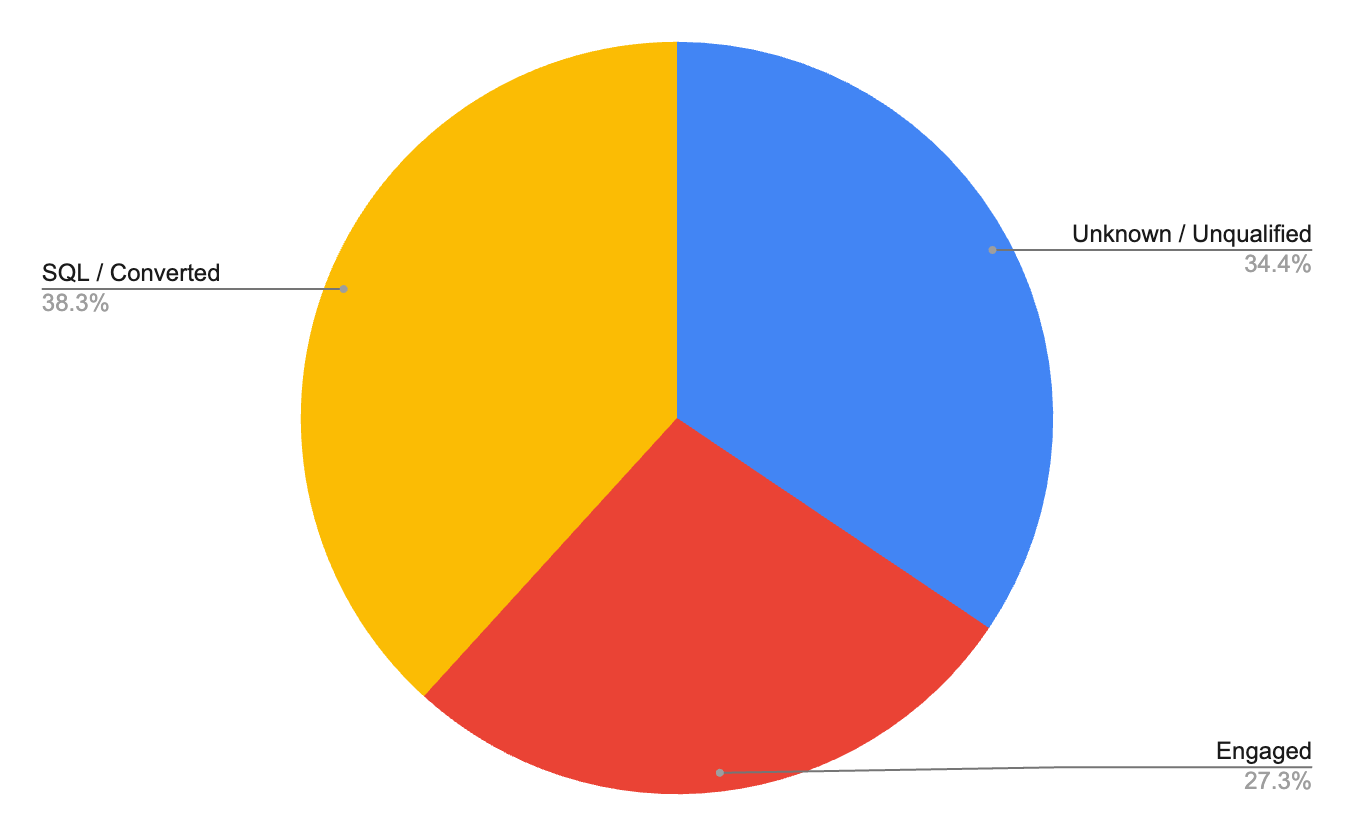
- 65% of leads via Mint blogs were engaged, with 38% being SQLs/converted
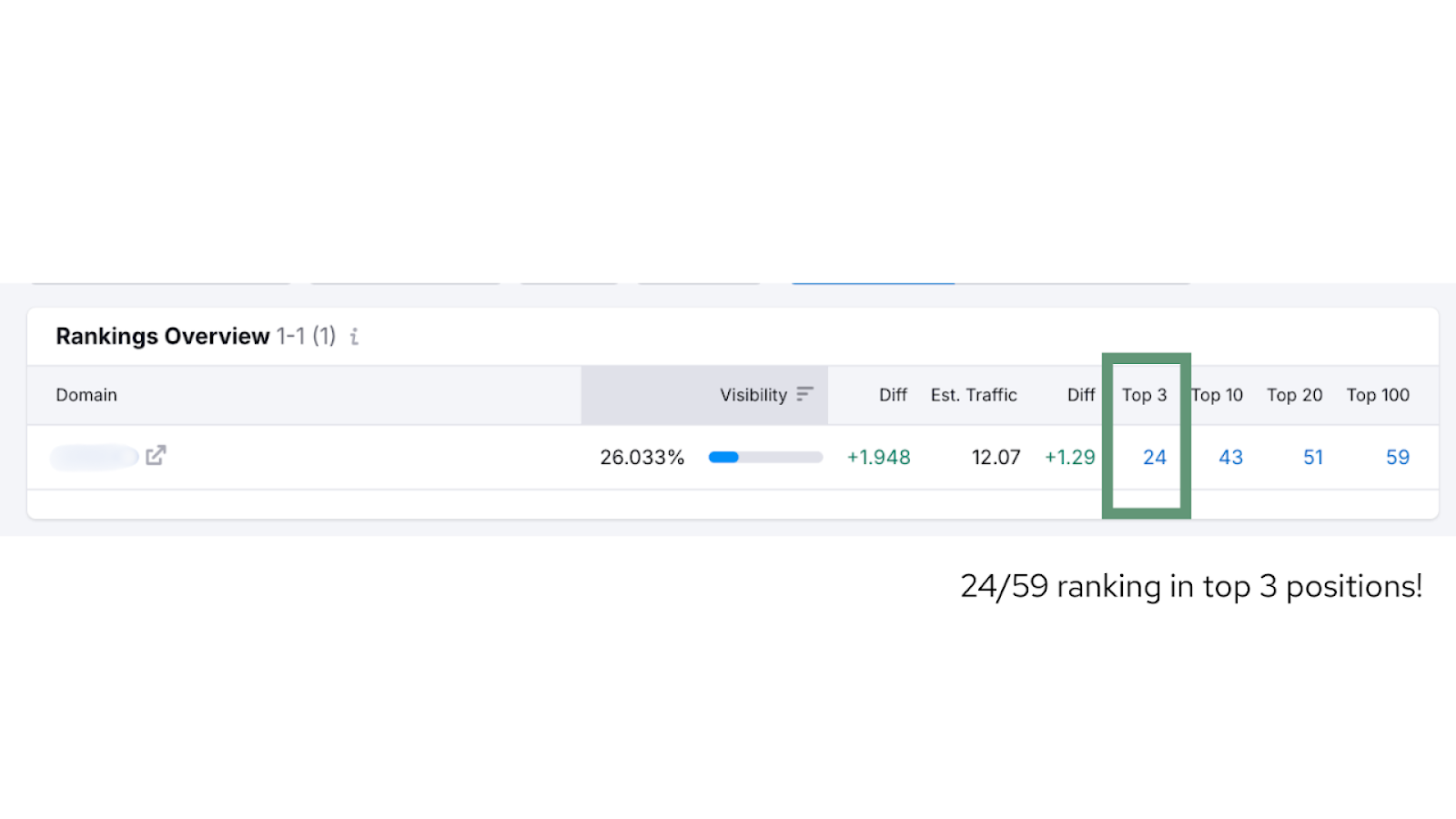
- Ranking for 25 high value keywords in the top 3 positions and over 50 keywords on the first page of Google
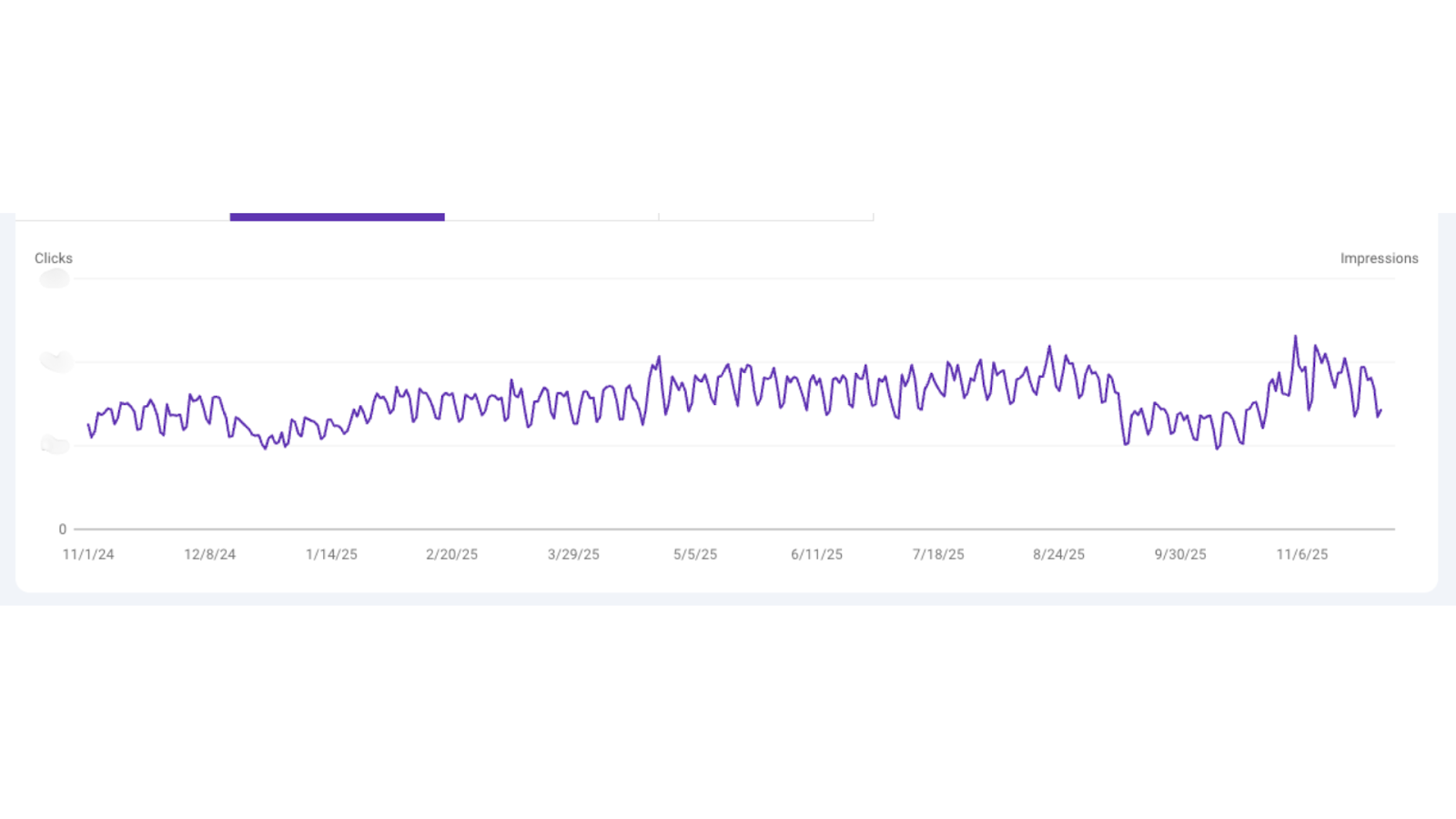
- Impressions on Google grew by 32.5% from Nov 2024 to Nov 2025
Situation: what this fintech company needed
This fintech company is a global payments company. At its core, it puts merchants in control of how money moves across their entire business. They process billions of dollars every month, are award winning, work with customers across 4+ verticals and their services are used by leading brands globally.
They came to us in 2024 to scale their content output, increase brand presence and awareness and ensure that their insights and perspectives were hitting the market. They also believed that content had a strong influence on their commercial objectives. The products that they offer are still relatively new, so educating prospects and the market is a key part of the funnel, making high-quality content essential.
But in trying to scale content, they faced a few issues:
It was very hard to find freelancers or external agencies who could write about the topics they needed to. Not only are payments complex, but the pain points prospects face are highly nuanced. In such a nascent industry, you don’t just need a good writer – you need someone who can digest these concepts, understand the trade-offs payment leaders are making, and present them in a way that’s actually useful.
Take a common merchant pain point, such as improving approval rates. There's no single switch to flip – the decisions merchants face are highly technical, with each choice affecting cost, risk, resilience, and customer experience.
The content has to unpack these decisions and show how the product helps merchants manage those trade-offs more effectively. This just isn't possible without writers/agencies who are experienced in writing about complex topics.
They needed a better way to track and report on the success of content. Organic was already their strongest channel, but they had limited visibility into which topics and pages were actually driving high-quality, non-branded conversions. It was difficult to see month-over-month progress, understand how SEO impacted the pipeline, or identify which articles to optimize for higher conversion rates. They wanted clearer signals, tighter attribution, and a reporting process that linked content performance directly to marketing and sales outcomes.
They operate in a fast-moving, highly competitive market. New platforms and adjacent payment providers are constantly updating their offerings, messaging, and content. The fintech company needed a partner who could stay on top of competitor positioning, understand how their product really compared, and translate that into content that clearly differentiated their approach.
We knew we'd have to be careful and thoughtful in our approach to targeting the right keywords. The products they offer are in a niche, complex space, so we spent time understanding the product and the different ways prospects describe their pain points online.
The results:
Leads via the blog grew by 338.5%, with 50% coming from blogs we created or optimized
The company’s team does a lot of fantastic marketing work across multiple channels: brand, paid, partnerships, events, product marketing, and more. Because so many initiatives contribute to overall website performance, using total organic or total website leads isn’t a reliable way to track the specific impact of content. Those numbers are influenced by everything from a new product launch to a paid campaign or a homepage redesign.
To accurately measure the value of content, we needed to isolate non-branded content performance and identify which specific pages and keywords were driving high-intent conversions.
We’ve found that the best metric to look at is leads that at one point visited a blog post. We tracked first, last and multi-touch conversions (more on how later), and from August 2024 to November 2025, all leads that at one point visited a blog post grew by 338.5%, with just over half of them coming through pieces of content that we created or optimized.
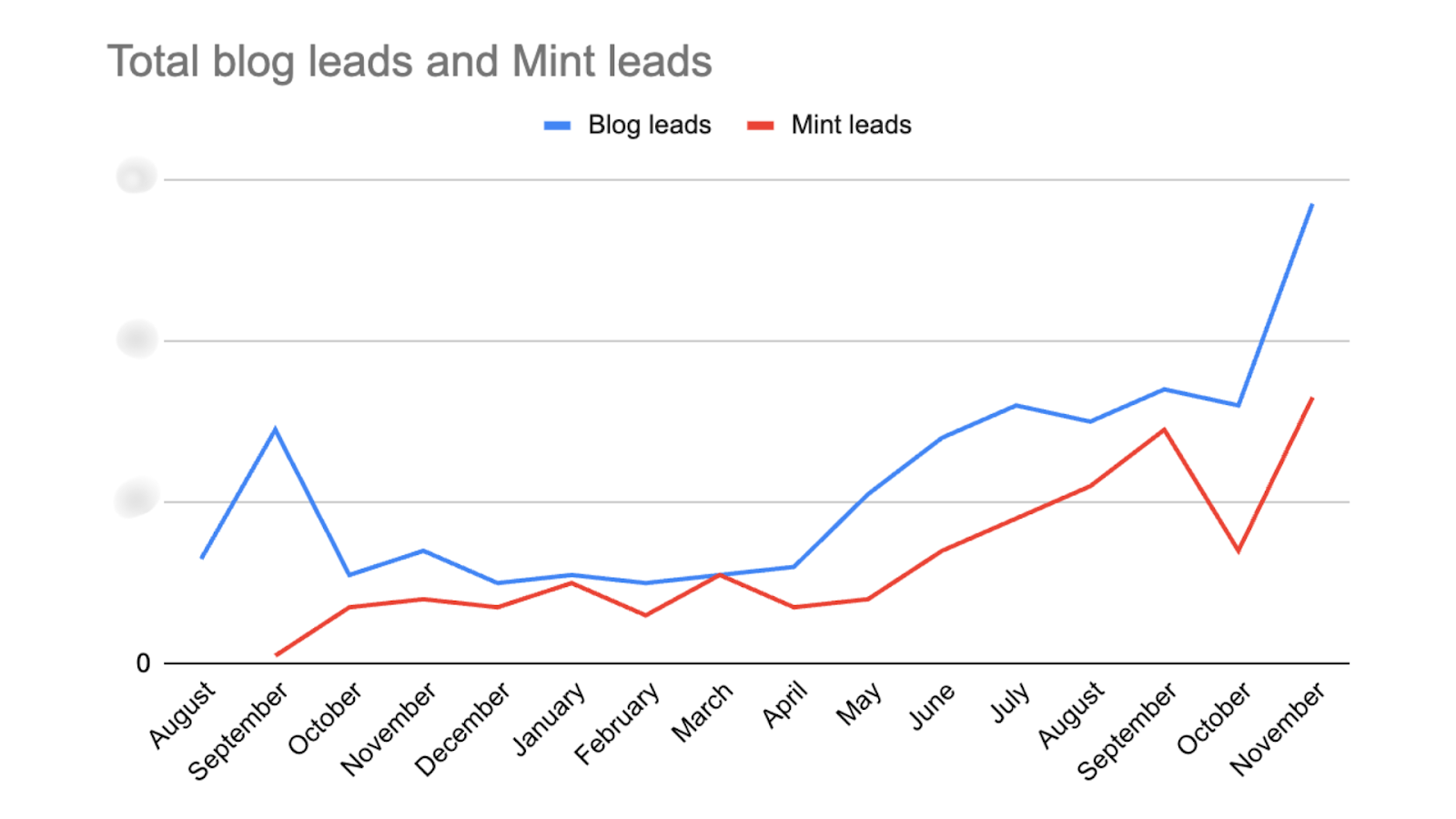
Of all organic leads the fintech company’s website received, 71% visited a blog post at one point in time showcasing the value of blog content in organic inbound leads.
SQLs via the blog grew by 466%, and of all Mint leads, 38% were SQLs / converted
Seeing growth of inbound website leads month over month is great, but it doesn’t show the full picture, especially in the world of payments where quality is often more important than quantity (payment companies monetize by payment volume, so one company processing a lot of payments is worth a lot more than smaller companies that don’t process a lot).
Typically, leads that come via content tend to be more qualified or “higher quality” because if they’ve spent time reading content, they’ll be more familiar with the product and therefore if it’s a good fit for them. Only ones that are a good fit will then reach out for a demo request.
Of the leads that came in via Mint content, the quality was especially high. From September 2024 to November 2025, across the total of leads that we helped bring in, 65% were of high enough quality to engage with, with 38% of overall leads being SQLs or converted into opportunities.
Zooming out to all SQLs that came in via the blog, from October 2024 to November 2025, these grew by 466%.
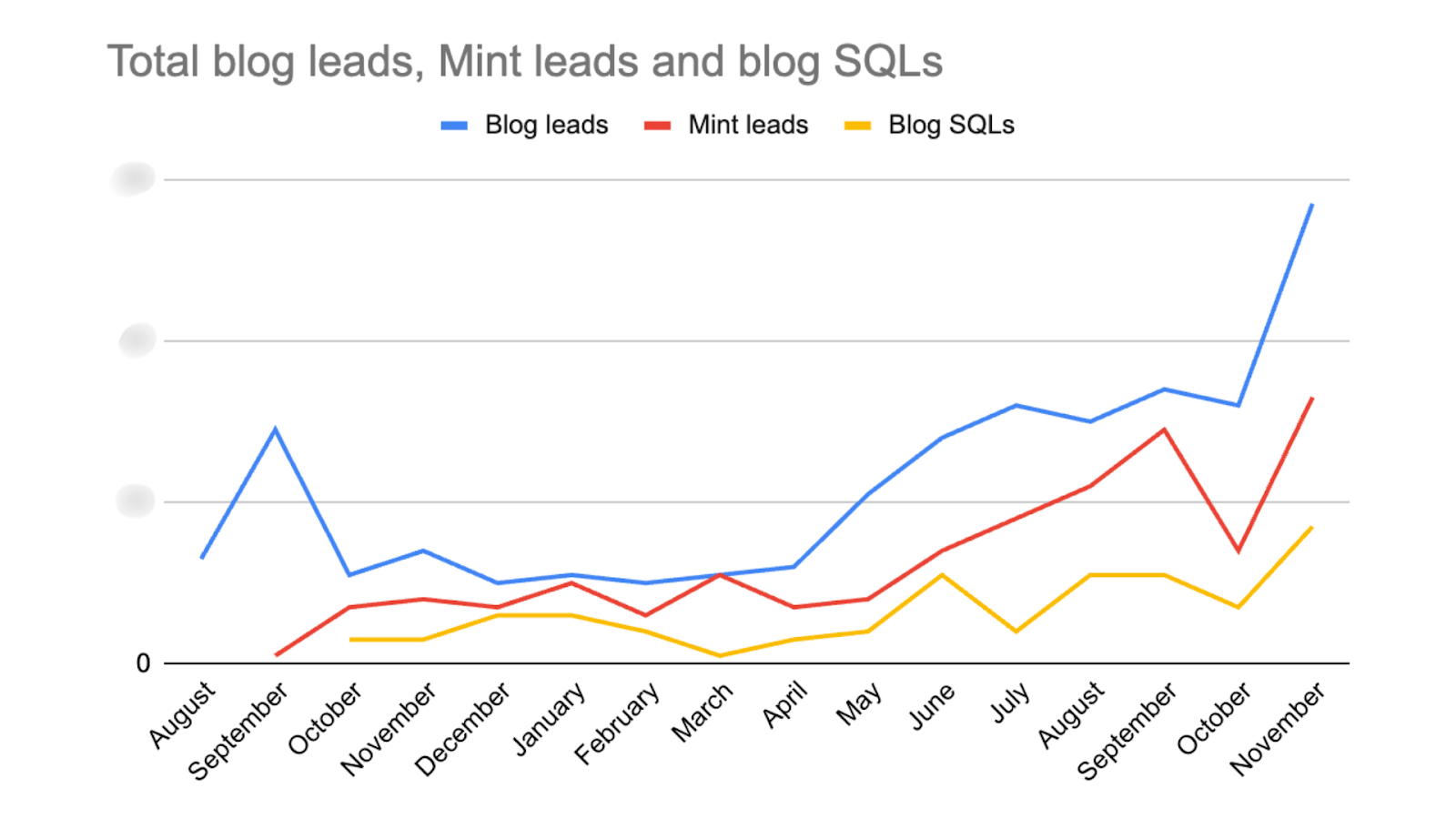
Even though sales cycles are long in this industry, we were also able to attribute multiple closed high-value customers that visited our content.
Ranking in the top 3 positions of the first page for 20+ buying keywords
Ranking high on Google was a cornerstone of our strategy, with the goal of ranking for as many “buying” keywords as possible. These are searches where someone is close to converting and likely to be interested in working with the fintech company.
They were already ranking well for several important phrases, but there was still plenty of room to grow their footprint.
Based on our research and time spent with their team understanding the market and customers, we were able to get their website ranking on the first page for crucial buying keywords in the payments space.
Of the 60 keywords we were targeting, almost half are in the top 3 positions, and the majority (72%) ranking on the first page of Google.
You can also see this reflected in impressions growing over time, by 32.5% comparing Nov 2024 to Nov 2025.
How we did it: deep understanding of the product and customers and partnership approach, optimizations and multi touch attribution tracking
Interviews with experts to help decide topics and create content, along with a close partnership approach
Many agencies and marketers still do SEO the traditional way: put a competitor domain name into SEMRush or Ahrefs, filter for high volume keywords and then export. That’s how they pick keywords to target.
But high volume keywords don’t necessarily translate into more traffic or conversions, especially in the world of AI Overviews where fewer and fewer people click on links.
Instead of that approach, we based ours on picking topics that we felt the target audience would actually be searching online. And we did that by having in-depth conversations with experts on the company’s team. These were conversations to understand the prospect’s pain points, challenges as well as how they feel about certain topics.
It was important for us to build ongoing relationships with key SMEs – not just for in-depth interviews, but also for quick questions, sense-checks on angles, and clarifying details without having to lean on the marketing team every time.
We’d also feed back wins to those SMEs when a piece brought in leads or opportunities, so they could see how their insight was having an impact.
That kind of direct, two-way relationship created a true partnership and meant we could move faster and produce content that genuinely reflected how the company works in practice.
Other ways of doing research included using and understanding their demo account, watching their product announcements and reading the reports their marketing team put together.
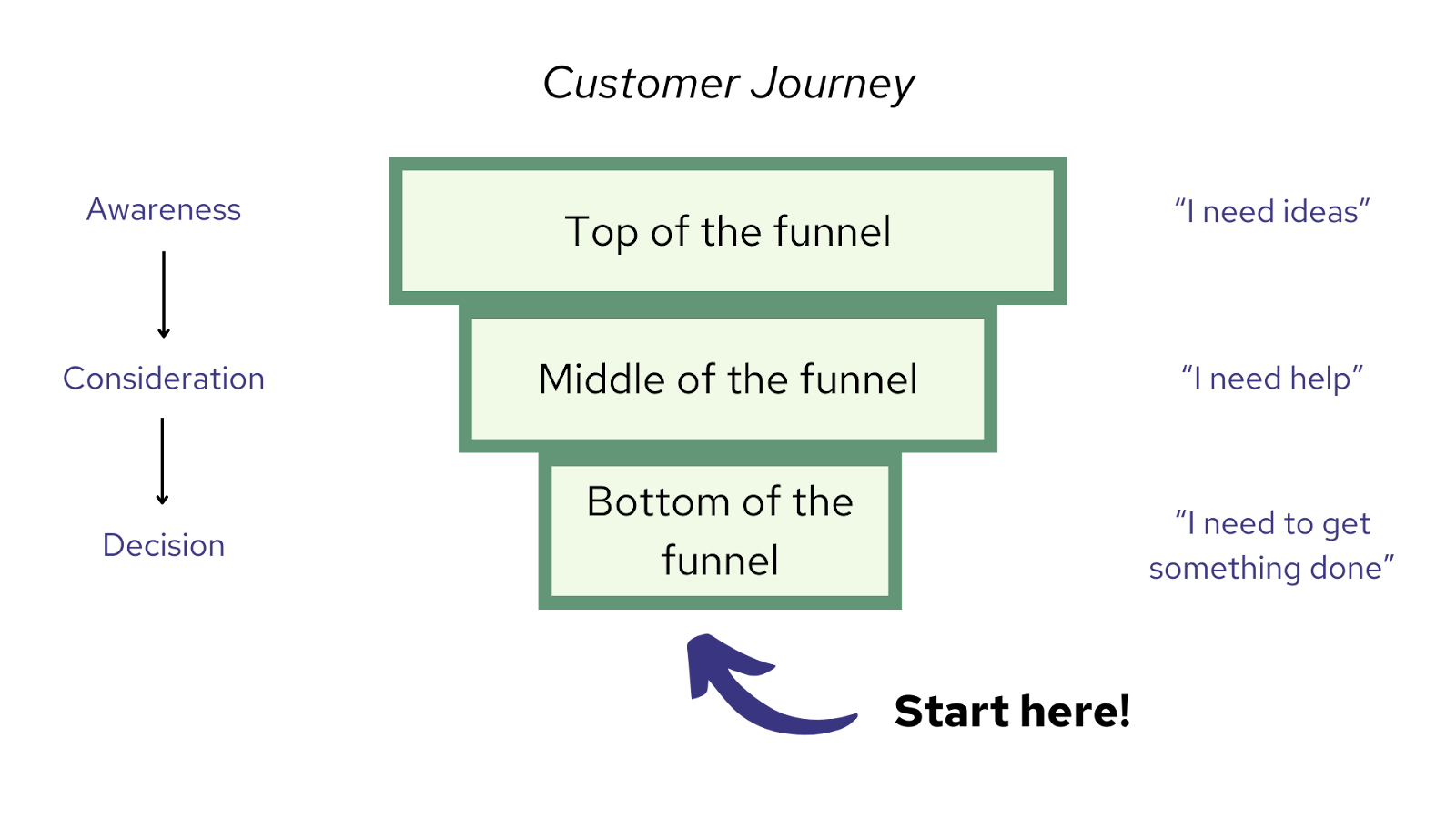
That’s the approach we took to come up with our list of buying keywords, which not only were more technical keywords, but they also had a “Bottom of the Funnel” focus. In other words, people searching them are more likely to convert. This is the foundational thesis that supports our strategy: start with the Bottom of the Funnel and work your way up.
Once a keyword was picked together with the company, we interviewed experts who were knowledgeable on that topic and would allow us to go deep.
A great example is our article on a highly technical payments topic on approval rates. We could have written a generic piece based purely on desk research, but it would have lacked real-world insight. Instead, we spoke with a subject matter expert on their team, who shared the kind of nuances only an expert sees day to day, details that simply aren't accessible without direct access to practitioners working in the field.
The result was a piece that didn’t just rank well, but also brought in leads because it was genuinely useful. The fintech company has an incredible talent pool, and tapping into that expertise is a big part of what truly makes the content stand out.
The company’s marketing team were also fantastic in giving in-depth feedback, educating us on their product and ensuring we were aligned with their tone of voice and strategy.
Ultimately this allowed us to create the best quality content that allowed us to actually bring in high quality customers.
Optimizing existing content for conversions
The company’s marketing team already placed a strong emphasis on content, and much of their existing library was (and still is) high quality. They’re a company that takes content seriously and invests real time and effort into getting it right.
But that doesn’t mean there weren’t any opportunities to improve and optimize the content specifically for conversions. Some articles, for example, focused more on defining a concept (e.g. payment authorization), and didn’t explain how to implement it or how the product could help.
We revamped many of the articles to be more SEO and conversion focused, making changes like:
- Starting off articles with pain points
- Going into a lot of detail about the product
- Adding images, diagrams, going into a lot of detail
You can see that with this article that goes against a lot of typical “content advice” out there: we actually go into detail about the product, we don’t keep things high level, and we go specific when necessary.
By optimizing and focusing some of their existing content on conversions, we were able to help them get even more out of their content and rankings.
The company also places a lot of emphasis on tone and storytelling. To get this right, we adapted parts of our usual style to match their voice: leaning more into narrative flow, mirroring the way they frame problems and solutions, and making sure each piece fit naturally alongside their broader marketing.
This was crucial in ensuring our content didn’t feel bolted on, but could be used confidently by the wider team. As a scaling company, this tone naturally adapts over time, and it was important that we evolved alongside its development.
Multi touch tracking to get a better understanding of the influence of content
Finally, all the above is great and works well, but without the right tracking in place it’s a lot harder to prove the impact of content and therefore make a case for investing more into it.
The company’s team already had a good tracking setup which mainly focused on just first and last touch conversion tracking. This was already very helpful, but we also wanted visibility on the role of content from a multi-touch perspective. That’s because this is the main way content has an impact: few people read one blog post and convert. They usually visit multiple pages, with a blog post being just one of them.
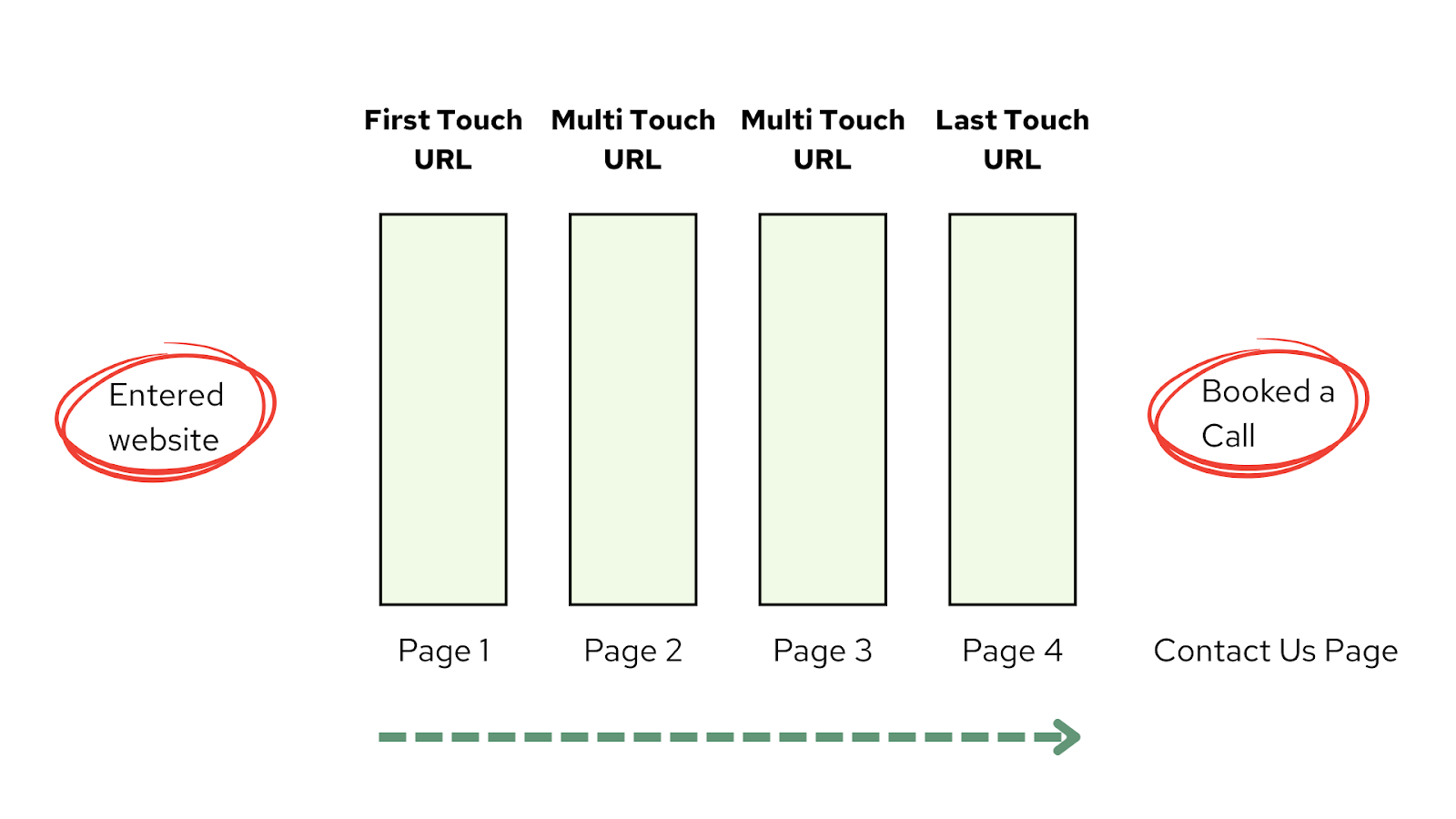
We set up tracking with WhatConverts so we could see the full picture, and very quickly we were able to see how prospects read content across multiple months.
In the screenshot below, you can see that the prospect first read a piece of content in September, but didn’t convert until over 2 months later (and read a few other product pages in between). This is a common pattern with content since people often read multiple pieces of content across months before converting.
This is crucial information because if we were only tracking last click attribution, that piece of content would never be highlighted. If we were tracking classic first click attribution (which is usually just within one session), that blog post wouldn’t have appeared either, since they read it 2 months previously.
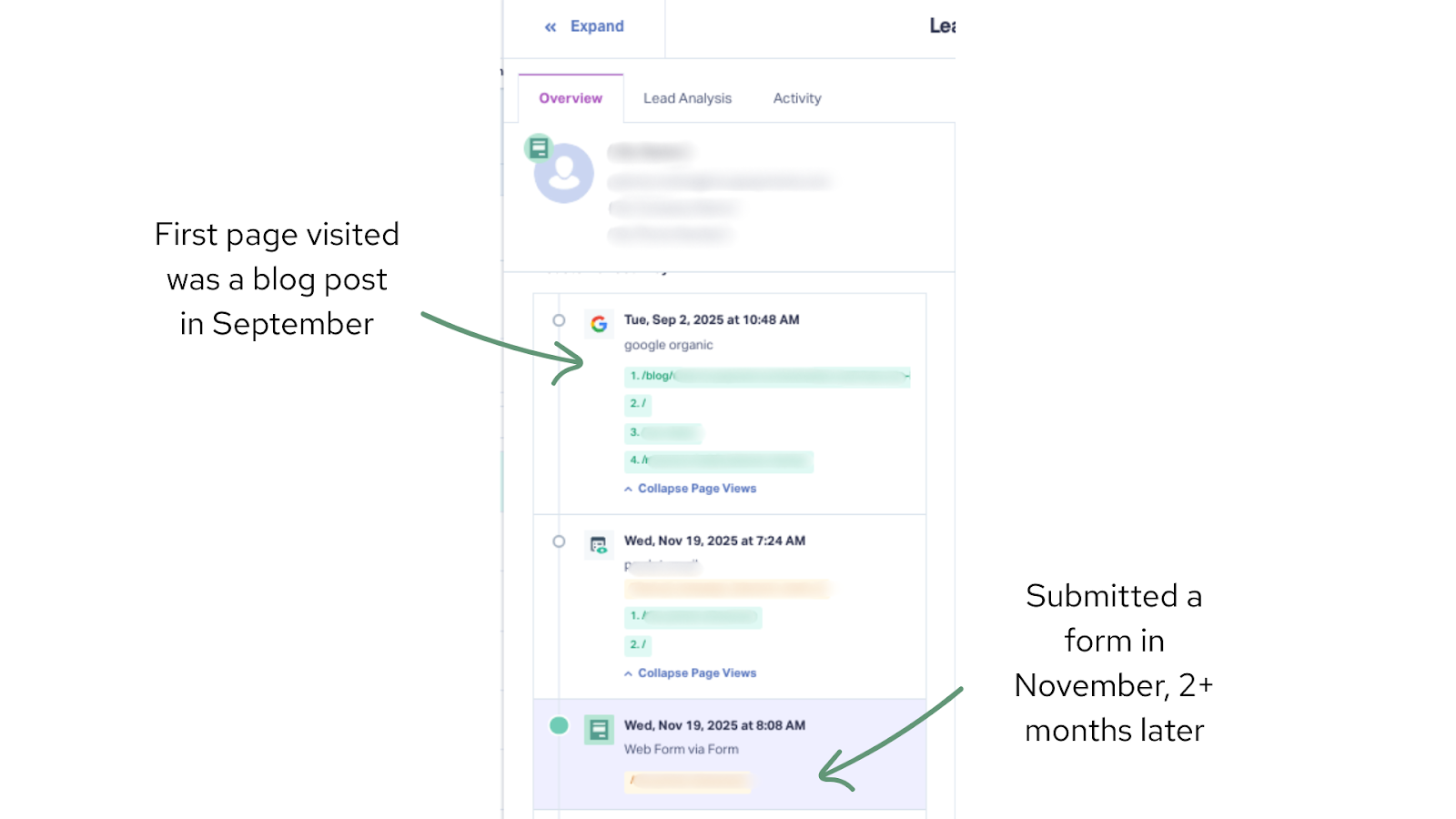
This was huge and allowed us to dissect a lot better who was being influenced, the articles that worked the best and then we could match it with the data in Salesforce to analyse the quality.
Every month, we were then able to report on:
- First/last touch vs multi touch leads
- Leads via LLMs
- Break down per URL
- Which contact form they used
- Breakdown by size of business
- Breakdown by industry and country HQ
- Breakdown according to the funnel
Not only did this allow us to track and prove the contribution of content, which the marketing team could then use to in discussions with leadership, but it also allowed us to have a better understanding of the customer.
Getting results with content requires a partnership approach, an understanding of conversion focused content and strong multi-touch tracking
We’re proud of the work we’ve done with this fintech company, and it’s been a true privilege to work with such a strong team. As a fintech-focused agency, we were willing to spend the energy understanding the product, as well as the company’s positioning and tone.
It’s always felt like a genuine partnership: working closely together, sharing context and expertise on both sides, and staying aligned on the same goal of building content that actually moves the needle.
Huge thanks to the team for being fantastic to work with. We’re excited for the future content and work we’ll do together!