
Hey everyone, Araminta here!
For the last newsletter of the year, I’d like to showcase a real life example of how a fintech company targeting payment companies (which would often be seen as "too niche" to succeed with SEO) is able to get amazing results with content: Yapily.
Yapily is an open banking provider in the UK. They are a Series B scale-up fintech, have won multiple awards for the best open banking solution in the UK and are trusted by industry-leading businesses like Google, Adyen, QuickBooks and Pleo. You won’t find a list of top open banking providers in Europe and the UK without it including Yapily.
Over the past 1.5 years of working together, our work with them has enabled them to almost triple (2.8x to be exact) the number of inbound organic leads they get via their website, as well as some other cool results:
- 20% of monthly inbound website leads visit a blog post at one point in their journey
- Of all first/last touch leads via the blog, 43% were engaged (i.e., qualified)
- The website is ranking on the first page for 45 key buying keywords such as:
- Bulk payment services
- Account information services provider
- Account-to-account (A2A) payments
- [Competitor] alternatives
- Reached 360k impressions per month, with 95% through the blog
Although all-around SEO metrics KPIs are strong, what we’re proudest of is the quality of the leads that content has helped bring in.
Thanks to the tracking/attribution set up we have, we were able to track all the way down to whether a lead was an MQL / SQL / Converted.
And we’re therefore able to say that of the first / last touch leads from the content we created, almost half were qualified. In other words, almost 1 in every 2 leads that came via our content was qualified.
For a company that targets other payment companies, not merchants, these are pretty incredible results – and it just goes to show that even niche B2B financial services can do very well with SEO.
How did we do it? Here are 3 key parts to it:
1. Targeting the “money keywords” with Bottom of the Funnel (BOFU) content
As people who have been following us for a while know, BOFU content is the framework that underpins how we work with clients.
Instead of doing what a lot of SEOs do and go after terms like “what is open banking”, we went after the “money terms”. These are keyphrases where someone searching this is clearly close to converting, like:
- Pay by Bank API
- API for bank transactions
- Instant bank account verification
- Open banking for lenders
That’s not to say we only wrote this type of content: for instance, we created a MOFU blog on Open Banking in Europe that has also brought in leads as well as generating traffic. But we did make sure to prioritize the BOFU buying keywords first.
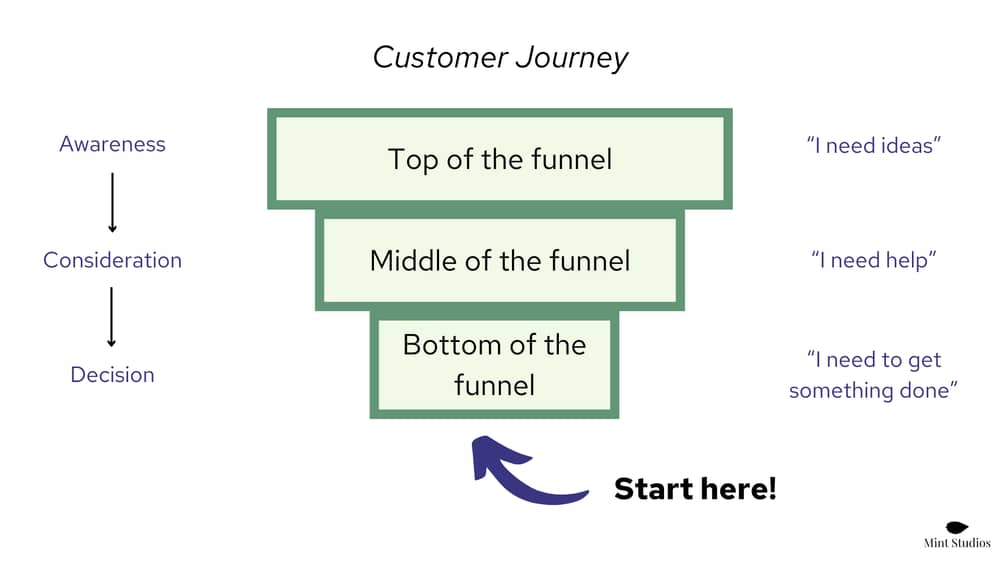
How did we know what those “money terms” were? As well as doing our research, we spent a lot of time interviewing salespeople and SMEs to truly understand who Yapily’s ideal customer was, which enabled us to deeply understand their pain points and triggers.
In order to add original insights to our content, we also based many of our articles on an interview with an expert.We go into detail on our process here: How to Do Research for Bottom of the Funnel Content Marketing)
2. Optimizing existing content for rankings and conversions
The Yapily marketing team are fantastic and had already created some quality content before we started (you can listen to our podcast episode where they go into more detail about their marketing here: Inside the Growth Story of Reaching Profitability as a Fintech (and the Marketing Strategy Behind it) | Gregory Aubert & Edvin Pauza, Yapily)
However, we identified that some content was not ranking or converting visitors into customers. We optimized and improved some of the existing articles by:
- Revamping the intros so they were more pain point focused
- Making the articles more advanced (by basing them on interviews with SMEs)
- Going into more detail about the product
- Adding case study information, to show how Yapily’s product helps businesses in the real world
3. Setting up comprehensive tracking all the way down to SQLs and deals
Attribution and tracking with content is hard, and it’s only getting harder with LLMs and cookie banners. But that doesn’t mean you should stop trying. The benefits of comprehensive tracking are huge:
- You’re able to show and prove the contribution of content
- You get a better understanding of your customers
With Yapily, we set up BigQuery and via Looker Studio and were able to track:
- First touch: the first page visited was a /blog/ page
- Last touch: the last page visited before converting was a /blog/ page
- Multi-touch: at one point in the journey, they visited a blog post
The multi-touch tracking was especially important, with the new Looker set-up, we could track all this and also see the exact URL that the lead visited, allowing us to understand the topics that had the biggest impact.
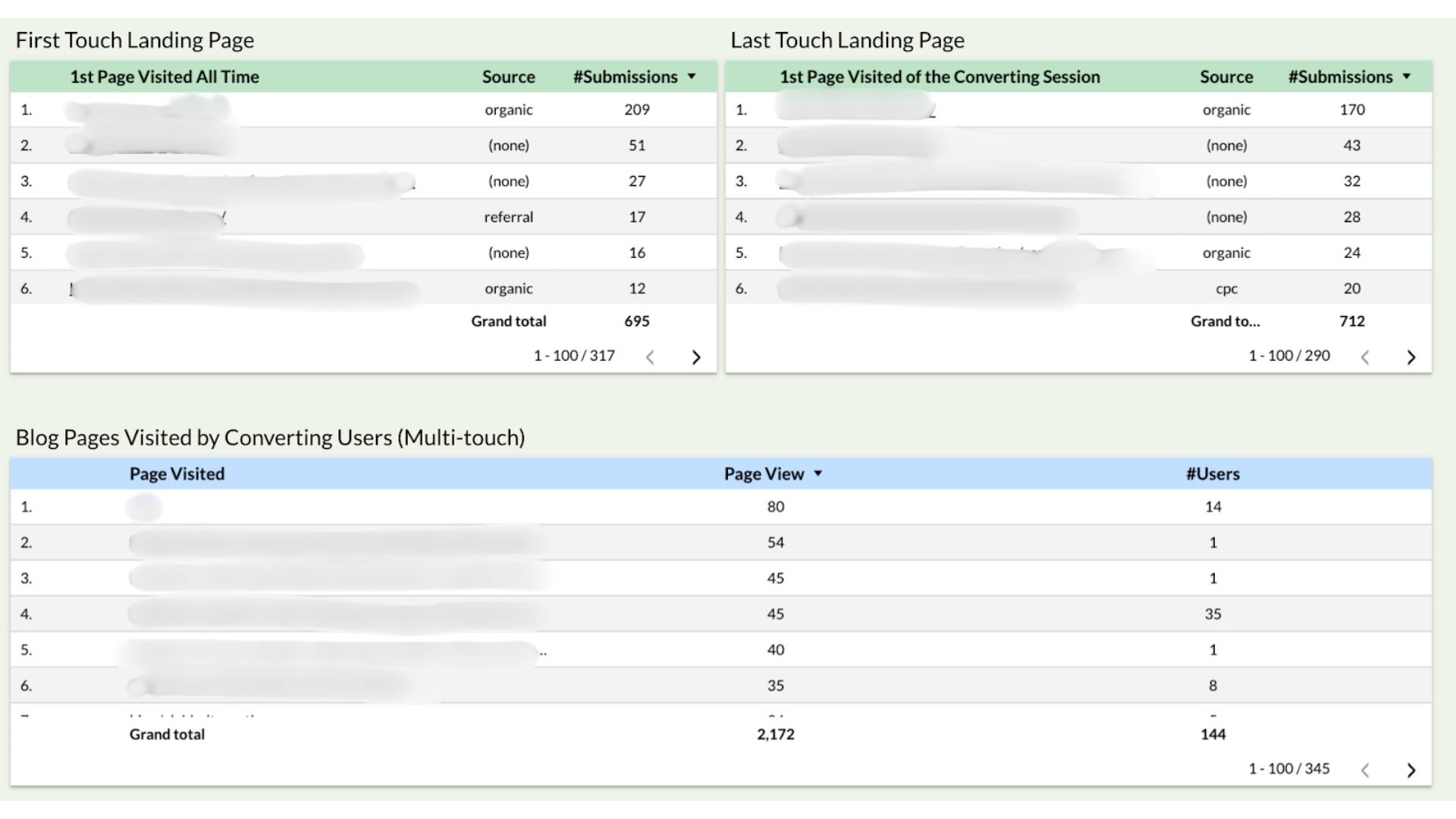
We also had access to a spreadsheet connected to Salesforce so we could track the quality of the inbound website leads (although only first / last touch), allowing us to connect and track the quality of some of the leads we were bringing on.
This comprehensive tracking is what allows us to see that:
- Content brings in high quality leads
- Content helps influence 20% of leads (and this is likely higher)
- Content is actually working
Hopefully this case study is a clear demonstration that content and SEO can work in niche industries, that content can directly bring in leads and that all this can be tracked and proven!
You can read the full case study here: Case Study: How Content Helped Yapily Achieve 2.8x Growth in Organic Inbound Website Leads
Mint Studios Recommended Reads
- What is BOFU (Bottom of the Funnel) Content and Why Is it Important?: if you're new to BOFU content, this article is a good place to start.
- How to Write About Your Product In Your Content [And Increase Conversions]: we've found that talking about your product increases conversions -- here's how to do it well
- Low Volume, High ROI Keywords: Why You Should Include Them in Your Content Strategy: why these are the types of keywords that perform well
Have a great New Year's and Happy Holidays, we’ll be back in your inboxes on the 9th January! 🎉
Araminta & the Mint team 🎉
We help financial services and fintech companies acquire customers and position themselves as experts with content marketing. Learn more about what we do.