Hey everyone!
Araminta here.
If you’ve been following our journey over the past few months, you’ll be aware that we designed our own process for improving visibility on LLMs with a framework we call GPT articles.
To summarise the framework: you compile a list of Bottom of the Funnel questions your target audience is searching (these are the “money” questions that indicate they are actively looking for your solution and close to converting), and then create and publish a short article for each prompt answering the question.
It’s a simple and straightforward strategy, and it works very well.
Some of the results we’ve achieved include:
- Increased Fiska’s LLM visibility from 5% to 34%+
- Drove a 67% increase in visibility for a B2B company in a niche financial services industry
- Took a new client from 0% visibility to 15%+ in one month
You can read the full article on our framework here: Want LLMs to Recommend Your Brand? Here's What We've Found Works: GPT Articles
But the inevitable next question is: does increasing LLM visibility actually help bring in new customers?
Does an increase in visibility translate to more people filling in your website forms (leads) and do those form fills actually translate into new customers (opportunities)?
The short answer is: yes.
What results have we seen?
After a few months of publishing GPT articles, we finally had a bit more data and could analyze results. Here’s what we found:
From 1 to 6+ opportunities per month: For one client, we were able to take them from 1 opportunity per month to 3+ per month consistently (and just a few months later, this is now 6+). And we’re talking about sales qualified opportunities, not leads. These opportunities usually close and become customers, and customers are worth $150k - $300k.
2x the number of leads from AI referrals: For another client, after a few months of publishing, leads from AI referrals (tracked via self-attribution) doubled.
From 0 to 4+ opportunities per month: Another client went from no inbound opportunities at all, to 4+ consistently every month. Again, these are usually closing and worth $50k+.
Although the total number of LLM leads has been relatively small, the quality and value of leads has made it easy to justify investing in this channel. We’re quite confident that an increase in LLM visibility translates into new customers.
Here are a few other takeaways we got from publishing GPT articles over the past few months:
1. Targeting one prompt means you will appear for other prompts
By creating a GPT article that targets a specific prompt like “Top payment gateways for SaaS”, do you also turn up for a related prompt, like, say, “Top embedded payment solutions for hospitality SaaS”?
The answer is clearly yes, otherwise we wouldn’t see an increase in form submissions. This shows us that you don’t need to get the exact wording of the prompt right, it’s more important to go after specific topics and general keywords.
2. The biggest challenge is accurate tracking
For our clients that already get 100+ form submissions per month, it’s been harder to discern whether the increase in LLM leads is due to our work or whether it’s due to a general increase in people using LLMs.
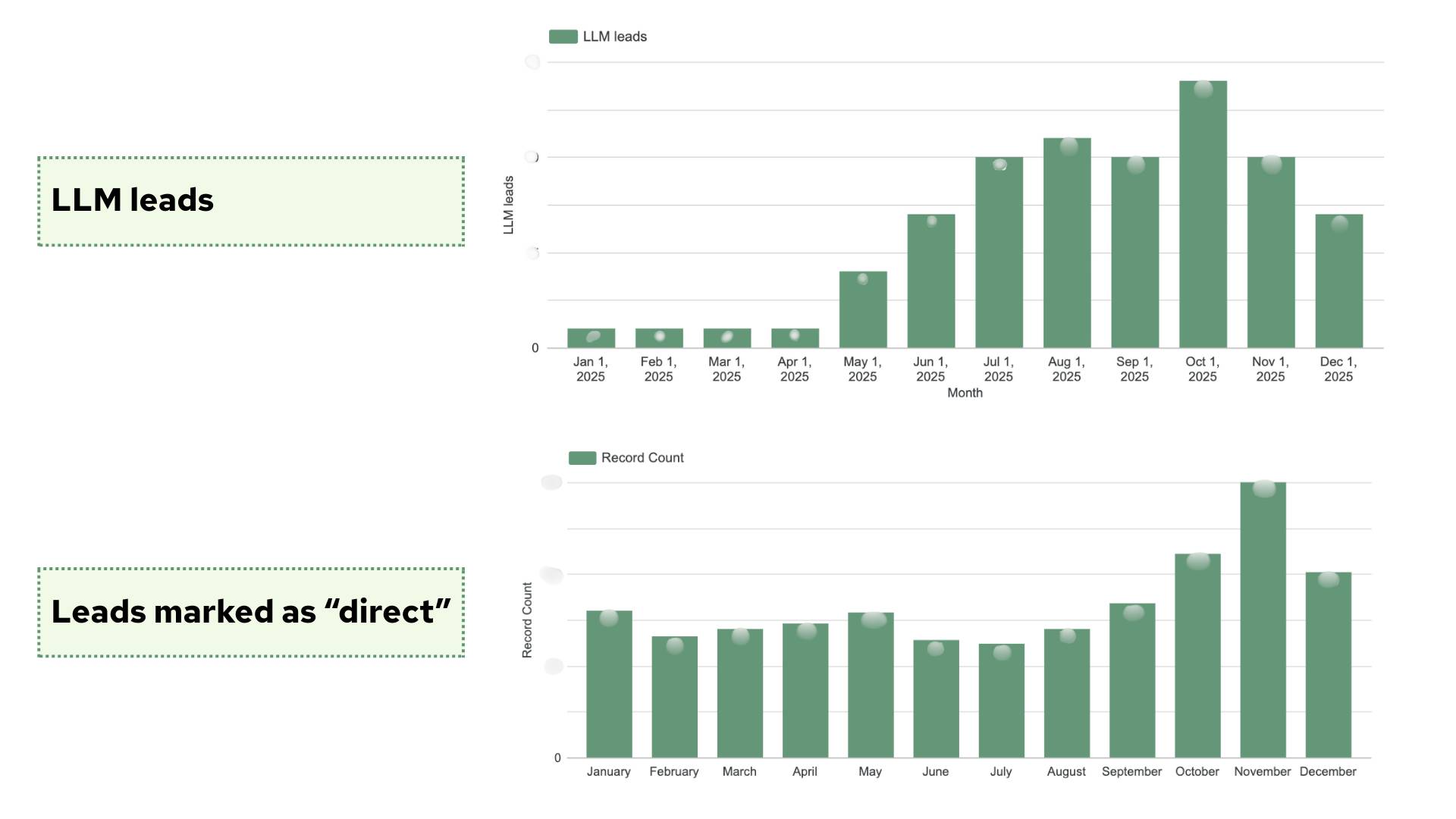
It’s also harder to be accurate because people coming via LLMs often are marked as “direct” or did some Googling after finding the brand via ChatGPT and then are marked as organic. You can see a correlation between LLM leads and direct leads here:
The journey is more fragmented than ever, which makes attribution really hard. Even when we directly ask the user, it’s not always clear. They might say “Research” or “online”:
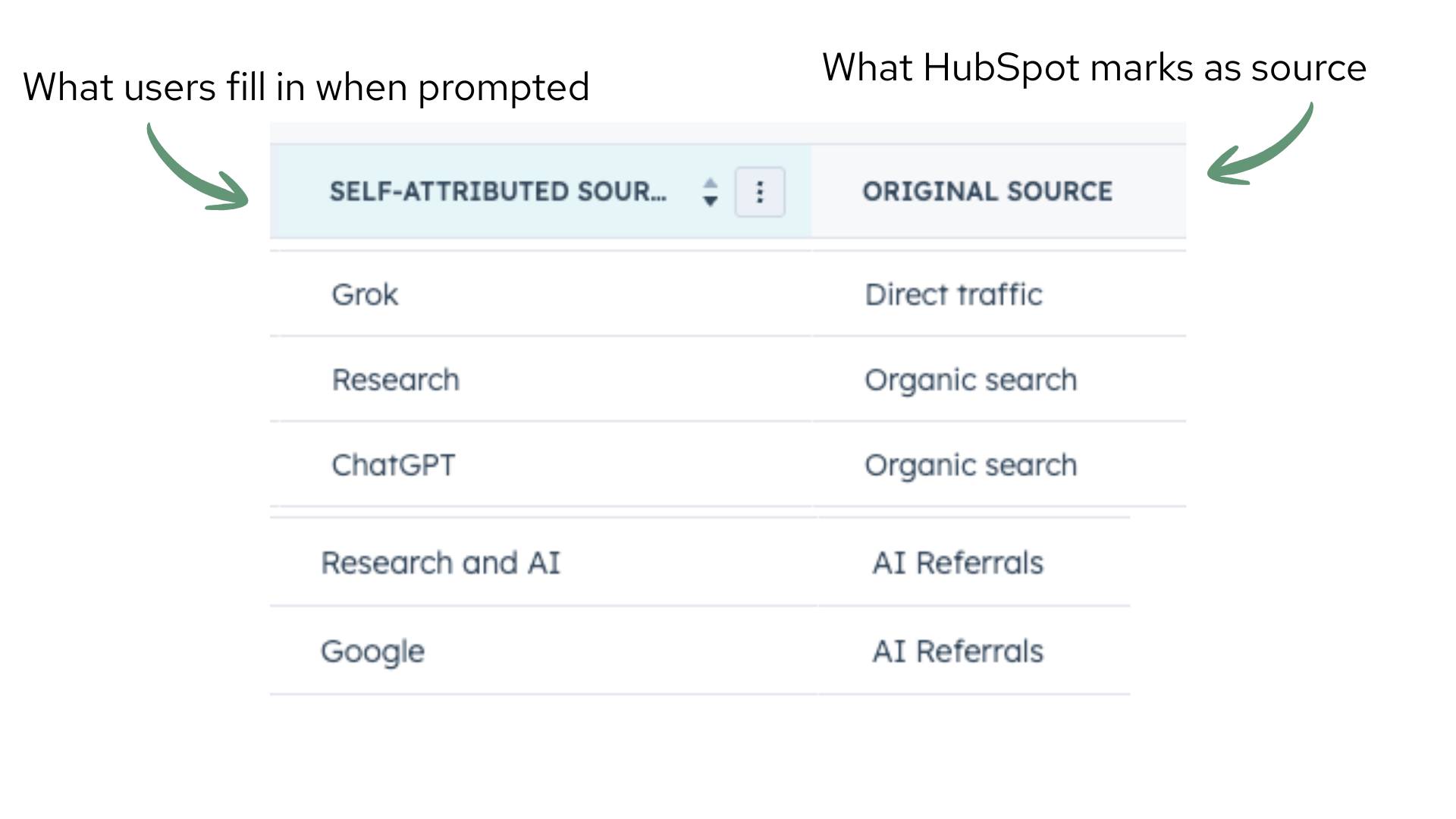
Our favourite way to track attribution is still with self-attribution, asking users “How did you hear about us?”. We also typically prefer a drop down option as it’s easier to categorize and you avoid answers like “Research”.
3. The quality of leads varies from client to client
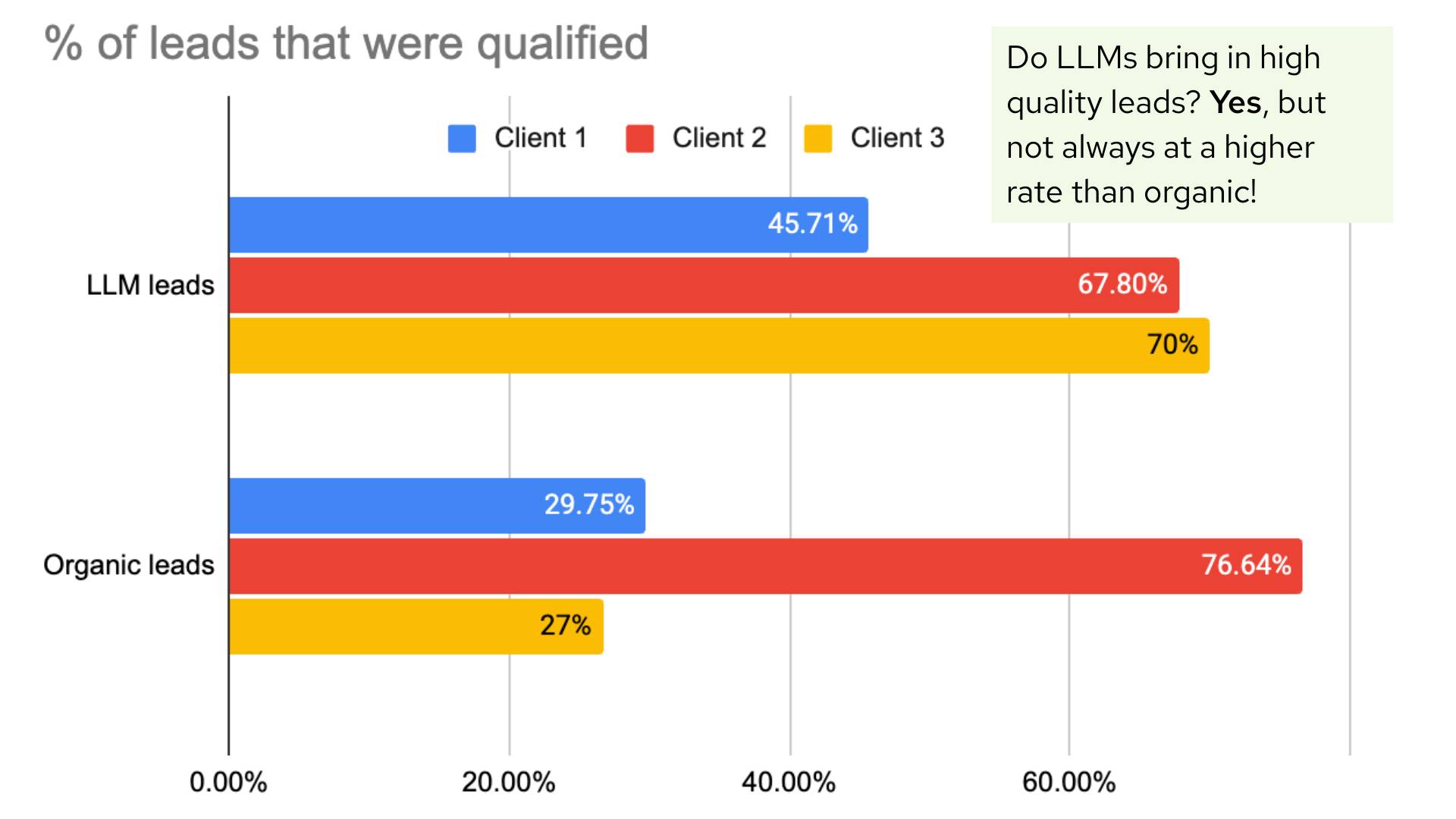
Although some marketers report that the quality of leads from ChatGPT are lower, others report they are higher.
We found instances of both, but generally leads from LLMs are quite good quality. The one time where organic leads were higher quality, LLM leads were still quite high, with 67.8% of leads being qualified.
In one case, the difference was huge, with LLM leads being 70% qualified and organic were 27%.
4. The prompts you target are 80% of the strategy
If you target the wrong prompts, the GPT framework won’t work.
This is because if you target prompts that don’t require a brand recommendation, then you won’t see an uplift in inbound leads (and likely not visibility either). For example, if someone types “What is a payment gateway?” into ChatGPT, it will never recommend a brand, it will simply answer the question:
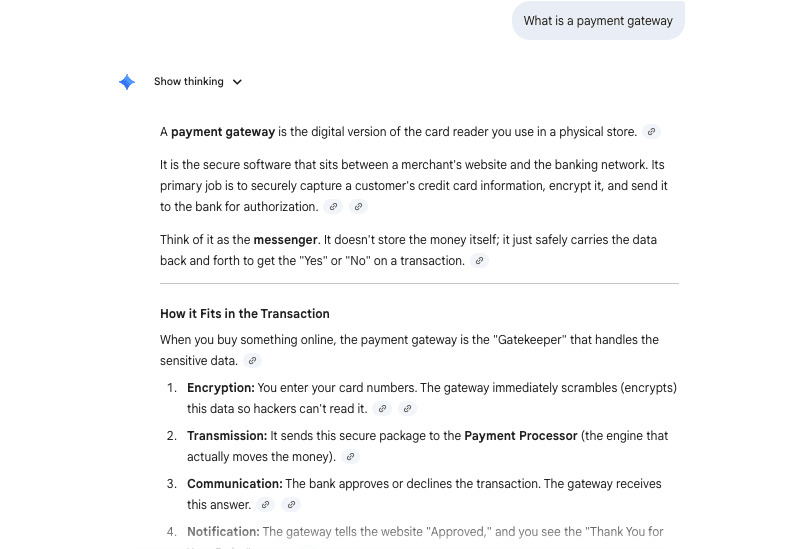
Instead, it makes more sense to go after prompts where a specific brand is actually mentioned, then you can be sure your brand actually appears in LLMs. For example, a BOFU prompt like “what is the best payment gateway for [vertical]?” will always mention brands.
5. GPT articles also rank on Google
We’re finding that quite a few prospects can find the GPT articles via Google. This is likely because more people are typing in longer search phrases into Google, maybe even like they would an LLM. Since the GPT article prompts are so specific, it’s often straight to number one.
It also means that GPT articles are being read by people, not just LLMs. So it’s important that your articles are OK to read, relatively follow your Tone of Voice and are not too salesy – you can still do that while implementing LLM best practices such as tables, bullet points and making it conversational.
6. The companies that benefit the most are early stage
With the GPT framework, you can start appearing on LLMs within a week or two. With SEO, it still requires months, even years, especially if you’re a new company.
Although we always advocate for doing both SEO and LLM work since they are very interlinked, it’s clear that doing GPT articles benefits companies that don’t want to wait years to appear on search and have low Domain Authority. If that’s you, we highly recommend implementing this.
We’ve now been doing GPT articles for almost 6 months for certain clients, and we’re more confident than ever before in the strategy. Although we’re tweaking it and improving it constantly, it still reliably helps grow visibility and now we can also say it helps with customer acquisition. It’s clear that LLMs are a new channel worth investing in and we believe that if search is a key channel for you, then LLMs should be as well.
Mint Studios Recommended Reading
- Read our analysis of whether LLM visibility brings in customers here: Does increased LLM visibility lead to more customers? Here's what we found via 3 case studies
- Analysis from Ahrefs that shows that AI search conversions actually perform better: Does AI Search Traffic Convert Better Than Traditional Search? For Ahrefs, Yes: 0.5% of Visitors Drove 12.1% of Signups
- Great article and analysis by Graphite that shows that organic search is still relevant: Debunking The Myth That Search Is Dying[My thoughts on AI Mode]
Thanks for reading,
Araminta & the Mint team 🎉
We help financial services and fintech companies acquire customers and position themselves as experts with content marketing. Learn more about what we do.