If you run marketing at a B2C fintech, comparison sites and affiliate partnerships are probably one of your key channels.
But there’s a problem: once you appear on a comparison page, your product can look very similar to everyone else’s.
And that’s if you manage to get featured in the first place.
So I wanted to speak to someone who sits on the other side of that inbox: the person deciding which fintechs get featured, which ones get ignored, and which ones ultimately do really well.
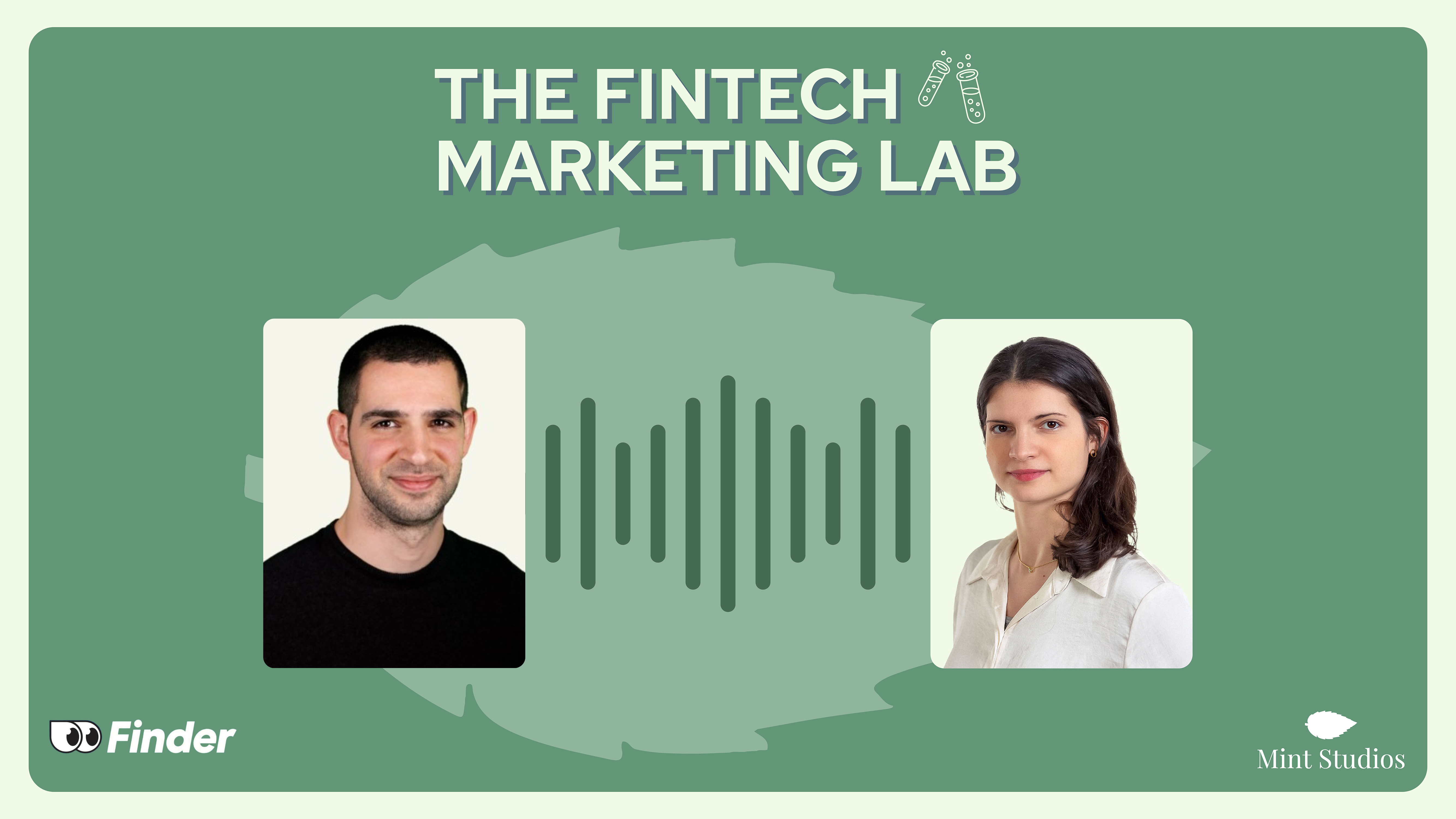
In the latest episode of the FinTech Marketing Lab, I spoke to Zak Ali, General Manager of Finder US.
We talked about what most fintechs get wrong when approaching comparison sites, what actually makes a publisher want to feature a new product, and why getting the placement is only half the job.
Here’s what I learned.
Why most fintech pitches get ignored
Zak told me that most inbound pitches follow roughly the same formula:
We think we’d be a great fit for your audience.
The company then explains what its product does and leaves it there.
But that isn’t enough.
The client services person reading your email has probably seen the same pitch hundreds of times. They’re busy, they don’t know your company, and they don’t have time to work out why your product deserves a place on the site.
There’s also a lot more involved in an affiliate partnership than adding your logo to a comparison table.
Does your tracking work?
Do you understand how affiliate rates work?
Can you handle the operational side of the partnership?
Is your product appropriate for the publisher’s audience?
Are there any regulatory or compliance risks?
If your pitch doesn’t address these questions, the publisher has to make a lot of assumptions. And if you’re a completely new entrant, it’s easier for them to ignore the email than investigate everything themselves.
As Zak put it, unless you’re already a household name, these pitches can be “dead on arrival.”
What comparison sites need before they take a chance on you
I think this was one of the most useful points from the conversation.
When you ask a comparison site to feature your fintech, you aren’t just asking them to give you some space on a page.
You’re asking them to take traffic away from another provider that already converts and makes them money, and send that traffic to you instead.
That is a commercial risk.
So your pitch needs to give them enough confidence to take that risk.
This could include:
- The other publishers or partners you already work with
- Results from similar affiliate partnerships
- Conversion data or relevant case studies
- Your commission rates
- Details about your tracking and attribution
- Evidence that the product has succeeded in another market
- A clear explanation of why the product is relevant to their audience
For example, Finder operates across markets including Australia, the UK, Canada and the US. A company that has already built a successful affiliate program in Australia can use those results when approaching Finder in the US.
It can say: we know how these partnerships work, we understand your brand and we already have evidence that the product converts.
That is a much stronger pitch than simply describing the product.
How to make your pitch difficult to ignore
If you don’t have a long track record, you can still stand out by doing your research.
Zak shared the example of a specialist investment provider that approached Finder with a very specific audience and proposition.
Instead of sending a generic introduction, the company had looked through Finder’s website and identified the exact pages where its product would make sense.
This immediately showed that the team understood Finder’s audience and had thought carefully about how the partnership could work.
It sounds obvious, but I see the same problem in other areas of marketing all the time.
If you’re pitching a journalist, podcast host, partner or comparison site, you need to show that you understand what they do.
Don’t make them find the angle for you.
Before contacting a comparison site, I would answer these questions:
- Which exact pages should feature our product?
- What does our product add that isn’t already there?
- Why is it useful to this particular audience?
- What evidence do we have that it will convert?
- What makes working with us easy rather than risky?
If you’re new to affiliate marketing, Zak also recommends considering a network such as Impact.
Publishers already understand the platform, the tracking is in place, and they may have existing relationships with its team. That removes some of the operational uncertainty that comes with working directly with a new fintech.
Why the offer matters more than the placement
Let’s say you get featured.
What makes someone click your product instead of the five other options on the page?
In many categories, it comes down to the offer.
If someone is comparing high-yield savings accounts, they’re probably looking for the highest yield. The largest number on the page is naturally going to attract attention.
But a strong headline offer doesn’t automatically produce conversions.
For example, a provider might advertise a 5% yield but only offer it on the first $5,000 deposited.
The person sees the 5%, clicks through, and then discovers the restriction on the provider’s website.
At that point, they leave.
So you may get plenty of clicks but very few completed applications.
This is why you need to look at the whole journey. Not just whether the comparison site sends traffic, but whether the offer, conditions, landing page and application experience all match what the customer expected when they clicked.
How AI is changing the value of comparison sites
The other interesting part of this is that comparison sites are no longer valuable only because of the traffic they send directly.
Their content can also influence which companies appear in Google AI Overviews, ChatGPT and other LLMs.
When someone asks for the best business bank account, credit card or investment app, the LLM needs independent sources to help it answer.
Comparison pages are useful because they include what a fintech’s own website usually doesn’t: multiple providers, original ratings, clear methodologies, and an independent point of view.
This creates a difficult attribution problem.
A potential customer might discover your fintech through an AI answer influenced by a Finder article, research your brand elsewhere and then visit your website directly.
The comparison site contributed to the sale, but it may never receive credit for it.
Zak said some partners are already willing to pay a flat fee for this wider visibility, even when the direct affiliate ROI is difficult to prove.
I think this is where the last-click attribution model starts to fall apart.
Affiliate partnerships now have two jobs:
- Generate measurable clicks, applications and revenue.
- Help the brand appear in the places where customers are researching their options.
You should still track conventional affiliate performance. But it may also make sense to monitor brand mentions, citations, and visibility across the prompts that matter to your audience.
Not every valuable interaction is going to fit neatly into your attribution platform.
Key takeaways
If you want your fintech to get featured—and actually perform—here’s what I would remember:
- A generic product introduction isn’t a convincing affiliate pitch.
- Comparison sites take a commercial risk when they replace an established partner with your product.
- Give them evidence that your offer converts and that your program is easy to operate.
- Research the site and identify the exact pages where your product belongs.
- Make the relevance obvious instead of asking the publisher to find the angle.
- A strong offer may win the click, but unclear restrictions can destroy conversion rates.
- Measure both direct affiliate performance and the wider visibility created through search and LLMs.
Ultimately, getting featured comes down to giving the publisher a genuine reason to take a chance on you.
“We’d be a great fit for your audience” isn’t that reason.
Show notes
Zak Ali is the General Manager of Finder US, part of the global financial comparison platform Finder.
In this episode, we discuss:
- What gets a fintech featured—or ignored—by comparison sites
- How Credit Karma built an owned audience
- What makes an affiliate pitch stand out
- Whether fintechs should work directly with publishers or use an affiliate network
- Why the offer has such a large impact on conversion
- How comparison sites influence LLM visibility
- Why last-click attribution is becoming less useful
- How Finder uses AI across content production, advertising and data analysis
- Why fintech marketers are becoming more generalist
Episode timestamps
- 00:00: Intro
- 02:07: AI Shakes Affiliate Trust
- 04:24: Owned Audiences Win
- 07:36: Getting Featured on Finder
- 13:31: Attribution in the AI Era
- 18:03: Finder Content Waterfall
- 24:57: Winning LLM Visibility
- 31:21: Build Automation and Earn Trust
Show links
- Finder on LinkedIn
- Zak Ali on LinkedIn
- Araminta Robertson on LinkedIn
- Mint Studios on LinkedIn
- Mint Studios Website
- Mint Studios Newsletter
About Araminta Robertson
Araminta is the Founder and Managing Director at Mint Studios, a content marketing agency that helps financial services and fintech companies acquire customers and position themselves as experts with content marketing.