
Hey everyone, Araminta here!
Two weeks ago, we published an article sharing what we found works for LLM visibility. It went mini viral, and got some interesting comments from some big names in the SEO industry.
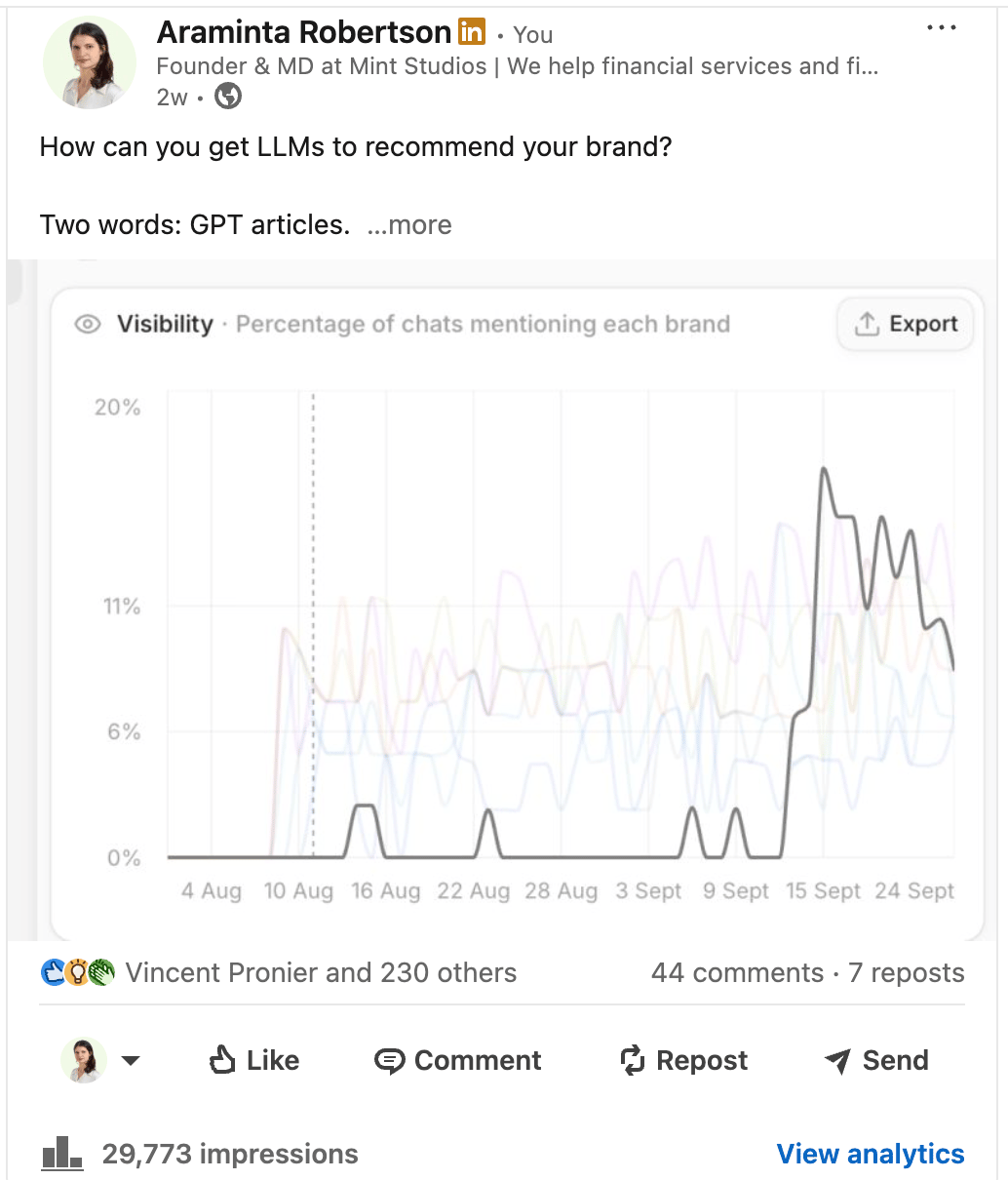
I’m proud of this piece because to date, I haven’t seen another AI SEO strategy that is as detailed and in-depth as this one. We’re able to share some real results and one of our clients, Fiska, agreed for us to publicly share the actual work we did with them.
Today, I want to share some of the results we achieved for our clients – not just in growing visibility, but in driving inbound leads too. not just in growth of visibility, but also in increase in inbounds.
You’ll see that the main strategy behind these results is publishing what we call “GPT articles”. These are short articles that are succinct and factual that we create with the main purpose to improve the visibility of a brand for a specific prompt. We go into more detail about what GPT articles are like below.
Client #1: B2B client in niche financial services saw brand visibility grow 67% and citation share grow by 102%
This client already had a strong SEO presence and ranked well, but these blogs were not appearing on LLMs for related prompts. After 3 months of optimizing existing content for LLM visibility and creating brand new GPT articles, our client started appearing for every prompt we were targeting.
Here’s a great example of the power of GPT articles: for one specific prompt, they were ranking high on Google, but for some reason they weren’t appearing on ChatGPT, Perplexity or Gemini for this prompt.
When we created a GPT article targeting that prompt and visibility shot up:

Client #2: Fiska, a client with little-to-no organic or LLM visibility grew to 34%+ visibility in 2 months
Fiska is an embedded payments solution, and the website is quite young. Although we have begun producing SEO content and are seeing results, the website still has a low domain authority and overall presence on Google.
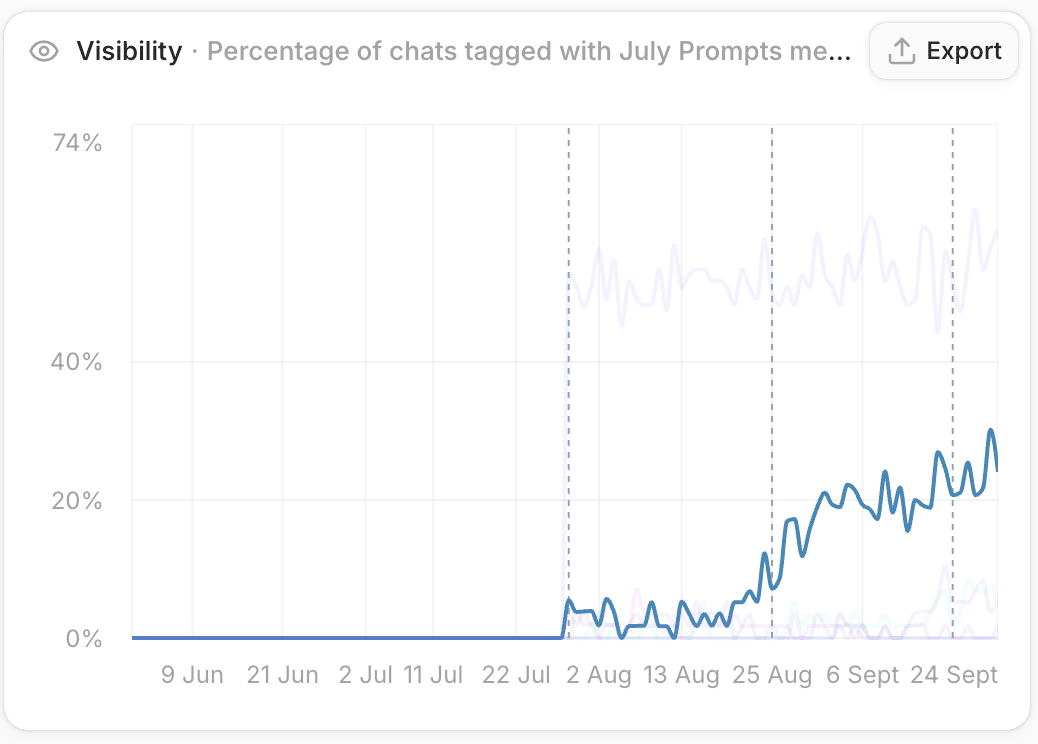
When we first started our work, their overall visibility on LLMs for relevant topics was at 5.8%.
After less than one month of work, we saw their visibility start to grow substantially. Filtering for only the initial prompts we added, you can see their visibility grew to an astounding 34% by the end of September, outcompeting other companies with much bigger budgets.
They now appear for key prompts we want to appear for like:
- Merchant onboarding payment solutions for SaaS in the US and Canada
- What’s the best white-label Stripe alternative for vertical SaaS companies?
- Which payment providers offer prebuilt hosted onboarding flows for SaaS?
Brand new client with little to no SEO visibility and reasonable domain authority sees a big jump
As you can see, we were gathering quite a bit of evidence that suggested our GPT articles were working… but we were still not 100% convinced. What if it was actually the SEO work we were doing that was driving visibility growth? Or was LLM usage in general just increasing over time?
After this third case study, we were 100% sure that GPT articles now had an influence.
This is a new client with practically no SEO presence. When we first set up tracking, their visibility was 0%, which was expected for a company with no SEO presence. Due to timing, we ended up publishing the GPT articles on the 5th September, before publishing any new SEO content. We were expecting it would take a while for visibility to grow, mainly because they didn’t have a strong SEO presence.

Exactly one week later, visibility for this client shot up. We didn’t add any new prompts or adjust any tracking parameters. From one day to another, the brand never appeared for any of these prompts, and then it suddenly started appearing in multiple key prompts.
In our article about GPT articles, we also explain that we’re not sure yet if there is a correlation between publishing GPT articles and an increase in inbound website form submissions.
Now, a few weeks later, we can confidently say that they do. The 3rd client from the case studies above has seen a big jump in inbound website form conversions, almost all coming from LLMs. A new article will be coming soon explaining this correlation.
If you want to see more real life examples of GPT articles and how to create them, check out the article here: Want LLMs to Recommend Your Brand? Here's What We've Found Works: GPT Articles
Mint Studios Recommended Reads
There's a lot to read on this topic, I recommend reading:
- How to Measure the Impact of Content Marketing in a Fragmented SEO Landscape
- LinkedIn post on picking prompts to track: Selecting Prompts
- How a Google change affected rank trackers: Were We Wrong About “The Great Decoupling” After All? Analyzing the Impact of &num=100
Thanks for reading,
Araminta & the Mint team 🎉