
Curvo is just 2 and a half years old, and they don’t get most of their best customers through ads, partnerships or even referrals.
They get them with content.
Specifically, these five articles:
- How to buy vanguard funds in Belgium
- What to consider when buying an etf in Belgium
- Taxes you should know as a Belgian investor
- Best broker in belgium to buy VCWE ETF
- Alternatives to VWCE for Belgians
Thomas, one of Curvo’s co-founders, was kind enough to agree to an interview to explain exactly how they got started with Curvo, what their strategy is and content production process.
About Curvo
A few years ago, Yoran and Thomas were looking for the best way to make money from their savings and secure their financial future. What they found was jargon, complicated trading platforms and clunky apps: so they decided to set up Curvo, a better alternative.
With Curvo, investors can invest in ETFs and index funds via an easy to use, user-friendly app.
They started on the backend of 2019 and launched the product in October 2021. They started publishing content towards the end of 2019, and when they launched the product 2 years later, that content helped them bring in 80 customers instantly.
2 and a half years later, Curvo is still publishing content, and it’s what brings in their best customers.
The results: content brings in their best customers
Before we dive into their process and strategy, it’s worth outlining what type of results Curvo’s content was able to generate.
Their content currently brings in 12k+ in monthly organic traffic, and of their 383 current members, between 35 - 40% have come via their blog and Youtube videos.
But it’s more than that: customers who came via content are more likely to stick around, purchase investments and be customer advocates.
Why? Thomas says himself that your best customers are those who read your content start to finish, have taken the time to watch your Youtube videos and really believe in your vision and the way you think. These are also people who often already had a problem and were actively looking for a solution. For example, they might be searching “Vanguard ETF Belgium”, and then come across Curvo.
This doesn’t happen with ads or someone who randomly comes across Curvo. Curvo don’t do ads – but if someone did click on an ad, they would still likely check the Curvo blog. When you’re investing multiple hundred euros per month, you’re not going to make a purchase decision based on an ad.
Their content brings in the most customers, as well as the best customers. So how do they do it?
How Curvo creates content
How do they do it? What’s their process as two, extremely busy founders of a growing fintech company?
They don’t use SEO or keyword tools to come up with content ideas. Instead, they go to Reddit to see what questions people have. Based on the popularity of some of those questions, they then decide to focus on those ideas. Every 3 months, they do a content meeting and come with a list of ideas.
They have a spreadsheet to rank the priority of each article, where they factor in:
- How easy it is to rank for the keyword
- How difficult is it to write the article
- Search volume
Based on the priority rank, they’ll then aim to create a new piece of content every week or 2 weeks.
When it comes to writing, they use a content brief template, which Thomas was happy to share with me: Curvo Brief Template
Either Yoran or Thomas write the article, and the other edits it.
Thomas tells us it takes 2 hours to do research, and if the research is comprehensive then the article is quick to write. If it involves spreadsheets or tooling it might take a little longer.
What is their overall content strategy?
Curvo began publishing content so early in their journey because they knew they had to build trust and legitimacy. They wanted to be seen as a voice that wasn’t just selling a product, but also selling a solution.
Their content strategy was simple: answer people’s questions and write about the problems people faced.
They knew, for example, that in Belgium:
- People don’t know which ETF to buy
- How investment taxes work
- How to buy Vanguard funds in Belgium
A lot of investment content online is very focused on the US, with talks of 401ks, mutual funds and more. Thomas and Yoran knew there was a niche to write about investment content for Belgians.
Creating long form content that is honest and transparent
They immediately started with creating long form content, usually between a 6 to 10 minute read. There was no keyword research or fancy content strategies, it was very simple: focus on creating content related to problems.
For example, they created content on how to dollar cost average in Belgium, and how to find out the best broker to buy an ETF in Belgium.
These are also Bottom of the Funnel (BOFU) style articles: articles that focus on people who are already aware they want to invest in index funds and are actively looking for a solution.
Read more: What is BOFU (Bottom of the Funnel) Content and Why Is it Important?
But if you head to their most popular articles, you’ll see that they are very focused on being as transparent and honest as possible.
In their article on how to buy Vanguard funds in Belgium, they don’t promote their app right away. Instead, they outline the various ways to buy Vanguard funds, include all the important details and only talk about their product towards the end.
Even in their article on “best broker in Belgium”, they don’t even mention Curvo till the very end. They’ve taken the “be a teacher, not a salesman” mentality to the very extreme, prioritising honesty and transparency over signups. Thomas says they believe this has helped build even more trust within their community.
Being open about their numbers
Neither Yoran or Thomas are financial experts or advisors and don’t come from a finance background. So how could they create content that would be genuinely useful to others?
Thomas says they did it by being very open about their numbers. If you head to the Our Numbers page on their website, you can see how much money members have invested, how many customers they have, their total monthly contributions, and a lot more.
They also focused on building tools, such as a spreadsheet. This helped building legitimacy. They also focused on content and educating at the beginning, so weren’t promoting their product. Thomas admits that their content is targeting beginners, and by being beginners themselves they were able to understand problems in more in-depth.
Creating a linkable asset
Part of their strategy and approach was to create a tool called Backtest. So any articles on investments are US focused, that they knew they needed a tool that would help compare ETF performance in Belgium.
So they built a tool that compares performance between multiple index funds and ETFs:
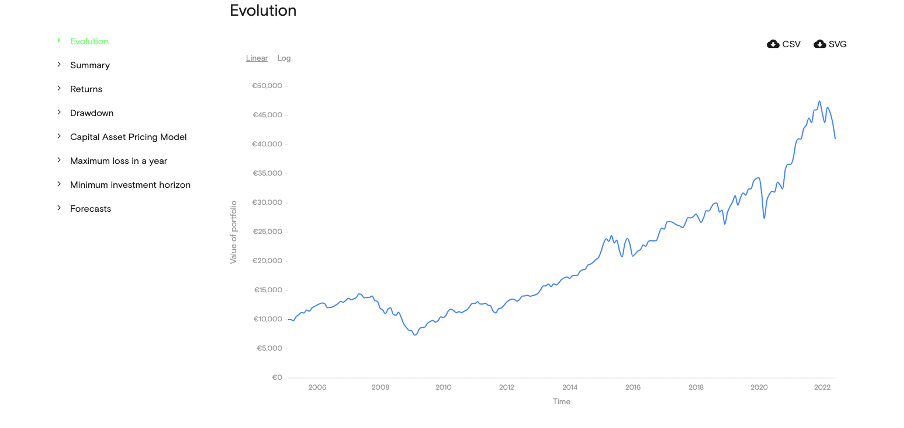
That page now brings in 1,000 users per day. Due to its popularity, it also brings a decent amount of backlinks.
This tool is for the more advanced investor, which means it doesn’t bring in customers – but it does bring in legitimacy. Thomas says that once a month someone shares the tool online, which helps with Google ranking and backlinks.
Doing the work themselves
Unlike many other fintech founders and companies, Yoran and Thomas do all the content themselves. But that’s also because their company is bootstrapped, so they have no pressure from investors and can take their time (although that’s now changing).
So they’ve had to learn everything about content marketing and SEO themselves. How did they teach themselves?
Thomas says they read a lot of case studies online, including the SEMRush and Ahrefs blog, as well as the Fintech Marketing Hub and the Mint Studios blog (😉).
Right from the start, Thomas and Yoran saw SEO as the foundation. They understood from the very beginning that if they nail the foundation, everything else will grow. And although there aren’t a huge number of people researching investment related terms in Belgium, they know this will increase over time as well.
Thomas is also a big believer in doing something yourself before outsourcing. He believes SEO is worth learning, and that as long as you know what problem you are solving, it’s not too difficult. Not only that, but what you publish on your blog is a direct reflection of who you are as a brand. If your blog content is terrible, then that’s a direct representation of your brand.
How do they manage a multi language website?
Another of their challenges was dealing with a multi-language website.
Like many other startups, Curvo use Webflow to host their website and CMS. They wanted to create multiple blogs in different languages with Weglot, a Webflow tool that translates content and URLs automatically. They reached out to Weglot and it turns out that on the Advanced plan, Weglot can set up subfolders as well as translate the URL (fellow Webflow users, take note).
They got it all set up and running, and when they translated their blog to Dutch, the number of visitors and conversion drastically increased.
It’s worked out very well for them: Weglot translates the articles automatically, and they have a visual editor where you can go in and make any quick adjustments.
When an article is doing exceptionally well in Dutch, they translate the infographic. And now they’re experimenting with doing videos in Dutch.
Their main challenge now is figuring out if this approach in other countries, if they can scale what they’re doing and whether they should start creating content for other European countries.
Tips for other fintech founders
Thomas and Yoran are big believers in content and building a strong foundation. We did ask Thomas if he thinks all fintech founders should invest in content.
He believes it only makes sense to create content if:
- The competitive landscape quality is low, and search results don’t offer good content
- If customers actively use Google to search and find solutions
He also understands that it’s important to have a long term view – something which many founders might struggle with.
Curvo is leading the way in terms of investment content in Belgium, and the incredibly high level of quality of their content sets them apart even from investment content in other countries. It’s not easy work, but it’s paid off: their content continues to bring in customers even when they’re not publishing, and it also brings in their most dedicated, long term users.