
Hey everyone, Araminta here.
A common complaint I hear from marketing leaders is that they’re struggling to hit their KPIs because the sales teams isn’t happy with the quality of leads.
The companies that are coming through are too small, the prospects are ghosting or there is a lack of intent.
From marketing's side, it’s easy to think that sales is the issue, that maybe they’re not following up properly or not closing.
It depends on every situation, but if you know the leads from marketing aren’t the best quality, what can you do about it?
I wanted to share how we use content to improve the quality of leads, and then walk through how ComplyAdvantage (one of the companies we covered in our recent report) handled the same problem.
How to improve the quality of your leads with content marketing
The biggest mistake I see some marketing teams make is calling everyone who downloads a report "a lead."
Someone who handed over their email to grab a PDF isn't really a lead ready for sales, in my opinion. Just because you’ve added your email and want a report, doesn’t mean you actually want to buy the product.
They can still be useful leads as you are building trust with them in the brand, but they aren’t to talk to salespeople just yet.
That's why sales struggles with these types of leads: these are not people looking to buy. So no wonder they get ghosted or the calls don’t get anywhere.
There are two fixes worth doing. One is in the kind of content you create. The other is in the tracking you have around it.
1. Create content focused on the right intent
To improve the quality of leads, that means they need to be more likely to buy once they talk to sales. That means they should actually be interested in buying, rather than just downloading a report. The best way to do this is to target them at the right moment.
Instead of creating content like “top trends in payments for 2026”, shift towards content where you know the person doing the research is interested in a solution.
Talk to your sales team and take time to fully understand who the best leads are: and what 'high intent' looks like. This can lead you to create content that will resonate with 'quality' leads.
So if we sell an accounting tool, that means content around:
- Top accounting tools for e-commerce
- Quickbooks alternatives
- How to match invoices to payments
If we want to go more technical, like an open banking provider:
- Open banking API
- Open banking for lenders
- Payment initiation service
Someone who’s doing research on alternatives to your competitors or an API, is clearly a lot closer to buying than someone who is reading a “Top Open Banking Trends” report.
This is not to say you shouldn’t create those trends and reports, those are great. But they serve a different purpose: they are not for lead gen, they are for raising awareness of your brand.
(This is why we didn’t gate our most recent How the Top Fintechs Do Content report, the main purpose was awareness).
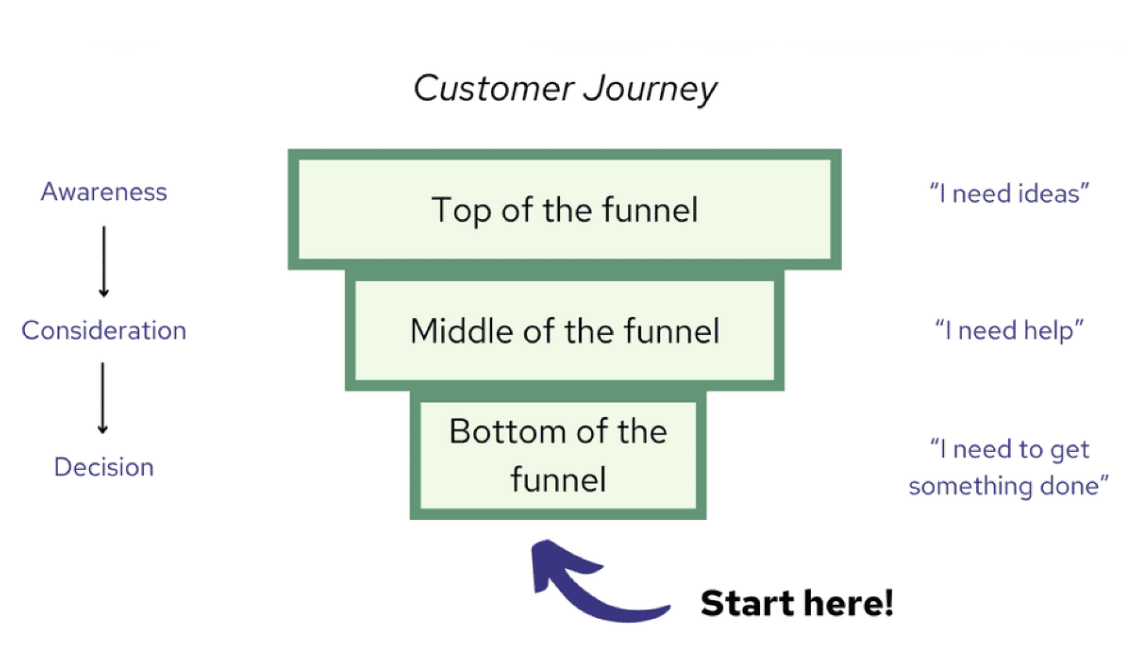
This is the whole premise behind our framework of “Start with Bottom of the Funnel content”, which you can read more about here: What is BOFU (Bottom of the Funnel) Content and Why Is it Important?
2. Where do you get the leads then? (Or, how to correctly track leads)
When we tell people that emails from a report don’t really count as leads that sales can work with, they sometimes freak out: “but we need emails! If not, there is nothing to share with sales!”
The main shift is that real leads for sales should now come from elsewhere: your demos booked, your contact form submissions.
With content, if you rank for those high intent keywords like “Open banking API” and “Top accounting tools for e-commerce” on both Google and LLMs, people will eventually find your contact form and submit. It does actually work.
The hard part is the tracking. They won’t read one article and submit a demo form. They’ll read a few, they’ll use ChatGPT, they’ll go to your product page and 2 months later, will convert.
It’s a messy journey which marketing is becoming more of, which is why you need HubSpot correctly set-up, or if not a third party tool like WhatConverts. I recently did a video showcasing how WhatConverts allows us to prove how content is helping bring in leads here (and not just volume, but quality): Why total lead numbers isn't always the best metric to track for content (use deal size instead!)
If your sales team needs more “leads” to call, you can get them to focus on “warm” leads that at least have a stronger buying signal: e.g. people who have read 5+ pieces of content on your website (rather than just downloaded 1 report). You can track this through tools like HubSpot and Dreamdata.
With those two ingredients in place: content for the right intent, and actually tracking leads with buying intent, you’ll see the quality of leads improve.
This is the approach we took with a global payments company and saw not just leads, but actual SQLs via the blog grow by 466%. And of all the leads content helped bring in 38% were SQLs or opportunities. Content works so well for them we actually had to keep the case study anonymous! You can read it here: Case Study: How this Fintech’s SQLs From the Blog Grew by 466%
Here’s how ComplyAdvantage addressed the same issue
I thought it would be interesting to look at a real example of how a fintech company actually addressed the issue of quality. In my interview with Will, the former Marketing Director, he explained the different ways they increased the quality of leads (you can find the full thing in the report)
1. Moving away from TOFU content
Just like I mentioned above, they moved away from the high level type content and actually started producing more BOFU content (this actually happened after Will attended one of my workshops!). Examples of the type of content they produced:
- The best sanctions screening software and companies
- The best transaction monitoring software and companies
They also changed how they wrote their content. Instead of generic statements like “screening for PEP is important”, they interviewed their experts and wrote in-depth articles on how elections could impact PEP data or what the FATF report means for compliance managers.
2. They started doing “always-on” content rather than campaigns only
The lead quality issue often stems from the fact that marketers think of campaigns as an ROI: I invest $ into a campaign and get $$ out in the form of leads.
But nowadays, you need to be marketing at all times so you can capture the buyer when they’re ready, not just when you’re running a campaign. Although ComplyAdvantage still does campaigns, they now serve a different purpose.
- Always-on content (SEO, newsletters, content for events): helped to bring a predictable flow of leads
- Campaigns: to help reach revenue goals and get more leads
We went into more detail in our interview which you can find in the report.
3. They made webinars work again
Webinars still work well (that’s why we’re doing one next week!). ComplyAdvantage invested in improving their webinars, and the results speak for themselves. A few things they did:
- Having “follow up tables” where attendees can join a virtual table where speakers are sitting and are happy to have a chat.
- Have an optional-to-join “demo table” where someone from the sales team can walk an attendee through how the product works.
- Running polls throughout the event.
They also made sure the webinars focused on more BOFU topics that they knew their audience really cared about. They also focused on the quality of their database so invites were going to the right people and spent more time on distribution, including working with influencers.
4. Proper tracking with Dreamdata
And of course, a big part of this was getting the tracking right. They mainly use Dreamdata, which allows them to aggregate information from Google, Salesforce, LinkedIn, and Hubspot.
With such long sales cycles, they can track influenced revenue from content, broken down into:
- A business development meeting
- A business opportunity
And it’s not just that. Whenever a new meeting is booked, a Slack channel gets a notification which includes lead details and source. It’ll also show if content played a part. Will shared that this was a great way for the sales team and leadership team to see the value of content.
Via Dreamdata, the content team can also see how people bounce around the homepage, a product page, download a white paper, may disappear for a few months, and then book a demo.
This is instrumental to getting a good understanding of how prospects interact with their content, and it’s also a great way to show leadership the role of content in a sales journey.
Improve the quality of leads with high-intent content and better tracking
If your sales team is telling you the leads are bad, throwing more leads at them won't fix it. You need to send them fewer, better ones.
That comes down to two things working together: content built around the topics buyers actually search when they're close to making a decision, and tracking that's good enough to show which of those people end up on a sales call months later.
ComplyAdvantage is a good example of what that looks like when it's set up properly, and there's a lot more from Will in the full report if you want to see how they got there.
We're also covering this live in the webinar next week, so come along if you want to ask questions!
Mint Studios Recommended Reads
- How Fintech Companies Do Content: Why ComplyAdvantage Gets Better Results with Less Content: If you just want to read the ComplyAdvantage case study, you can find it here!
- What 34 Studies Reveal About AI Search in 2026: Great meta-study of what really works in AI search
- How I Do Content Engineering with Claude Code: Here's how Ryan uses Claude Code to automate a lot of his content marketing, very interesting!
Thanks for reading,
Araminta & the Mint team 🎉
We help financial services and fintech companies acquire customers and position themselves as experts with content marketing. Learn more about what we do.